


Types of Tie-Down Straps: Your Complete Guide to Securing Any Load
Choosing the right types of tie-down straps for your cargo isn’t just a good idea – it’s essential for safe and responsible transportation. This guide covers the main types of tie-down straps and how to choose the right one for your needs. From hauling furniture across town to strapping down motorcycles, proper cargo securement protects you, your belongings, and everyone on the road. Understanding the different types of straps available is crucial for selecting the best option for your specific cargo and application.
This guide is for anyone who needs to transport cargo safely, from homeowners to professional haulers. Choosing the right strap is essential for safety and compliance with transportation laws.
At Rhino USA, we offer many different types of tie-down straps to choose from. The best choice for you will depend on the specific application you have in mind. There are several common types of tie-down straps, such as ratchet straps, cam buckle straps, and winch straps, each designed for particular uses and load requirements. To help you decide, we’ve provided a list below that explains the different uses for each type of strap.
Customers can also create custom tie-down straps by selecting the length, hardware, and color options that best meet their needs.
For more information, or to request custom products, visit our website to connect with our team and explore all available options.
Next, let's look at the materials and construction that make tie-down straps reliable.
Tie-Down Strap Materials and Construction
When it comes to securing cargo safely and reliably, the materials and construction of your tie-down straps make all the difference. Most high-quality tie-down straps are made from polyester webbing, a material prized in the industry for its impressive strength, minimal stretch, and outstanding durability. Polyester webbing is the preferred material for tie down straps due to its strength and minimal stretching. Polyester webbing stands up to the elements—resisting UV rays, mold, mildew, and moisture—making it a good choice for both indoor and outdoor hauling jobs.
The construction of tie-down straps involves more than just the webbing. Each strap is designed with specific hardware to suit different types of tie-down needs. For example, ratchet straps use a ratcheting mechanism to tighten and secure heavy loads, while cam buckle straps rely on a cam buckle for quick, easy tensioning—ideal for lighter or more delicate cargo. E track straps are equipped with e track fittings, allowing them to lock securely into e track systems commonly found in trailers and vans, providing versatile anchor points for securing cargo of all shapes and sizes.
Strength is a critical factor in choosing the right tie-down strap. The breaking strength of a strap refers to the maximum force it can withstand before failing, while the working load limit (WLL) is typically one-third of the breaking strength, providing a crucial safety margin. The working load limit (WLL) of a tie down strap indicates how much weight it can safely handle. Always check the WLL to ensure your straps are suited for the weight and type of load you’re hauling. Heavy duty straps are designed for bulky, heavy loads like machinery or pallets, while lighter-duty loop straps or endless loop designs are perfect for smaller items or bundling cargo together.
Hardware options also play a big role in the effectiveness of tie-down straps. Common types of hooks and hardware include:
-
S hooks
-
Flat hooks
-
Snap hooks
-
Wire hooks
Each type of hook offers unique features—flat hooks are great for sliding under rails, while snap hooks provide a secure, closed connection. The length and width of the strap can vary depending on your needs, with widths typically ranging from 1 inch for lighter loads up to 4 inches for the heaviest jobs.
Safety and compliance are essential in the transportation industry. The Department of Transportation (DOT) sets strict regulations for tie-down straps, requiring proper labeling and certification to ensure straps meet safety standards. Straps that use high-quality polyester webbing and DOT-approved hardware are a reliable choice for anyone serious about securing cargo. Regularly inspect your straps for signs of wear, fraying, or damage, and replace them as needed to maintain safety and performance.
Whether you’re hauling furniture, shipping pallets, or transporting vehicles, there are many different types of tie-down straps designed to meet the demands of any job. Investing in durable, well-constructed straps not only protects your cargo but also ensures you’re in compliance with industry regulations. With the right combination of webbing, hardware, and safety features, you can trust your tie-down straps to keep your loads secure, trip after trip.
Now that you know what goes into a quality tie-down strap, let's explore the different types available.
Types of Tie-Down Straps
Tie-down straps are classified by their tensioning mechanisms, weight capacities, and specialized end-fittings to suit different cargo types.
Quick Comparison of Main Types of Tie-Down Straps
-
Ratchet Straps: Heavy-duty, for large/bulky items. Known for their heavy-duty strength and durability, making them suitable for securing large or bulky items.
-
Cam Buckle Straps: For lighter loads, easy to use. Suitable for lighter loads and are easier to use for smaller jobs.
-
Winch Straps: For extremely heavy cargo, used with winches. Designed to work with winches on flatbed trailers and are used for extremely heavy cargo.
-
Axle Straps: Heavy-duty, wrap around tires for vehicles. Used to wrap around tires for securing vehicles to trailers.
-
Bungee Cords: Elastic, for very light loads. Elastic cords that provide stretch and are intended for very light loads.
Below, you'll find detailed information on each type of tie-down strap, including their typical uses and features.
Heavy-Duty (HD) Ratchet Straps

-
Applications:
-
Securing heavy cargo like motorcycles, furniture, appliances, and machinery during transport.
-
-
Features:
-
1.6” poly/silk webbing with double-diamond stitching
-
High break strength (max 5,208 lbs)
-
Full-bend s-hooks with integrated safety clips
-
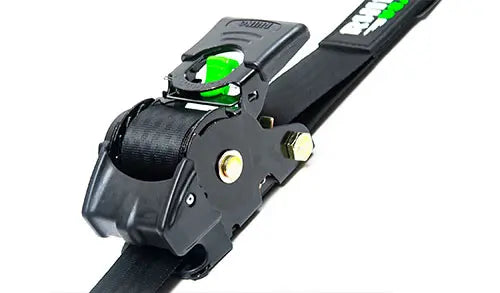
Heavy-duty ratcheting mechanism for precise tensioning
-
High-quality materials help prevent the hooks or hardware from becoming bent under heavy loads, ensuring safety and durability.
-
Medium-Duty Ratchet Straps

-
Applications:
-
Securing medium-weight cargo like kayaks, lawnmowers, coolers, and smaller furniture.
-
-
Features:
-
1” poly/silk webbing
-
Medium break strength (max 1,823 lbs)
-
Full-bend s-hooks with integrated safety clips
-
Less bulky and easier to handle than heavy-duty straps
-
Exceeding the break strength could cause the strap to fail, so always use straps within their rated limits to ensure safety.
-
Retractable Ratchet Straps

-
Applications:
-
Convenient for securing cargo in trailers, trucks, and beds where storage space is limited.
-
-
Features:
-
1” poly/silk webbing
-
Medium break strength (max 1,209 lbs)
-
Full-bend s-hooks with integrated safety clips
-
Built-in spring mechanism that automatically retracts the strap, keeping it tidy and preventing tangles
-
Retractable ratchet straps are easy to store and should be kept in a cool, dry place away from sunlight and moisture to maintain their condition.
-
Cambuckle Straps

-
Applications:
-
Quick and easy to use for securing medium cargo like bikes, kayaks, dirtbikes, ATVs, and camping gear.
-
-
Features:
-
1.5” poly/silk webbing with double-diamond stitching
-
Medium-high break strength (max 3,328 lbs)
-
Full-bend s-hooks with integrated safety clips
-
Tensioning mechanism operated by a cam buckle, no ratcheting needed
-
The cam buckle lets you manually apply the right amount of tension to keep your cargo safely secured.
-
Bungee Cords

-
Applications:
-
Lightweight and versatile for securing small items like luggage, coolers, and tarps.
-
-
Features:
-
Double braided rubber and latex core
-
Heavy-duty 3.5mm steel core hooks
-
Ultra-durable plastic coating
-
US lab-tested break strength (max 185 lbs)
-
Bungee cords are elastic cords that provide stretch and are intended for very light loads.
-
Axle Tie-Down Straps

-
Applications:
-
Specifically designed to secure vehicles by wrapping around the axle.
-
-
Features:
-
2” x 38” poly/silk webbing
-
Very high break strength (max 11,128 lbs)
-
Triple-stitched looped ends
-
Heavy-duty reinforced steel d-rings on each end
-
Anti-scratch protective sleeves
-
The straps loop around the axle to create a secure attachment point, making them ideal for bundling or securing cargo where a strong, flexible connection is needed.
-
Transom Tie-Down Straps

-
Applications:
-
Securing boats and personal watercraft to trailers by attaching to transom tie-down points.
-
-
Features:
-
2" x 96" poly/silk webbing
-
Very high break strength (max 10,000 lbs)
-
Full-bend s-hooks with integrated safety clips
-
Heavy-duty padding
-
Corrosion-resistant hardware
-
Lashing Straps

-
Applications:
-
Perfect for tying down large or odd-shaped cargo together for stability during transport or storage.
-
-
Features:
-
1” x 12’ poly/silk webbing
-
Rust-proof zinc alloy buckle in a silicone housing that’s easy on your hands
-
Integrated hook and loop fastener for easy storage
-
Always check the strength of the strap to ensure it is suitable for your cargo and meets safety requirements.
-
Heavy-Duty Tarp Straps

-
Applications:
-
Securing tarps to trailers, sheds, or other outdoor structures.
-
-
Features:
-
EPHD Rubber, Industrial Strength
-
3 connection points for adjustable length
-
Extra-thick straps
-
Strong hooks for attachment
-
Heavy-duty tarp straps also offer a competitive price point for securing tarps and outdoor equipment.
-
E-Track Ratchet Straps

-
Applications:
-
Used with E-track cargo tracks in vans, trailers, and truck beds for secure and versatile cargo tie-down.
-
E-Track ratchet straps can also be used in combination with chain assemblies for securing especially heavy or industrial loads.
-
-
Features:
-
Poly/silk webbing
-
High break strength (max 4,500 lbs)
-
Fittings designed to slide into and lock onto E-track
-
Heavy-duty padding
-
Corrosion-resistant hardware
-
UTV Wheel Chock Tie-Downs

-
Applications:
-
Securing UTVs and other off-road vehicles in trailers or on truck beds using wheel chocks with integrated tie-down straps.
-
-
Features:
-
Cradles the wheels to prevent movement
-
Integrated straps provide additional security
-
Fittings designed to slide into and lock onto E-track fitted wheel chocks
-
Car Lasso Straps

-
Applications:
-
Designed for transporting mid-sized vehicles like Cars, Trucks, UTVs, and Jeeps.
-
Similar heavy-duty straps, such as tent straps, are also used to secure large outdoor tents for events and gatherings, especially to keep them anchored during strong wind gusts.
-
-
Features:
-
Heavy-duty stitching
-
Pro-grade materials
-
High break strength (max 10,000 lbs)
-
Unique lasso design that provides a secure and adjustable connection to your vehicle’s tires, eliminating the risk of damage or shifting during transit.
-
Why Are Tie-Down Straps So Important?
Preventing Accidents
Now, let's go over some of the most important reasons why tie-down straps should be part of your hauling gear.
Loose cargo is a hazard waiting to happen. Sudden stops, turns, or even bumps can send unsecured items flying, potentially causing:
-
Collisions: Loose cargo can become projectiles, crashing into other vehicles or causing drivers to swerve dangerously.
-
Vehicle Damage: Unrestrained cargo can slam into your own vehicle, damaging the interior, exterior, or even compromising its handling.
-
Road Hazards: Lost cargo creates obstacles for other drivers, increasing the risk of accidents and property damage.
Tie-down straps prevent these scenarios by anchoring your cargo firmly in place, minimizing movement and ensuring it stays put through all road conditions.
Protecting Your Belongings
Unsecured cargo is vulnerable to damage during transport. Bouncing around can lead to:
-
Scratches and Dents: Furniture, appliances, and even delicate items like bikes can become scratched or dented when colliding with each other or the inside of your vehicle.
-
Cracks and Breaks: Fragile items are especially susceptible to breaking when jostled about without proper support.
-
Internal Damage: Loose machinery or equipment can suffer internal damage from bouncing and shifting, leading to costly repairs or replacements.
Tie-down straps provide essential support and stability, minimizing movement and protecting your belongings from bumps and bruises.
Peace of Mind
Knowing your cargo is secure brings peace of mind, allowing you to focus on the road instead of worrying about potential disasters. Securement straps give you the confidence that:
-
You're following the law: Most regions have laws requiring proper cargo securement. Tie-downs ensure compliance and avoid potential fines or citations.
-
You're being responsible: Securely transporting your cargo is not just legal, it's your responsibility as a driver to keep everyone safe.
-
You'll Arrive with Everything Intact: Whether you're moving household goods or delivering valuable equipment, tie-down straps provide the assurance that your items will arrive safe and sound.
In conclusion, using tie-down straps is an investment in both safety and peace of mind. They prevent accidents, protect your belongings, and ensure responsible transportation. Don't let your next trip turn into a disaster – buckle down and secure your cargo properly before hitting the road.
- Choosing a selection results in a full page refresh.