


How to Measure Hitch Drop for Level Towing
Towing a trailer safely and efficiently requires proper hitch drop measurement. Ensuring the right hitch drop is crucial for maintaining a level trailer, which in turn provides better handling and smoother towing experience. Moreover, it reduces strain on your tow vehicle and minimizes the risk of accidents due to improper weight distribution.
Drop hitches are engineered for durability and safety, and their utility lies in accommodating a wide range of trailer types and towing scenarios. CURT drop hitches provide a drop ranging from 2" to 11", and common drop hitch sizes include 2", 4", 6", 8", and 10". A 6" drop hitch works for 95% of trailers out there, and the most common hitch ball sizes are 2 inches and 2-5/16 inches.
Hitch drop is the distance between the top of the towing vehicle’s hitch receiver and the trailer’s coupler when both are level and correctly aligned. This measurement helps you determine the appropriate ball mount needed to connect your tow vehicle and trailer. By taking the time to measure hitch drop accurately, you play a key role in maintaining a responsible and secure towing process, improving your overall towing experience.
In the sections that follow, we'll break down the specific benefits of using a drop hitch correctly, examine the different types available including both fixed and adjustable options, and provide you with expert guidance for selecting the right drop hitch for your particular towing needs. Whether you're new to towing or you've been doing it for years, understanding hitch drop requirements and how to determine the proper setup is absolutely crucial for maintaining a safe, secure, and legally compliant towing operation every time you hit the road.
Step-by-Step Guide to Measuring Hitch Drop
To measure hitch drop for level towing, follow these steps:
-
Park your unloaded vehicle and trailer on level ground. This ensures accurate measurements for both the hitch receiver and trailer coupler.
-
Measure hitch receiver height. Using a tape measure, find the distance from the ground to the top edge of your trailer hitch receiver at the rear of your truck. Make sure to keep the tape measure perpendicular to the ground for accuracy. Let’s call this measurement A.
-
Measure trailer coupler height. Now, measure the distance from the ground to the bottom edge of your trailer coupler. This is part of the Ground-to-Component Method. Ensure that the trailer is level during this measurement. You can use a bubble level to double-check the trailer’s levelness. Let’s call this measurement B. For maximum accuracy, measure the trailer with the expected tongue weight or loaded to its normal towing weight.
-
Determine the required hitch drop. Subtract, or minus, the trailer coupler height (measurement B) from the hitch receiver height (measurement A) to determine how much drop you need for level towing.
To summarize, here’s the formula:
Hitch Drop = A (Hitch Receiver Height) - B (Trailer Coupler Height)
The required drop height can vary based on the load, vehicle suspension, and trailer design.
By following these four steps, you’ll ensure a proper and level towing setup for your vehicle and trailer. Remember that accuracy is key when measuring hitch drop, so take your time and double-check your measurements. The result will show you how much drop is needed for your setup. If you are towing with a truck that has a bed higher than standard, or a lifted truck, you may need a greater drop to achieve a level trailer.
Tools for Measuring Hitch Drop
When it comes to measuring hitch drop for level towing, there are several tools available to help you get the job done accurately. In this section, we will discuss various tools such as tape measures, hitch height gauges, and adjustable drop hitches. We will also cover the pros and cons of each tool for measuring hitch drop.
Tape Measure: A tape measure is an essential tool for measuring hitch drop. With it, you can measure the hitch height (from the ground to the top of your hitch receiver opening) and the coupler height (from the ground to the bottom of the coupler). To ensure accuracy, it is crucial to have both the tow vehicle and trailer parked on level ground.
Pros:
-
Inexpensive and widely available
-
Easy to use
Cons:
-
Requires manual calculations to determine hitch drop
Hitch Height Gauge: A hitch-height gauge is a specialized tool designed for measuring hitch drop. This device can be attached to the hitch receiver and gives you a direct measurement of the hitch height. Some hitch height gauges are adjustable, allowing them to fit various hitch receiver sizes.
Pros:
-
Precise and easy to use
-
Can potentially reduce the need for manual calculations
Cons:
-
Can be more expensive than a tape measure
-
May not be compatible with all hitch receiver sizes
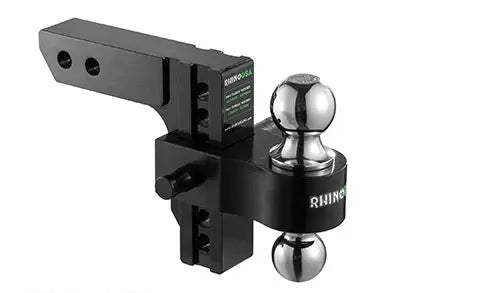
Adjustable Drop Hitches: Adjustable drop hitches are a versatile option for towing with different hitch heights, sizes, and trailer types. These hitches are mounted to the receiver and use pins to secure the adjustable components in place, allowing you to easily change the height to match different trailers. Adjustable drop hitches are engineered to carry different trailer loads and can accommodate different sizes and heights, making them suitable for a wide range of towing needs. They are especially practical solutions if the calculated drop is not a standard size or if you need to tow multiple trailers. While not strictly a measuring tool, they can help you achieve an even towing setup by allowing you to adjust the hitch height with ease.
Pros:
-
Versatile and adjustable to accommodate various hitch heights, sizes, and loads
-
Can help provide a level and secure towing experience
Cons:
-
More expensive than traditional fixed ball mounts
-
Still requires initial hitch drop measurements with a tape measure or hitch height gauge
In summary, each of these tools can assist you in measuring hitch drop for level towing. Based on your needs and budget, choose the appropriate tool that best fits your requirements. Remember, accurate hitch drop measurements are essential for safe and level towing.
Adjusting Hitch Drop for Level Towing
Before starting the hitch drop adjustment process, it’s essential to gather accurate measurements to match the trailer and tow vehicle heights. First, park your tow vehicle on level ground and measure the distance from the ground to the top of the hitch receiver opening (Measurement A). Next, make sure your trailer is level and measure the distance from the ground to the bottom of the coupler (Measurement B). In order to obtain a proper hitch drop, subtract Measurement A from Measurement B.
Once you have the correct measurements, follow these steps to adjust the hitch drop:
-
Choose a ball mount with the correct drop (or rise hitch) based on your measurements to match the trailer and vehicle heights. If your trailer coupler is higher than your hitch receiver, use a rise hitch to elevate the connection and maintain a level setup.
-
Insert the drop hitch into the receiver tube of your truck, ensuring it fits snugly.
-
Align the hitch pinhole with the receiver tube's pinhole and insert the hitch pin, then lock it with a clip or locking mechanism.
-
Lower the trailer coupler onto the ball mount and ensure it locks securely in place.
-
Use a level to ensure the trailer is level with the truck after installation.
-
Connect the safety chains from the trailer to the truck, crossing them under the hitch.
-
Check all lights and electrical connections to ensure they are working correctly before pulling the trailer.
-
Perform a final inspection of all connections, locks, chains, and electrical components before towing.
For adjustable drop hitches, insert the horizontal shank into the receiver tube and secure it with a pin. Measure the coupler height from the bottom of the trailer coupler to the ground to set the correct height. Select the hole in the vertical shank closest to the coupler height to secure the attachment, and insert pins to secure the attachment after aligning the holes of the coupler and adjustable shank.
Achieving a level towing configuration is crucial for both safety and performance. When your trailer is level, it allows for better handling, reduces the risk of sway, and ensures even weight distribution between the vehicle's front and rear axles, which is important for maintaining steering and braking control. A proper drop keeps the trailer tongue from scraping the ground, especially with low-sitting trailers or uneven surfaces. Incorrect drop can shift excessive weight to the rear axle, causing severe strain on the suspension and uneven tire wear. On the other hand, an unbalanced towing setup may result in excessive wear on tires and suspension components, poor braking performance, and decreased fuel efficiency.
When selecting a drop size, it is generally safer to round up to the next size or choose a slightly lower drop if the calculation falls between standard hitch sizes. Fixed drop hitches are suitable for towing the same trailer with the same payload regularly, while adjustable hitches are better for towing different trailers. Quality drop hitches are typically made of solid steel and may have adjustable height features.
By following these guidelines, you’ll be able to properly adjust your hitch drop and ensure a safe, level towing experience. Remember, it’s essential to periodically check your hitch setup and make adjustments as needed to maintain optimal performance when pulling your trailer.
Common Mistakes to Avoid
When measuring and adjusting hitch drop for level towing, people often make some common errors that can negatively impact their towing experience. By being aware of these mistakes and following the tips provided, you can avoid these issues and ensure a successful towing experience.
-
Not parking both the tow vehicle and trailer on level ground: This is essential when taking measurements because it allows you to accurately determine the required hitch drop. To avoid this mistake, always make sure both your tow vehicle and trailer are parked on level ground before taking measurements.
-
Using a poorly aligned tape measure: To obtain accurate measurements, it’s crucial to keep the tape measure perpendicular to the ground and ensure it aligns with the hitch receiver or trailer coupler. Avoid angled inaccuracies by paying close attention to the alignment of your tape measure.
-
Ignoring the type of trailer: Not all trailers are the same, and some might require a certain hitch drop or rise to maintain a level towing position. If you have a lifted truck or SUV, you may need a greater drop hitch to compensate for the increased height and keep your trailer level. Make sure you know the specific requirements for your trailer before adjusting your hitch drop.
To avoid these common mistakes and ensure a successful towing experience, follow these simple tips:
-
Always park both the tow vehicle and trailer on level ground before measuring.
-
Keep the tape measure perpendicular to the ground and aligned with the hitch receiver or trailer coupler during measurements.
-
Double-check the type of trailer to ensure you’re using the correct hitch drop or rise.
-
If your vehicle is lifted, consider that you may need a larger drop hitch to maintain a level trailer.
-
Always walk around your towing setup to inspect all connections and ensure everything is secure before towing.
An unlevel trailer puts excessive stress on one axle over the other, leading to accelerated tire wear, blowouts, and suspension strain.
By keeping these tips in mind, you can confidently and accurately measure hitch drop and enjoy a safe and level towing experience.
Get the Drop Right Before You Hit the Road
Having the proper hitch drop is crucial for safe and effective towing. A correctly measured hitch drop ensures an even distribution of weight, better handling, and improved stability while towing. If you’re wondering how to match the right drop hitch to your specific towing setup, simply follow the steps outlined in this article to make the right choice.
First, it is essential to have both your tow vehicle and trailer parked on level ground. Measure the height from the ground to the top of your hitch receiver, while keeping the tape measure perpendicular to the ground. Next, measure the height from the ground to the bottom of the trailer coupler while the trailer is level.
Key Measurements:
-
Ground to top of hitch receiver: Measurement A
-
Ground to bottom of trailer coupler: Measurement B
To determine the necessary hitch drop or rise, simply subtract Measurement A from Measurement B. A positive result indicates the required hitch drop, while a negative result indicates the needed hitch rise.
In conclusion, take the time to properly measure the hitch drop for your towing setup. This simple yet critical step will lead to a safer and more efficient towing experience. With confidence and knowledge, follow the guidelines provided to ensure level towing and enjoy the peace of mind that comes with a well-prepared trailer setup.
- Choosing a selection results in a full page refresh.