





How To Plug And Patch A Motorcycle Tire Like A Pro
Do not let a screw or nail ruin your ride. Get yourself a tire plug kit and learn how to use it. A flat tire is a common issue for motorcycle riders during commutes or weekend rides. Before getting started, it is important to note that plug kits are only meant to be used on the tread of your tire. If you find a puncture in the sidewall, or a large gash on the tread, it is best to avoid a potentially deadly situation and instead have your tire completely replaced to meet standard safety guidelines. Importantly, punctures in the sidewall are not repairable and require tire replacement.
It is ironic that modern-day motorcycle tires are almost invincible, yet a small 1 ½ screw can completely ruin your day. Today’s tubeless tire technology typically keeps you safe from any deadly blowouts, by preventing foreign objects from completely deflating the tire while hitting the road. Tubeless tire repair kits often include plugs and tools for repairing punctures without removing the tire from the motorcycle, and some kits come with CO2 cartridges for reinflating the tire after a repair. If your tire does have an inner tube, and the object that caused the puncture is still stuck in the tire, it is still very unlikely that the tire would completely lose all its air pressure instantly, but rather deflate slowly overtime.

Of course, if you notice any puncture in your tire, it is safe to say you should immediately pull over to inspect the damage. We do not recommend driving on a punctured tire that has not been repaired. Always look for a safe place to perform the repair to avoid further risks.
Step-by-Step Guide: Plugging a Motorcycle Tire
Tools and Materials Needed
Proper tools for plugging a motorcycle tire include:
-
Reamer
-
Insertion tool
-
Rubber cement
-
Tire plug kit (with plugs or 'bacon strips')
-
Pliers
-
Knife (for trimming excess plug)
-
Tire inflator or access to an air source
-
Safety gloves and eye protection
Procedure for Plugging a Motorcycle Tire
Step 1: Inspect and Locate the Puncture
Finding a puncture in a motorcycle tire can sometimes be a surprisingly tough task, as some small objects will find themselves lodged deep into the tire tread. If you can visually see the puncture and the foreign object causing it, move on to the next step. If you cannot see the puncture at all, your best bet would be to feel around the tread for a bit until you can feel the area that was damaged.
The diameter of the puncture hole should be less than 7 mm (or 6mm, as most tire manufacturers suggest) for proper repair, and most tire manufacturers suggest that plugs and patches only be used in the crown of the tire, which is about 75% of the tread. Only repairable punctures in this area and of this size should be considered for plugging or patching.
Step 2: Remove the Object
Once the puncture has been accurately located, remove the nail, screw, or other object using the pliers from your plug kit. If you see a screw that is lodged deep into your tire, it is time to grab that power drill from your workbench and slowly unscrew it from your tire. If it is not deep, the pliers should do fine.
Rope-style plugs are commonly found in auto parts stores or gas stations and are easy to install, and some riders prefer using 'bacon strips' for plugging tires due to their handy ease of use.
Step 3: Properly Ream and Clean the Hole
Take the reamer from your tire repair kit and ream the hole. This will help clean and expand the hole, preparing it to be plugged. Most tires are steel belted so it is going to take a lot of effort and energy to jam the reamer in there. Consider it a necessary evil as you’re going to want to make sure the puncture hole is completely cleaned and reamed before using the plug tool to install the rubber seal.
Using a tire plug kit typically involves reaming the hole, inserting the plug, and allowing the glue to dry before riding.
Step 4: Insert the Plug
Firstly, you will want to insert the seal onto the insertion tool, making sure that your seal is about halfway through the insertion tool for this to work. If your tire patch kit includes rubber cement, put some on the seal and some more on the hole. Begin by slowly inserting the seal about 2/3 of the way into the punctured area.
If you push too far, the seal may fall into the tire. That is okay, simply repeat the above steps with a new rubber seal. Once you are sure it is about 2/3 of the way in, gently begin to remove the insertion tool.
Step 5: Trim Excess Plug
Finally, use the knife provided in your plug kit to remove any excess string from the rubber seal.
Step 6: Reinflating Your Motorcycle Tire
Once you have confirmed that your tire has been plugged and properly sealed using the steps above, you can now safely move forward to reinflating it. If you are stranded and do not have a tire inflator on hand, find the nearest gas station as most will happily provide an air inflator for anyone to use. If you do happen to have a tire inflator on hand, simply use that and you will be on the road again in no time.
Emergency tire repair kits should be suitable for the type of tire on the motorcycle, and it's important to carry a handy repair kit and air source when packing for a ride. Packing a suitable repair kit, including plugs, patches, inflators, and other tools, before a trip is essential for being prepared.
Safety Note
Tire plugging should be limited to speeds under 60 mph until a full tire replacement can be made.
Professional inspection and a proper internal patch are necessary for permanent repair after plugging a tire.
After Plugging: Next Steps and Safety Checks
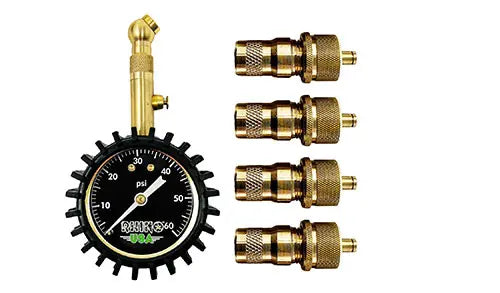
Although this makes for a good temporary fix, you do not want to ride on a patched motorcycle tire for too long. Visit your local mechanic and see what your options are. After each ride on a patched motorcycle tire with an inner tube, be sure to check the air pressure in your tire with a tire pressure gauge. If it is too low to safely continue riding, reinflate it and fix that tire sooner than later!

Now that you know the step-by-step process and safety checks, let's address some of the most common questions about motorcycle tire repair.
Motorcycle Tire Repair Kit FAQ
Is It Safe to Plug and Patch a Motorcycle Tire?
Plugging and patching a motorcycle tire can be a safe and effective temporary solution for minor punctures, but it’s essential to follow proper procedures and guidelines. Importantly, some tire manufacturers do not recommend any repairs and suggest replacement instead, especially for certain types of damage or locations on the tire. Most tire manufacturers suggest plugging punctures up to about 6mm in size and only in the crown of the tire, which accounts for roughly 75 percent of the tread. Always check if the tire is repairable based on the size and location of the puncture. Importantly, these repairs are typically considered temporary fixes, so always follow manufacturer guidelines and safety standards.
What Tools and Materials Do I Need for Plugging and Patching a Motorcycle Tire?
To plug and patch a motorcycle tire like a pro, you’ll need some specific tools and materials, including:
-
-
Tire plug kit
-
Patch kit
-
Pliers
-
Reamer
-
Rubber cement
-
Safety gear like gloves and eye protection
-
All of these are included in the Rhino USA 86 Piece Tire Repair Kit! It’s also crucial to have proper safety gear like gloves and eye protection. Be aware that the speed rating of your tire may be affected after a repair, and if the tire is not repairable, replacement is necessary. In our blog, we’ll provide a detailed list of all the required items and explain their usage to ensure you have everything you need to perform the repair confidently.
How Long Will a Plugged or Patched Motorcycle Tire Last?
The longevity of a plugged or patched motorcycle tire largely depends on the size and location of the puncture, the quality of the repair, and your riding conditions. A temporary plug can be used to get back home or to a dealership, but a combination plug-patch is considered a more reliable repair. Tire manufacturers often view repairs as temporary fixes and recommend consulting them directly for specific guidelines. A well-done repair on a small, central puncture can last for thousands of miles. However, it’s essential to monitor the tire’s pressure and condition regularly. If you notice the repair begins to fail, it’s advisable to replace the tire promptly
- Choosing a selection results in a full page refresh.