





How to Read a Tire Pressure Gauge
This guide is for anyone who needs to check and maintain tire pressure using a pressure gauge. You'll learn how to use different types of gauges, why accurate readings are important, and how to avoid common mistakes. Accurate pressure readings are essential for safety, performance, and efficiency—whether you're a vehicle owner, a general user, or someone responsible for maintaining pressure systems.
What Is a Pressure Gauge?
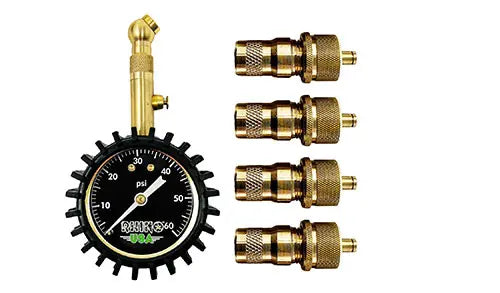
A pressure gauge is an instrument used to measure the pressure of gases or liquids within a system. It usually has a dial face, a needle, and a pointer that represents the pressure level. The dial face displays pressure units, such as pounds per square inch (PSI), bars, or kilopascals (kPa). The needle on the dial points to the current pressure level within the system, allowing you to read the value directly.
-
Dial Face: The circular display showing the scale and units.
-
Needle: The moving pointer that indicates the current pressure.
-
Pointer: Another term for the needle, showing the pressure value.
PSI stands for pounds per square inch and is a common unit for measuring pressure, especially in tires.
Types of Pressure Gauges
Pressure gauges come in several types, each suited for different applications:
Bourdon Tube Gauge
-
Most common type.
-
Uses a curved tube that straightens as pressure increases, moving the needle.
Diaphragm Gauge
-
Ideal for low-pressure, delicate applications.
-
Uses a flexible diaphragm for precise measurements.
Digital Pressure Gauge
-
Provides instant, clear digital readouts.
-
Eliminates guesswork and offers high accuracy.
Choosing the Right Gauge
Selecting the correct gauge is crucial for accurate readings:
-
Scale Range: Ensure the gauge’s minimum and maximum values cover your application.
-
Pressure Units: Check if the gauge uses PSI, bar, or kPa, and use the correct unit for your needs.
-
Application: Match the gauge type to your system (e.g., pneumatic, hydraulic, tire pressure).
Reading Techniques
To read a pressure gauge accurately:
-
Stand directly in front of the gauge to avoid parallax error.
-
Understand the scale and divisions on the dial.
-
Regularly calibrate and maintain your gauge for reliable readings.
Now that you have a general understanding of pressure gauges, let's focus on how to read tire pressure gauges specifically.
How To Read A Pressure Gauge: A Guide for Tire Pressure Gauges
Checking your tire pressure is a key component to helping maintain the longevity of your tire and its performance. Tire pressure gauges are widely used for monitoring tire safety and performance, ensuring that your tires are always at the correct pressure levels.
To check your tire pressure, which is essentially the amount of air in your tire, you must use a tire pressure gauge. When using a tire pressure gauge, you will be getting a number which is your PSI. Tire pressure gauges measure positive pressure inside the tire relative to ambient pressure (atmospheric pressure), which serves as the baseline for the measurement.
Key Terms:
-
Pressure Gauge: An instrument with a dial face, needle, and pointer that shows the pressure level.
-
PSI: Pounds per square inch, the unit that represents tire pressure.
-
Needle: The pointer on the dial that indicates the current pressure.
The optimal PSI for your tire depends on your car, so it is best to check with your vehicle manufacturer for your PSI. If you are looking for a tire pressure gauge for a larger vehicle, such as an RV, you may need a different gauge type that measures up to a higher PSI.

Types of Tire Pressure Gauges
There are three main types of tire pressure gauges. Choosing the right gauge type is important for accurate measurement and safety.
Comparison of Tire Pressure Gauge Types
|
Gauge Type |
Price |
Accuracy |
Ease of Use |
Battery Needed |
Readability in Dark |
Portability |
|
Stick |
Low |
Moderate |
Moderate |
No |
No |
High |
|
Digital |
Moderate |
High |
High |
Yes |
Yes |
High |
|
Dial |
High |
High |
Moderate |
No |
Some (if luminous) |
Moderate |
Stick Gauge
Features:
-
Most inexpensive option.
-
Small and portable.
-
Does not require batteries.
Pros:
-
Affordable.
-
Compact and easy to carry.
Cons:
-
Can be difficult to read.
-
Less accurate than other types.
How to Read a Stick Gauge:
-
Open the valve on your tire.
-
Press the open end of the stick gauge onto the valve.
-
Observe the stick as it moves to indicate pressure.
-
If the stick appears stuck, lightly tap the side of the gauge to help it settle.
-
Once the stick stops moving, read the PSI value.
Digital Gauge

Features:
-
Provides accurate digital readings.
-
Can be used in low-light conditions.
-
Requires batteries.
Pros:
-
Easy to read.
-
High accuracy.
-
Can display readings in the dark.
Cons:
-
Needs batteries to function.
-
Slightly more expensive than stick gauges.
How to Read a Digital Gauge:
-
Open the valve on your tire.
-
Press the end of the digital gauge onto the open tire valve.
-
Wait for the electronic display to show the PSI reading.
-
Record the PSI value.
Dial Gauge
Features:
-
Typically the most expensive.
-
Does not require batteries.
-
Often has a luminous dial for low-light readability.
Pros:
-
High accuracy.
-
Easy to read (especially with luminous dial).
-
No batteries required.
Cons:
-
Requires two hands to operate.
-
Not always easy to read in the dark unless luminous.
How to Read a Dial Gauge:
-
Open the valve on your tire.
-
Press the valve at the end of the hose to the open tire valve.
-
Wait for the needle to stop moving.
-
If the needle appears stuck, lightly tap the side of the gauge to help it settle.
-
Stand directly in front of the gauge to avoid parallax error.
-
Read the PSI value indicated by the needle.
If you seem to be having trouble reading your tire pressure with your tire pressure gauge of choice, you may be moving it too much or placing it onto the valve incorrectly. Either of these things can lead to an inaccurate reading of your PSI. A faulty or inaccurate pressure gauge can lead to operational inefficiencies and safety hazards, so routine inspections of pressure gauges help in the early detection of potential problems.
The best time to check your car’s tire pressure for an accurate reading is if it has not been driven for at least three hours. It is also best to repeat this at least once a month. Regular monitoring of the gauge will help you identify any anomalies promptly, enabling you to take appropriate action to maintain the pump's efficiency and longevity.
Now that you understand how to read a tire pressure gauge, let's explore the broader world of pressure gauges and their importance in various applications.
Featured Product: Rhino USA 75 PSI Tire Pressure Gauge
If you are still having trouble deciding which tire pressure gauge is the right choice for you, one we recommend is the 75 PSI Tire Pressure Gauge. This gauge is a dial gauge, so it is extremely accurate, does not require batteries, and even glows in the dark for easy reading in the dark.
The Rhino Tire Pressure gauge measures up to 75 PSI, which gives you a wider range of uses, and can fit in your glove box. Along with all of this, it also comes with a lifetime warranty, which can make you feel a little better about the price because even though it may be more expensive than a stick and digital gauge, you will receive a quality product that is backed by a no questions asked lifetime warranty!

Tire Pressure Gauge FAQ's
How often should I check my tire pressure?
It's recommended to check your tire pressure at least once a month and before long trips. Seasonal temperature changes can also affect tire pressure, so it's a good idea to monitor it regularly to maintain optimal levels. Ensuring optimal tire pressure on your vehicle can also help with improving fuel efficiency.
Can I Use a Digital Tire Pressure Gauge Instead of an Analog?
Yes, digital tire pressure gauges are accurate and convenient tools for measuring tire pressure. They can be used interchangeably with analog gauges, but it's essential to select a reliable digital gauge and calibrate it periodically to maintain accuracy. Both types of gauges are accurate enough to measure tire pressure, and digital gauges are easier to use.
Essential Checklist: How to Read Any Pressure Gauge Accurately
-
Understand the Gauge's Scale and Divisions: Familiarize yourself with the scale and how it is divided for accurate readings.
-
Calculate Tick Mark Values: Divide the difference between two major numbers by the number of small spaces between them to determine the value of each tick mark.
-
Identify Pressure Units: Check the gauge face for units such as PSI, bar, or kPa.
-
Settle the Needle: If the needle appears stuck, give the gauge a light tap to help it settle.
-
Avoid Parallax Error: Stand directly in front of the gauge when reading to ensure accuracy.
-
Check the Scale Range: Make sure the gauge’s scale range is suitable for the pressure you are measuring.
-
Contextual Reading: Always interpret the reading in the context of the system’s normal operating range to determine if the pressure is at an acceptable level.
- Choosing a selection results in a full page refresh.