

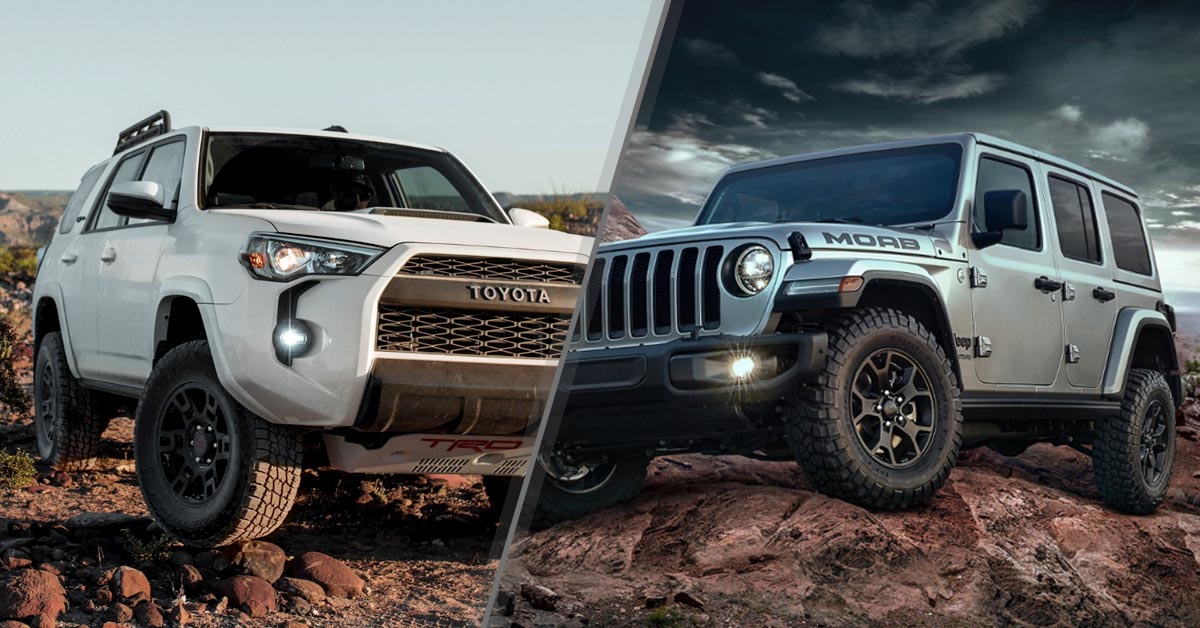
Toyota 4Runner VS. Jeep Wrangler
Are you shopping for a rugged SUV and torn between the Toyota 4Runner and Jeep Wrangler? This comprehensive comparison is designed for SUV shoppers, off-road enthusiasts, and families who want to make an informed decision. We’ll break down the key aspects that matter most: price and value, reliability and build quality, interior comfort, technology and features, performance and fuel economy, off-road capability, safety, and cargo and storage. By the end, you’ll know exactly which vehicle best fits your lifestyle—whether you’re seeking daily comfort, legendary off-road prowess, or a family-friendly adventure machine.

Why does this comparison matter? Both the 4Runner and Wrangler are icons with decades of heritage, but they excel in different areas. Understanding their strengths and weaknesses will help you choose the right SUV for your needs, whether you’re hitting the trails, commuting, or hauling the family.
Summary Comparison Table
Here’s a quick overview of the main decision points for anyone searching “Toyota 4Runner vs Jeep Wrangler”:
|
Feature/Aspect |
Toyota 4Runner |
Jeep Wrangler |
|---|---|---|
|
Off-Road Capability |
Advanced 4WD, Crawl Control, KDSS, locking rear diff; excels on trails, versatile for daily use |
Engineered for extreme off-road, solid axles, front/rear locking diffs, sway bar disconnects, removable roof/doors |
|
Reliability |
Renowned for durability and longevity; versatile daily driver |
Strong heritage, improved reliability, rugged build |
|
Comfort |
Superior daily comfort, more interior space, up to 7 seats |
Less refined ride, open-air options, classic design |
|
Technology |
8" touchscreen, Apple CarPlay/Android Auto, JBL audio (available) |
Uconnect system, up to 12.3" touchscreen, OTA updates |
|
Price |
Starts at ~$41,790; higher trims more expensive |
Starts at ~$41,265; generally more affordable |
|
Cargo Space |
Up to 89.7 cu. ft., more practical for gear |
Up to 72.4 cu. ft., versatile with removable roof/doors |
|
Safety |
Toyota Safety Sense standard, 8 airbags |
Advanced safety features optional, ParkSense Assist |
|
Fuel Economy |
Lower MPG, V6 or hybrid options |
Better MPG, larger fuel tank, more range |
|
Towing Capacity |
Up to 5,000 lbs |
Varies by trim, generally lower than 4Runner |
What Do 'Off-Road Capabilities' and 'Reliability' Mean Here?
-
Off-Road Capabilities: In this context, off-road capability refers to how well a vehicle can handle rough terrain, steep inclines, mud, rocks, and other challenging conditions. The Jeep Wrangler is engineered for extreme off-road use, with features like solid axles, locking differentials, and electronic sway bar disconnects. The Toyota 4Runner is also highly capable, offering advanced systems like Crawl Control and Multi-Terrain Select, making it versatile for both trails and daily driving.
-
Reliability: Reliability means how consistently a vehicle performs over time with minimal breakdowns or major repairs. The Toyota 4Runner is recognized for its long-term durability and low maintenance needs, making it a favorite for families and daily drivers. The Jeep Wrangler has a strong heritage and rugged build, with recent improvements in reliability scores.
Price and Value
If you’re looking for the more affordable option, the Jeep Wrangler generally comes out ahead. The base two-door and four-door Wrangler models start at around $41,265, which is over $4,000 less than the Toyota 4Runner’s starting price of approximately $41,790. The 4Runner remains the pricier choice across all trim levels.
However, price isn’t everything. The 4Runner’s higher cost brings more standard safety features and greater cargo capacity. The Wrangler, on the other hand, often includes more advanced technology and premium equipment at lower trims, but adding safety features can increase the price.
Next, let’s examine how these vehicles stack up in terms of reliability and build quality.
Reliability and Build Quality
Toyota vehicles, including the 4Runner, are legendary for their reliability and durability. The 4Runner is known for lasting hundreds of thousands of miles with minimal issues, making it a top pick for families and daily drivers. It’s built on a truck-based, body-on-frame chassis, which means the frame and body are separate—this design is tougher and better suited for off-road abuse.
Surprisingly, the Jeep Wrangler outperformed the 4Runner in J.D. Power’s recent reliability scores, with an 81/100 compared to the 4Runner’s 79/100. This marks a significant improvement for Jeep, which has historically lagged behind Toyota in this area. Both vehicles come with a three-year/36,000-mile basic warranty and a five-year/60,000-mile powertrain warranty.
Next, let’s look at how these vehicles compare in terms of interior comfort and features.
Interior and Comfort
The Toyota 4Runner takes the lead in overall comfort and space. It offers:
-
More interior room, with seating for up to seven (with optional third row)
-
Leather seat upgrades for enhanced comfort
-
Larger trunk space (up to 89.7 cu. ft. with seats folded)
-
Smoother, quieter ride and better handling for daily driving
The Jeep Wrangler, while iconic and fun with its removable roof and doors, is less refined for daily use. Its interior is more utilitarian, but recent models have improved in comfort and materials. The Wrangler’s open-air driving experience is unmatched, but it can’t match the 4Runner’s spaciousness or ride quality.
Transitioning from comfort, let’s explore the technology and features each SUV brings to the table.
Technology and Features
Toyota 4Runner
-
8-inch touchscreen with Apple CarPlay®, Android Auto™, and Amazon Alexa compatibility
-
Available JBL audio system with 15 speakers
-
Power moonroof
-
Dual-zone climate control
Jeep Wrangler
-
Uconnect® infotainment system (known for speed and ease of use)
-
Up to 12.3-inch touchscreen display with over-the-air software updates
-
Removable roof and doors for open-air driving
-
Optional premium audio and advanced tech features
While the Wrangler offers a larger touchscreen and more tech at lower trims, the 4Runner’s features are more focused on comfort and convenience. Both vehicles offer modern connectivity, but the Wrangler’s tech is more advanced in recent models.
Now, let’s compare their performance and fuel economy.
Performance and Fuel Economy
Toyota 4Runner
-
4.0-liter V6 engine producing 270 horsepower
-
5-speed automatic transmission
-
Available 2.4L turbo hybrid option (2025 model)
-
Towing capacity up to 5,000 lbs
-
Fuel economy: 16 mpg city / 19 mpg highway (V6)
Jeep Wrangler
-
Base V6 engine with 285 horsepower
-
Multiple engine options, including turbocharged and diesel
-
Better fuel economy than the 4Runner
-
Larger fuel tank for more range between fill-ups
-
Towing capacity varies by trim, generally lower than 4Runner
The Wrangler is more fuel-efficient and offers more engine choices, while the 4Runner focuses on proven reliability and towing strength.
Next, let’s dive into what really sets these vehicles apart: off-road capability.
Off-Road Capability
Both the Jeep Wrangler and Toyota 4Runner are designed for serious off-road use, thanks to their truck-based, body-on-frame chassis. This means the vehicle’s body is mounted on a separate frame, providing greater strength and durability for rough terrain—an essential feature for off-road enthusiasts.
Toyota 4Runner Off-Road Features
-
Durable four-wheel-drive system
-
Locking rear differential for improved traction
-
Advanced off-road systems like Crawl Control (automatically manages throttle and brakes on tough terrain)
-
Kinetic Dynamic Suspension System (KDSS) for enhanced wheel articulation
-
Multi-Terrain Select for optimizing traction on various surfaces
Jeep Wrangler Off-Road Features
-
Solid axles for greater articulation over obstacles
-
Front and rear locking differentials (Tru-Lok®) for maximum traction
-
Electronic sway bar disconnects for extreme articulation
-
Three world-class four-wheel-drive systems
-
Removable roof and doors for open-air adventure
The Wrangler is engineered for extreme off-road conditions, making it the go-to for hardcore trail enthusiasts. The 4Runner, while highly capable, is more versatile for daily driving and family use.
After conquering the trails, safety is a top concern—let’s see how these SUVs compare.
Safety Features
Toyota 4Runner
-
Toyota Safety Sense suite (standard)
-
Forward collision avoidance
-
Automatic high beams
-
Automatic emergency braking
-
Lane departure warning
-
Adaptive cruise control
-
Steering assist
-
Front and rear parking sensors
-
-
Eight standard airbags
Jeep Wrangler
-
Rearview camera (standard)
-
Optional advanced safety features:
-
Blind Spot Monitoring
-
Adaptive Cruise Control
-
ParkSense® Rear Park Assist System
-
-
Additional safety features available as add-ons
The 4Runner offers more standard safety features, while the Wrangler requires upgrades for similar protection.
Now, let’s move on to cargo and storage—an important consideration for families and adventurers alike.
Cargo and Storage
When it comes to cargo and storage, both the Jeep Wrangler and Toyota 4Runner offer practical solutions, but with different strengths.
The Wrangler is a favorite among off-roaders who value versatility, thanks to its removable doors and roof. This makes it easy to load gear or enjoy open-air driving. Cargo space is:
-
31.7 cubic feet behind the rear seats
-
72.4 cubic feet with seats folded
The Toyota 4Runner takes a more traditional approach, offering:
-
46.3 cubic feet behind the rear seats
-
88.8 cubic feet with seats folded
-
Optional third row (reduces cargo space to 9.0 cubic feet with all seats up)
Both vehicles offer optional equipment for easier loading and organization, such as cargo management systems and power liftgates.
Cargo Space and Seating Capacity Comparison
|
Feature |
Toyota 4Runner |
Jeep Wrangler |
|---|---|---|
|
Max Cargo Space |
88.8 cu. ft. |
72.4 cu. ft. |
|
Cargo Space (seats up) |
46.3 cu. ft. |
31.7 cu. ft. |
|
Seating Capacity |
Up to 7 (with 3rd row) |
Up to 5 |
|
Removable Roof/Doors |
No |
Yes |
For those who spend a lot of time on the road or trail, fuel economy and cargo flexibility can be deciding factors. The Wrangler offers better fuel economy and open-air versatility, while the 4Runner provides more space and practicality for families and gear-heavy adventures.
Next, let’s address some frequently asked questions to help you make your final decision.

4Runner vs Wrangler FAQ's
Which is more reliable Jeep or Toyota?
The reliability of a Jeep Wrangler versus a Toyota 4Runner can vary depending on the model year, maintenance, and individual use. However, historically, Toyota vehicles, including the 4Runner, have built a reputation for excellent reliability. Toyota often ranks high in reliability studies, and the 4Runner is known for its durability and longevity.
Jeep Wranglers are popular for their off-road capabilities, but opinions on their reliability can vary. Some Jeep enthusiasts appreciate the rugged design and off-road performance, while others mention occasional issues. If reliability is the most important factor in making your decision, we would recommend the 4Runner over the Jeep Wrangler.
Which has the higher resale value?
Historically, Toyota vehicles, including the 4Runner, tend to have strong resale values. Toyota has built a reputation for producing reliable and durable vehicles, which contributes to their appeal in the used car market. Jeep Wranglers also hold their value reasonably well, especially certain models with high demand in the used car market. The Wrangler's iconic design and off-road capabilities contribute to its resale value.
The Jeep Wrangler and Toyota 4Runner were the top two vehicles on MotorTrends best resale value SUV's list, however, according to the data, the Jeep Wrangler beat out the 4Runner by a small margin.
Whether you end up getting a Toyota 4Runner or Jeep Wrangler, we hope you enjoy the adventure! Rhino USA is the gold standard in tie-downs, recovery gear and off-road accessories, make sure you head over to our store to have all the necessary gear for your off-road vehicle!
- Choosing a selection results in a full page refresh.