

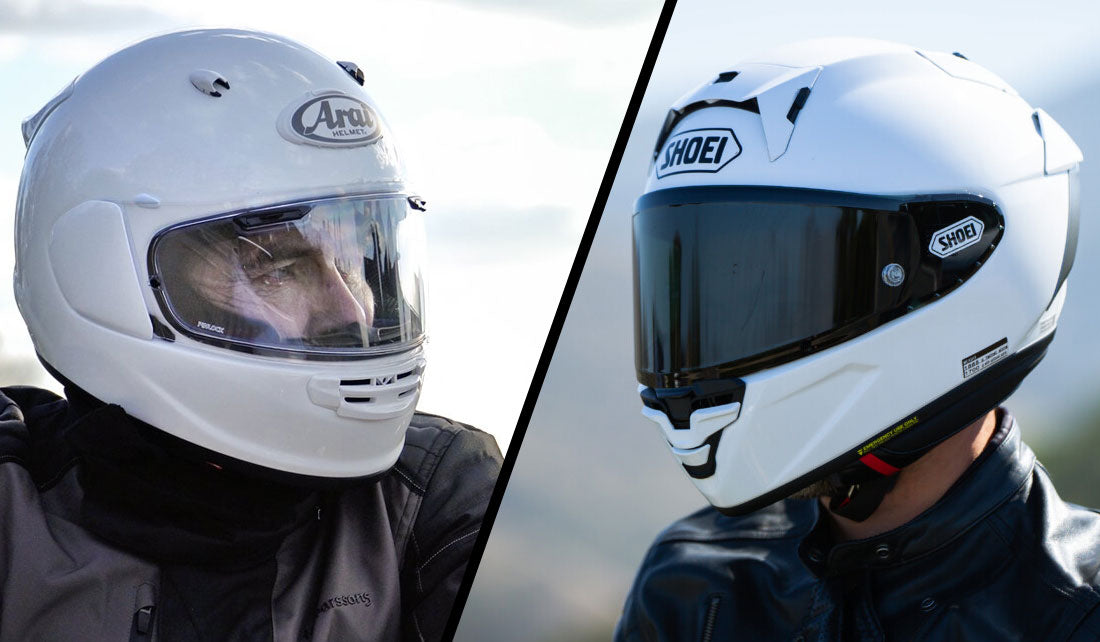
Shoei vs. Arai: Motorcycle Helmets Compared
Shoei and Arai stand out as two giants in the motorcycle helmet world. As leading helmet manufacturers, these brands have earned the trust of riders worldwide for their top-notch quality and safety standards. Both brands are Japanese helmet manufacturers with a long history—Arai was established in 1926 and Shoei in 1959.
Shoei’s story began in 1959 when Eitaro Kamata started making helmets in Japan. The company quickly gained fame for its racing focus. In 1965, Honda chose Shoei as its official race helmet, marking a big milestone.
Arai’s roots go back to 1926, when Hirotake Arai founded a hat-making company. They later shifted to making motorcycle helmets for personal use. Arai has since become known for its handmade craftsmanship and rigorous safety testing.
Both brands have a strong presence in professional racing. You’ll often see MotoGP and Formula 1 drivers sporting Arai or Shoei helmets on the track.
When you’re looking for a new helmet, Shoei and Arai are likely to be at the top of your list. They offer a comprehensive range of all the helmets for different riding styles and needs, ensuring there’s a model suited for every type of rider.
These two brands often compete for the top spot in motorcycle gear rankings. Compared to other brands like AGV, Bell, and Schuberth, Shoei and Arai are known for their premium craftsmanship, long-standing reputation, and advanced safety features, while other brands may differ in philosophy, ownership structure, or market focus. Their rivalry has pushed both to keep improving their designs and safety features over the years.
Introduction to Motorcycle Helmets
When it comes to motorcycle safety, the helmet is arguably the most important piece of gear a rider can own. A good helmet doesn’t just protect your head in the event of an accident—it can also enhance comfort, reduce fatigue, and boost your confidence on the road. With so many helmet manufacturers out there, finding the right fit can feel overwhelming. That’s where Arai and Shoei come in. Both Arai and Shoei helmets are renowned for their exceptional quality, advanced safety features, and reliable protection. These brands have set the standard for what a premium helmet should offer, consistently ranking among the top choices for riders who value both safety and comfort. In this article, we’ll explore what makes these two helmet manufacturers stand out, comparing their different models, features, and the technologies that help keep you safe every time you ride.
Helmet Models and Features
Arai and Shoei offer a diverse lineup of helmet models, each tailored to meet the needs of different riders and riding styles. Arai’s helmets tend to focus on maximum safety, featuring thicker, rounder shells designed to deflect and disperse impact forces. This approach helps reduce the risk of rotational injuries in a crash. Shoei helmets, meanwhile, put a strong emphasis on passive safety by maximizing rider comfort and minimizing distractions, which can help prevent accidents before they happen.
Popular Shoei helmets like the GT-Air, Neotec, and X-SPR Pro are known for their advanced ventilation, integrated sun visors, and lightweight construction. The Shoei Neotec, for example, is a very good helmet for riders with a long oval head shape, offering a snug and secure fit for all-day comfort. On the other hand, Arai’s Signet-Q and Tour-X5 are great helmets for those with a round oval head shape, providing a more tailored fit for different head profiles.
When choosing between Arai and Shoei, it’s important to consider your own head shape, riding style, and personal preference. Whether you’re looking for a helmet for daily commuting, long-distance touring, or track days, both brands offer models with features designed to enhance your riding experience—be it superior airflow, advanced visor systems, or customizable internal padding. Ultimately, the right helmet is the one that fits your head perfectly and matches your unique needs as a rider.
Design Philosophy and Aesthetics
Shoei and Arai take different approaches to lid design. Both brands focus on safety, but their philosophies diverge when it comes to other aspects, including the use of side plates as part of the helmet's construction.
Shoei emphasizes comfort and aerodynamics. They believe a comfortable rider is a safer rider. You’ll notice sleek lines and modern styling in their lids. Shoei helmets are also designed to be customizable for a better fit, with options for cheek pads and headliners, which can really matter for riders seeking a tailored feel.
Arai, on the other hand, prioritizes impact protection above all else. Their lids often have a rounder shape. This design helps spread impact forces more evenly. Arai's design philosophy includes the concept of helmets that 'glance off' surfaces to reduce rotational forces during impacts, which can matter significantly in real-world crashes. Additionally, Arai helmets tend to have a thicker shell, making them more resistant to cracking and penetration.
In terms of looks, Shoei helmets tend to have a sportier appearance. You’ll see sharp angles and aggressive styling, especially in their racing models.
Arai helmets usually have a more classic look. Their designs are simpler, focusing on function over flashy aesthetics.
When comparing arai vs other brands like Bell and Shoei, Arai's fit and shell shape are often preferred by riders with long oval heads, while Shoei and Bell may suit different head shapes and preferences.
Both brands offer customization options. You can choose from various colors and graphics to suit your style.
When it comes to ventilation, Shoei often uses larger vents. Arai prefers smaller, more numerous vents. Both aim to keep you cool, but through different methods.
The visor systems also differ. Shoei’s tend to be easier to change, while Arai’s are designed for maximum safety in crashes, with attention to details like side plates and shield mechanisms.
In the end, your choice may come down to personal preference. Do you value sleek looks or traditional design? Do you prefer easier customization or a focus on pure safety?
Shell Construction and Materials
The construction and materials of a helmet’s shell play a crucial role in its ability to protect you on the road. Both Arai and Shoei use proprietary multi-layer fiberglass construction to create strong, lightweight shells that meet the highest safety standards. Arai’s approach is rooted in tradition, with each shell handcrafted individually to ensure meticulous quality control. Shoei, on the other hand, utilizes advanced manufacturing techniques to produce consistently high-quality shells with precise tolerances.
Shell size and shape also impact a helmet’s aerodynamics, wind noise, and overall comfort. For instance, the Shoei GT-Air features a compact shell design that helps reduce wind noise and improve airflow, making it a good helmet for riders who value a quiet, comfortable ride. In contrast, the Arai Tour-X5 has a slightly larger shell, offering increased protection but potentially allowing for a bit more wind noise.
When selecting a new helmet, it’s important to consider not just the materials used, but also the design and fit of the shell. Both Arai and Shoei offer different shell sizes and shapes to accommodate a wide range of head profiles, ensuring that you get the best possible fit and protection. Whether you prioritize a lightweight feel, reduced noise levels, or maximum impact resistance, both brands deliver premium helmet options that excel in safety, comfort, and style.
Safety Standards and Testing
Shoei and Arai both take helmet safety very seriously. They meet strict standards set by organizations around the world.
These brands comply with DOT (Department of Transportation) requirements in the USA. They also pass ECE (Economic Commission for Europe) tests in Europe.
Many Shoei and Arai helmets earn Snell certification too. Snell is known for its rigorous testing methods.
Both companies go beyond the minimum requirements. They conduct their own tests to make sure their helmets are top-notch.
Shoei uses a special wind tunnel to check aerodynamics. This helps them design helmets that work well at high speeds.
Arai puts its helmets through multiple impact tests. They drop the helmets onto different shaped anvils to simulate various crash scenarios.
For internal safety, Arai helmets typically feature a single-piece EPS liner with varying densities to handle different impact conditions. Shoei helmets utilize a dual-layer, multi-density EPS liner designed to absorb impact energy and reduce rotational forces. Both brands use proprietary shell construction methods that involve multiple layers of fiberglass for enhanced protection.
You can trust that both brands take your safety seriously. Their helmets undergo extensive testing before hitting the market.
When you buy a Shoei or Arai helmet, you’re getting gear that has passed numerous safety checks. This gives you peace of mind on the road.
Comfort and Fit
Shoei and Arai both prioritize comfort and fit in their helmet designs, with attention to high-quality internal parts and advanced liner construction. Both brands use moisture-wicking materials to keep you cool and dry, and their liners are engineered for optimal impact absorption and comfort.
Ventilation is key for comfort on long rides. Shoei helmets often feature more vents, giving you better airflow. Arai takes a different approach, focusing on fewer but strategically placed vents.
Head shape matters when choosing a helmet. Arai offers three distinct internal head shapes—round oval, intermediate oval, and long oval—giving riders a wider variety of options for a perfect fit. Shoei, on the other hand, primarily offers an intermediate oval head shape, which fits 75-85% of American riders.
Arai provides a significant range of internal liner and cheek pad options for customization, and their helmets are known for plush interiors that enhance comfort. Shoei helmets are designed to be customizable as well, with removable internal parts and cheek pads to help you achieve a better fit, which improves comfort during wear.
Personally, I find that Arai’s plush interior makes it exceptionally comfortable for long trips, and the variety of head shapes really helps with fit. One user said, “My Arai feels like it was made just for me.” Others prefer Shoei, with comments like, “The ventilation in my Shoei keeps me cool all day.”
Both brands offer different shell sizes for each model. This ensures a proportional look and fit across all helmet sizes.
Remember to try on both brands. What feels comfortable to one rider may not work for another. Take your time to find the right fit for your head shape and riding style, as the wear experience can be quite personal.
Performance in Different Riding Conditions
Shoei and Arai helmets both excel in various riding conditions. At high speeds, you’ll find both brands offer excellent stability and aerodynamics.
Arai helmets tend to have slightly better wind noise reduction. This can make a big difference on long rides or when traveling at higher speeds.
Shoei helmets often have an edge in extreme weather. Their ventilation systems typically provide better air flow, with active, high-volume airflow that helps you stay cool in hot conditions. Arai's ventilation is effective but less adjustable, so Shoei often leads in overall ventilation performance, especially for hot-weather racing.
For long-distance touring, comfort becomes key. Shoei helmets are generally lighter than equivalent Arai models, which helps reduce neck strain. Shoei is often seen as more accommodating for long rides due to their focus on comfort and reduced fatigue, while Arai’s multiple shell shapes may give you a more customized fit.
Visor technology is crucial in changing light conditions. Shoei is praised for precise shield mechanisms and ease of shield changes, offering tool-free visor changes and integrated drop-down sun visors (sun visor) on some models, which Arai generally avoids. Arai's visor changes are more complex due to its VAS (Variable Axis System) and they stick with external visors only, so you may need to carry an extra shield.
When choosing a helmet for your bike, consider how features like sun visor, ventilation, and weight match your riding style—whether you ride a sportbike, adventure bike, or cruiser. It's important to try different helmets to find the best fit and comfort for your specific riding conditions.
Both brands use high-quality face shields with good optical clarity. This helps you see clearly in various lighting and weather situations.
In rain, both Shoei and Arai visors perform well. They use effective water-shedding designs to maintain visibility.
Price and Value for Money
Shoei and Arai helmets are known for their high prices, reflecting their premium status. Both brands are recognized for high-quality construction and advanced safety features, which justifies their premium prices.
Shoei’s cheapest full-face helmet, the RF-SR, costs about $480. Arai’s least expensive option, the Defiant-X, is priced around $578. This shows Arai’s slightly higher starting point.
At the top end, both brands can reach prices over $900. These premium models often include advanced features and materials.
The price difference between Shoei and Arai isn’t huge. But is it worth it? In the opinion of many riders, Shoei helmets are generally considered to offer better value for money compared to Arai. Both brands use high-quality materials and strict testing.
You’re paying for safety, comfort, and durability. These helmets often last longer than cheaper options. This can make them a good value over time.
Arai offers more options for customizing fit. This might justify their slightly higher prices for some riders.
In the end, both brands provide excellent helmets. Your choice may come down to which fits your head shape best. Try on both at a store to see which feels right for you.
Remember, a helmet that fits well is worth the investment. It can make long rides more comfortable and keep you safer on the road.
Customer Reviews and Brand Loyalty
Shoei and Arai both have passionate fans who swear by their helmets. Many riders stick with one brand for years, praising the comfort and quality. Both brands are premium-priced, reflecting their commitment to safety and innovation in helmet design.
Shoei users often mention the snug fit and quiet ride. You’ll see comments about how well-ventilated and lightweight their helmets feel, even on long trips, and how comfortable they are to wear for extended periods.
Arai loyalists frequently highlight the brand’s handmade craftsmanship. They appreciate the attention to detail and the helmet’s ability to conform to different head shapes over time, making them comfortable to wear for a variety of riders.
On forums, you’ll notice heated debates about which brand is superior. Some riders claim Shoei offers better value, while others insist Arai’s premium price is justified by its quality.
Both companies earn praise for their safety standards and innovative features. Customers often mention feeling secure and protected in either brand.
Some riders switch between the two brands, noting that each has its strengths. Personally, I found that trying both brands helped me decide which helmet felt best to wear on longer rides. They suggest trying on both to find your perfect fit.
Brand loyalty often stems from positive experiences with customer service or how a helmet performed in a crash. These personal stories strongly influence other riders’ choices.
Remember, the best helmet is the one that fits you properly and meets your specific needs. Don’t be swayed solely by brand reputation - try on different helmets and models to find your ideal match.
Conclusion: Which Helmet is Right for You?
Both Shoei and Arai make excellent motorcycle helmets. Arai's helmets tend to have thicker shells that are more resistant to cracking and penetration, while Shoei helmets are designed to be customizable for a better fit, enhancing comfort during rides. Your choice depends on your specific needs and preferences.
If you have an oval-shaped head, Arai offers more options. They produce helmets in long oval, round oval, and intermediate oval shapes.
Shoei helmets tend to have a more snug fit overall. This can be great for reducing wind noise and movement at high speeds.
Consider your riding style. Do you do mostly city riding or long highway trips? This can impact which features are most important to you.
Try on both brands if possible. Comfort is key for long rides and safety.
Think about your budget. Both brands are premium options, but prices can vary between models.
Look at the ventilation systems. Some riders prefer more airflow, while others want less wind noise.
Check out the visors and face shields. Make sure they’re easy to change and offer good visibility.
In the end, the best helmet is the one that fits you perfectly and meets your specific needs. Personally, I recommend trying both brands to see which feels best for you. Take your time, do your research, and choose the helmet that feels right for you.
- Choosing a selection results in a full page refresh.