
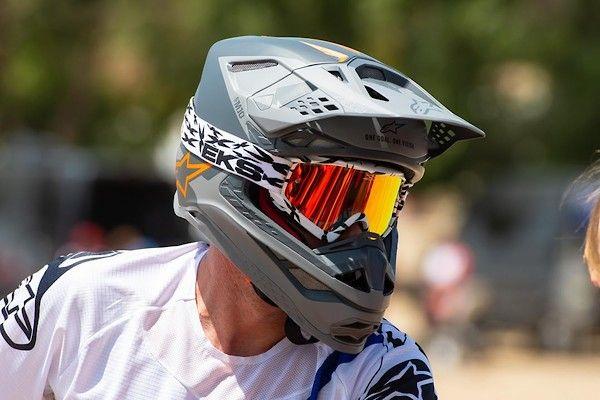
5 Best Off-road Helmets for UTV and MX
If you’re a UTV or off-road rider, wearing a helmet is one of the most important steps you can take to protect yourself on the trail. The right helmet not only adds a crucial layer of protection to your head, reducing the risk of head and brain injuries, but also ensures comfort and confidence during every ride. In this guide, we’ll help you find the best UTV helmets for your needs, focusing on top picks and a comprehensive buying guide tailored specifically for UTV and off-road enthusiasts.
Choosing the right helmet matters for both safety and comfort. The best UTV helmets are typically full-face or dual-sport types with excellent ventilation and motocross-style designs, offering superior protection and airflow for demanding off-road conditions. Our recommendations focus on helmets suitable for UTV and off-road use, so you can ride with peace of mind knowing you’re well-protected.
Before we dive into our top picks, let’s look at what makes a helmet great for off-road and UTV riding.
Types of Helmets for UTV and Off-Road Riding
There are various types of helmets suitable for UTV riding, including full-face, open-face, and dual-sport helmets. Here’s what you need to know about each type:
-
Full-Face Helmets: These provide the most protection for the head and face during off-road riding. They cover the entire head, including the chin and jaw, making them the safest option for UTV and aggressive off-road use.
-
Open-Face Helmets: Open-face helmets are lighter and provide better ventilation but offer less protection compared to full-face helmets. They leave the face exposed, which can be a drawback in rough terrain or in the event of a crash.
-
Dual-Sport Helmets: Dual-sport helmets combine features of both full-face and open-face helmets, allowing for versatility in different riding conditions. They typically have a sun peak, a large eye port for goggles, and a face shield, making them ideal for riders who switch between on-road and off-road environments.
The best UTV helmets are typically full-face or dual-sport types with excellent ventilation and motocross-style designs, as these offer the best balance of protection, airflow, and comfort for off-road adventures.
How to Choose an Adventure Bike Helmet
When choosing an off-road helmet, it’s important to know what features and qualities to look for. Below we break down the key factors you should consider before buying.
Fit and Comfort
Fit and comfort should be your top priority. No matter how feature-packed a helmet is, it’s not the right choice if it doesn’t fit your head properly. A good ADV helmet needs to feel snug all around without being painfully tight. There should be no pressure points, and it shouldn’t wobble or move when you shake your head.
We recommend trying on as many helmets as possible because each brand may suit a different head shape. The right fit not only maximizes safety, it also ensures you’ll be comfortable wearing it for hours on end—which is crucial for adventure rides.
Safety
Safety is paramount when it comes to any helmet. Always check that an adventure helmet meets recognized safety standards for your region—such as DOT certification for the US, ECE for Europe, or Snell for additional peace of mind. Safety certifications like ECE and Snell indicate higher safety standards for helmets.
Avoid ultra-cheap, uncertified helmets from questionable sources, as they may not protect you when it counts. It’s also worth looking at the helmet’s construction and safety tech. High-quality shells made from fiberglass composite or carbon fiber tend to be lighter and disperse impact energy better than basic polycarbonate shells.
Many modern helmets incorporate advanced features like MIPS (Multi-directional Impact Protection System), which helps reduce rotational brain injuries during angled impacts. In addition, check for details such as a secure chinstrap (D-ring fasteners are the gold standard) and emergency quick-release cheek pads, which can be invaluable in an accident.
Ventilation
Adventure riding often involves tough terrain and warm weather, so ventilation is very important. A good adventure helmet will have a well-designed ventilation system to keep you cool and prevent sweat build-up.
Look for multiple air intakes on the chin and forehead, plus exhaust vents to let hot air escape out the back. The vents should be easy to open and close (even with gloves on), allowing you to adjust airflow as conditions change. Effective ventilation will help you stay focused and comfortable during slow off-road sections and hot summer rides alike.
Weight
Weight might not be the first thing you think of, but it makes a big difference over long rides. Even small weight differences (measured in grams) can add up in terms of neck fatigue.
In general, dual-sport helmets that lean toward touring (especially modular or feature-rich models) tend to be heavier, while those derived from off-road (motocross-style) designs are often very lightweight. Remember that a lighter helmet will put less strain on your neck and shoulders—a huge benefit on long days or when riding rough terrain where you’re moving your head around a lot.
Don’t sacrifice safety, but do opt for the lightest helmet that still meets your needs and budget, so you’ll be less fatigued after a full day’s adventure.
Visors, Goggles and Peaks
One big advantage of adventure helmets is their versatility with eye protection. Most ADV helmets are built to accommodate both a full face visor (clear shield) and goggles.
Some models come with a visor installed but have enough room that you can flip it up and wear off-road goggles underneath; others even let you remove the face shield entirely and use goggles exclusively. Which setup is best for you depends on your riding: if you’re frequently in dusty, off-road conditions, goggles are invaluable for keeping dirt out of your eyes. If you’re mostly riding on the street or in the rain, a visor is convenient—just make sure the visor is Pinlock-ready (or includes an anti-fog insert) to prevent fogging in cold or wet weather.
Nearly all adventure helmets also feature a peak (the small brim on top of the helmet). This peak comes straight from the off-road world—it’s there to block sun glare and to deflect debris or mud kicked up by vehicles in front of you. A good peak can be a lifesaver when you’re riding toward a low sun or through branches on a trail.
However, at high speeds it can catch the wind, so many helmets have removable or adjustable peaks. Look for a helmet with a sturdy, well-designed peak mechanism that lets you take it off or tweak the angle, especially if you plan to switch between highway and trail riding often. The bottom line is that an adventure helmet gives you options: visor, goggles, and peak—use the combination that best suits the day’s ride.
Noise
Because of their shape and features, adventure helmets can be a bit noisier than streamlined street helmets. The large sun peak and more open design (e.g. vented chin bar) may catch the wind and create extra noise or even some buffeting at highway speeds.
Premium ADV helmets have improved aerodynamics to reduce this, but as a rule, dual-sport helmets still aren’t as whisper-quiet as dedicated touring road helmets. On the flip side, they are generally quieter than pure motocross helmets, since they have full visors and better padding/seals around the ears and neck.
If a quiet ride is important to you, pay attention to design details that curb noise: an aerodynamic shell shape, a well-sealed visor, and a snug neck roll can all help limit wind roar. Even then, many adventure riders simply use earplugs on long highway stretches—it’s a simple fix that significantly cuts down wind noise and reduces fatigue.
Flip-ups
“Flip-up” off-road helmets (also known as modular helmets) are those that have a hinge to lift up the entire chin bar and visor section. These can be a great choice for adventure-touring riders who value convenience.
A flip-up off-road helmet leans more toward the touring side in terms of weight and features, but it pays off when you’re covering long distances. Being able to flip open the chin bar at a gas station, at a checkpoint, or when talking to locals in a remote village is extremely handy—you can grab a drink or have a conversation without removing your whole helmet.
This is especially nice in hot weather or when you’re frequently stopping and starting. Many seasoned travelers swear by modular helmets for the flexibility they offer on big trips. Just remember that a good flip-up should have a secure locking mechanism and solid construction when closed, so it still provides reliable protection during your ride (most quality modular helmets are tested to the same standards as full-face helmets).
Additional Features
There are plenty of extra features and options that you might want to look for in an adventure helmet, depending on your needs:
-
Integrated Sun Visor: Some ADV helmets include a drop-down tinted sun visor inside. This is a great feature if you frequently ride in bright conditions and your helmet’s design doesn’t easily allow using goggles with a tinted lens. A built-in sun shade lets you quickly adapt to glare without swapping eyewear.
-
Bluetooth Compatibility: If you ride with a passenger or in groups, or you love listening to music/GPS, check if the helmet has built-in Bluetooth or at least cavities for speakers. Many adventure helmets are designed to accommodate communication systems so you can stay connected on the road.
-
Removable/Washable Liner: Riding off-road can be sweaty work. Almost all good helmets have removable interior liners and cheek pads, but consider how easy they are to take out and wash. Being able to clean or replace the padding will keep your helmet fresh, reduce odors, and maintain comfort on long adventures.
-
Chin Strap Type: Pay attention to the chin strap buckle system—typically either the traditional double D-ring or a quick-release ratchet type. This comes down to personal preference: D-rings are very secure and standard for racing, while micrometric ratchet straps are faster to buckle/unbuckle. Choose the style you prefer so that securing your helmet is never a hassle.
By considering all of the above factors—from getting the fit right to deciding on visors vs. goggles and other features—you’ll be well on your way to choosing the perfect adventure bike helmet.
Now that you know what to look for, here are our top choices for off-road helmets.
5 Best Off-road Helmets for UTV and MX
Below are our top picks for the best UTV and off-road helmets, focusing on models that offer excellent protection, ventilation, and comfort. The table summarizes key features for quick comparison.
|
Helmet |
Certifications |
Ventilation |
Liner Features |
|---|---|---|---|
|
Fox V3 Dirt Bike Helmet |
ECE 22.05, DOT |
12+ vents |
Removable, washable |
|
Shoei VFX-EVO |
DOT, SNELL |
12+ vents |
Emergency quick release, removable |
|
Arai VX Pro 4 |
DOT, SNELL |
Good ventilation |
Dry-cool liner, removable |
|
Bell Moto-9 Carbon Flex |
DOT, SNELL |
Velocity Flow Ventilation, adjustable vents |
X-Static XT-2 Silver Liner, removable, antimicrobial |
|
Alpinestars M10 Helmet |
ECE, DOT |
20+ vents |
Antibacterial, removable, emergency cheek pad removal |
Fox V3 Dirt Bike Helmet

Fox is definitely a fan favorite and their V3 Dirt Bike Helmet is no exception. Not only do these helmets look cool, but they have some pretty cool technology as well. These helmets have their Multi-Directional Impact Protection System, or MIPS, which helps protect the wearer's head during an angled impact. This is a key feature for a helmet because most impacts do not happen straight on.
The helmet also has an EPS liner, which maximizes the impact absorption of the helmet, which in turn maximizes the wearer's head protection during an impact. Another cool technology that this helmet has is the visor release system. During an impact, the visor will effortlessly detach, which can reduce additional injuries to the wearer.
On top of all this, the helmet has well over 12 vents, which makes the airflow and ability to stay cool fantastic. Additionally, it has exceeded the ECE 22.05 and DOT certifications.
Shoei VFX-EVO

Although the Shoei VFX-W reigned as Shoei's best for a long time, its reign has since passed and the VFX-EVO has taken its place. The VFX-EVO has a Motion Energy Distribution System, or M.E.D.S., which helps reduce the rotational acceleration to the wearer's head during an impact. This new system still has the lightweight and impact-absorbing power of their well-known EPS system.
The helmet also has a Multi-Ply Matrix AIM + shell which is their strongest and lightest shell yet. It has hand-laid layers of fiberglass and is DOT and SNELL approved. This helmet also has well over 12 vents, an advanced mouthpiece, large eye port, chin bar EPS, and an emergency quick release system, or E.Q.R.S.. The E.Q.R.S. is a great feature which makes the helmet extremely safe and easy to remove from the wearer in the event of an injury.
Arai VX Pro 4

The Arai VX Pro 4 is a fantastic helmet with a unique fit. Arai offers a diverse selection of interior fit shapes which helps cater to the various shapes and sizes of the wearer's head. This is key to not only the optimal fit of the helmet, but to the optimal comfort as well.
This helmet is DOT and SNELL approved, has a good ventilation system, and also has a dry-cool liner interior which allows it to dry significantly faster than other fabrics. Another neat feature of this helmet is that it is not made of the typical fiberglass, in fact, it is made of Super Fiber, which increases its strength and resistance with its complex Laminate construction, or cLc. The Arai helmets “egg-shape” is part of their “glance off” technology which helps avoid sending the impact energy straight into the helmet.
Bell Moto-9 Carbon Flex

The Bell Moto-9 Carbon Flex is an impressive helmet from Bell. Their Progressive Layering Technology, which has the ability to manage energy from low, mid, and high impact scenarios actually exceeds the DOT and SNELL safety standards. This technology is made of Expanded Polyolefin which works with Expanded Polypropylene and Traditional Expanded Polystyrene.
The shell is lightweight carbon composition, which is extremely strong and provides a high level of protection. The helmet also has a Velocity Flow Ventilation System, or VFV, and adjustable FlowAdjust vents. The X-Static XT-2 Silver Liner Extended Wear Interior, which is antimicrobial fabric is removable for easy washing and the chin bar is EPS lined and ventilated.
Alpinestars M10 Helmet

Alpinestars M10 helmet is carbon fiber and has a unique flat design to help reduce energy during impacts. This helmet also has an inner EPS liner and a safety feature of MIPS which helps protect the wearer from various types of impacts.
There are well over 20 different vents on this helmet, so airflow is no problem. Along with this, the antibacterial liner is also removable and washable. The M10 helmet is ECE and DOT certified and also has an emergency cheek pad removal system, which is helpful to someone that may be needing to remove the helmet from the wearer during an impact or emergency.
Protecting Your Ride: Cambuckle Tie-Down Straps for Dirt Bikes
Safety for you on your UTV or MX bike is of utmost importance, however, safety for your ride is also important. When transporting your prized UTV or dirt bike from one location to another, you always want to ensure that you are using the strongest, most suitable, and durable tie-downs on the market. Rhino USA is the gold standard in strap technology, whether you are looking to tie down your UTV with a wheel chock tie down kit or your MX bike with cambuckle straps. Check out our online store today!

- Choosing a selection results in a full page refresh.