


Showing You The Ropes: Recovery Strap VS Tow Strap
What is the difference? Here is all you need to know.
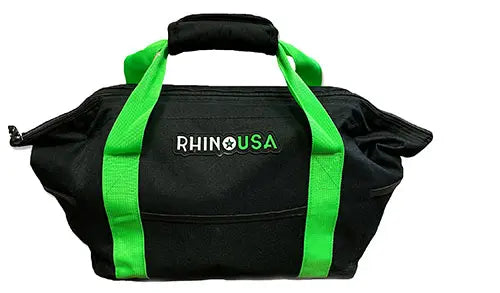
If you drive off-road frequently, or if you live in an area that’s often associated with terrain or old roads that aren’t really maintained frequently, tow straps and recovery straps would certainly be an essential piece of equipment in your kit. In fact, they might very well end up becoming one of the most important items to carry with you at all times, because they could help you get out of a nasty situation like virtually no other tool out there. A good recovery kit should include a lightweight carry bag to fit your shackles and other recovery gear. Keep reading in order to learn more!
Tow & Recovery: what is the difference between these two strap types?
I am sure that you’ve heard of both recovery and tow straps. Most people seem to think that there is no difference between the two, but others are aware that there is actually a difference between tow straps and recovery straps.
Admittedly, they do share many things in common, but they are also quite different in so many ways. There are distinct differences between tow straps and recovery straps, including their materials, stretch properties, and intended uses. For starters, the purpose is very different. As the name might imply, a recovery strap is strong enough to “recover” a vehicle from a tough spot, for example pulling out a truck from a muddy bank. On the other hand, tow straps are excellent at towing vehicles, but not at recovering them! Tow straps are, as the name suggests, designed for towing. They will work well if you need to tow a vehicle along, but they might break if you try to pull out or recover a vehicle that’s somehow stuck somewhere. Using the wrong strap for recovery can be dangerous. Tow straps have a very specific construction design, which relies on metal hooks or a hook located at their end points. Never use a tow strap with metal hooks for recovery, as the hook can break and become a dangerous projectile. Recovering stuck vehicles might actually require a lot of strain and pressure. For this reason, it is better not to use tow straps for this particular application. These straps might actually fly off if there is too much pressure or tension on them, and they might even injure people that stand nearby if the strap broke. If recovery equipment breaks, people can be injured by the projectile or struck by an out-of-control vehicle. It is important to understand that tow straps should be used for their purpose only, and the best way to utilize them is to indeed attach them to tow hooks.
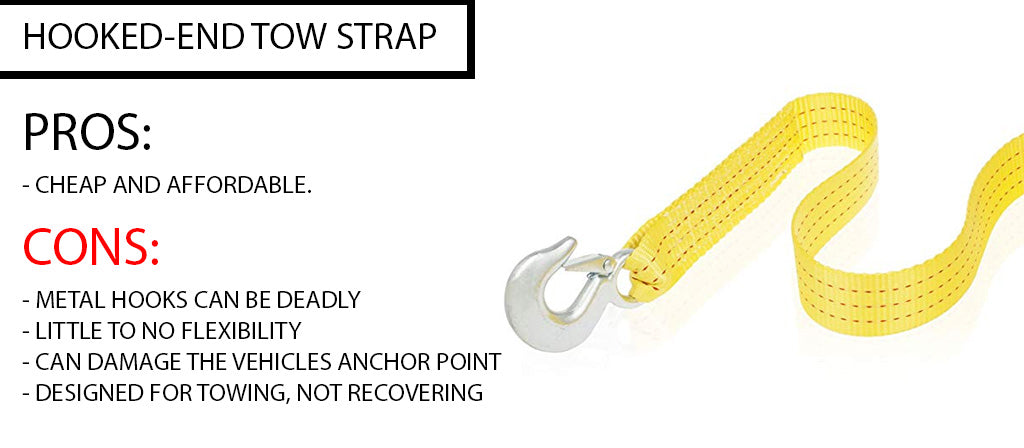
On a side note, tow hooks should not be attached to recovery straps, because they could actually damage the vehicle itself and worsen the situation. What makes recovery straps different and better for pulling out vehicles? Well, they are designed in such a way that they aren’t that vulnerable to extreme tension. For instance, their round slings with loop ends do not have any metal pieces attached to them, and as such, they are infinitely more flexible.
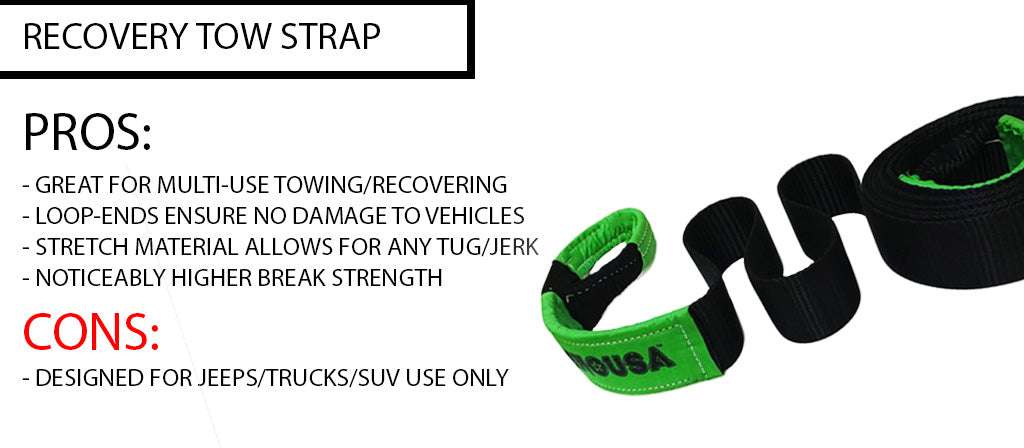
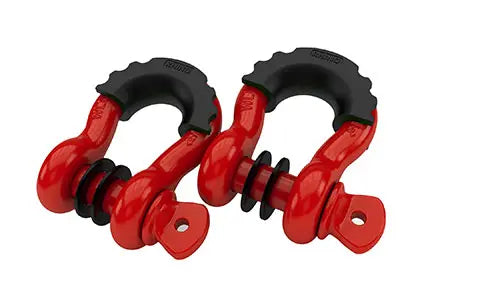
Recovery straps can actually also be used as tow straps as well, unlike tow straps which won’t work for recovery application. So you might actually consider using a recovery strap for both purposes, without worrying too much about possible issues or consequences! While recovery straps can be used for towing, they are a bit more stretchable, and therefore, not as easy to control on the road. In the optimal scenario, you would have towing and recovery straps ready to be used if needed, because each strap design is actually optimized for its specific function. When using a recovery strap to get a stuck vehicle free, ensure that it is hooked up correctly using a soft shackle, d-ring shackle, or shackle hitch receiver. Use rated recovery points (shackles) for both recovery and tow straps, avoiding attachment to a trailer ball, bumper, or steering component. Always keep spectators or anyone not directly involved in the recovery away from the area to prevent injury if something goes wrong.
In a recovery scenario, the pulling vehicle or recovery vehicle works together with other vehicles to assist a stuck driver. Proper coordination and safety measures are essential for a successful and safe recovery.
Introduction to Off Road Recovery
Venturing off the beaten path is all about adventure, but it also comes with the real possibility of getting stuck in mud, sand, snow, or rocky terrain. That’s where off-road recovery comes into play—a vital skill set for anyone who loves exploring trails in their truck, SUV, or ATV. The right recovery gear can mean the difference between a quick rescue and a long, frustrating wait for help.
At the heart of any recovery kit are the essential tools: the tow strap, recovery strap, snatch strap, and kinetic rope. Each plays a unique role in vehicle recovery. A tow strap is designed for steady, controlled towing, while a recovery strap—sometimes called a snatch strap—uses kinetic energy to help yank a stuck vehicle free with a running start. Kinetic recovery straps and ropes act like a giant rubber band, stretching to store energy and then releasing it smoothly to pull a vehicle out of trouble. This dynamic action reduces the risk of vehicle damage and makes for a safer, more effective recovery.
When assembling your recovery kit, it’s crucial to pay attention to the working load limit (WLL) of each strap and rope. The WLL should be at least two to three times the weight of your vehicle to ensure safe operation. Materials matter, too: a polyester strap, like a Rhino strap, offers less stretch and is ideal for short, controlled pulls, while a nylon strap, such as the ARB snatch strap, provides more elasticity for dynamic recoveries. While it might be tempting to use a homemade or bubba rope, these can be unreliable and even dangerous, so always opt for purpose-built recovery gear.
Don’t forget the supporting cast—soft shackles, D-rings, winch cables, and tree savers all play important roles in off road recovery. The weakest point in any recovery setup is often the sewn loops at the ends of straps, so make sure they’re reinforced and inspect them regularly for wear. Using the right equipment and techniques, like attaching to proper recovery points and avoiding sharp jerks, helps prevent vehicle damage and keeps everyone safe.
Ultimately, mastering off-road recovery is about preparation and practice. By understanding the difference between a tow strap and a recovery strap, knowing when to use a kinetic rope, and always following safety protocols, you’ll be ready to tackle any stuck situation with confidence. Whether you’re facing deep mud, loose sand, or snowy trails, having the best snatch strap and recovery gear on hand ensures you can get back on the trail—and keep the adventure going.
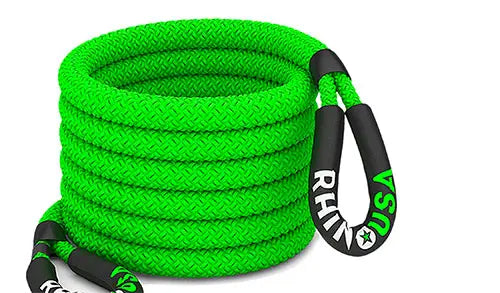
Link To Product: Rhino USA Recovery Tow Strap
Understanding Load Capacity: Recovery Strap vs Tow Strap
When it comes to choosing the right tool for your off-road adventures, understanding load capacity is paramount. Both recovery straps and tow straps have specific weight limits that dictate their safe and efficient use. The 'breaking strength' of a strap refers to the maximum load it can handle before failure, and it's important to note that the weakest point is often the sewn loops, not the webbing itself. Let’s break down this crucial aspect to help you make an informed decision:
Recovery Strap Load Capacity: The Power of Stretch
Recovery straps are engineered with elastic properties to handle sudden jolts and pulls. Their load capacity is often rated based on the maximum force they can withstand while stretched, and this stored energy helps absorb shock during recovery. It’s crucial to choose a recovery strap with a load capacity that surpasses the weight of the vehicles involved in the recovery operation. This ensures the strap can absorb the shock of sudden tugs without snapping or breaking. For example, the Big Brute Recovery Strap has a lab tested break strength of 24,200 lbs and comes with a lightweight carry bag, making it a reliable choice for demanding recoveries.
Tow Strap Load Capacity: Steady and Solid
Tow straps, on the other hand, are designed for steady towing without the stretch characteristic of recovery straps. The load capacity of a tow strap is typically specified as its maximum straight-line pull strength. When choosing a tow strap, consider the combined weight of the vehicles being towed to ensure the strap can handle the load safely and efficiently. A good tow strap is typically made of 100% polyester or polypropylene, which provides strength and minimal stretch, making them suitable for static recoveries.
Recovery straps do not have hooks at each end. This is because they are actually not designed specifically to tow, but to actually assist with extraction, giving the vehicle a minor running start to facilitate the project. This is quite important because harder jerking motions during the extraction of a stuck vehicle could actually lead to some vehicle issues. For instance, it might be possible to cause damage to it or other equipment.
On the other hand, kinetic recovery ropes—also called recovery ropes—are specifically designed to facilitate smaller adjustments, meaning that a strong, yet extremely controllable tug action can actually minimize recoil. This is possible due to the elastic stretchiness of these ropes, which are specifically designed to store the kinetic energy of tugging. In other words, they absorb the impact of motion, so it doesn’t affect the vehicles in a big way, making for a milder impact. Once fully stretched, the strap will indeed strive to return to its regular length, imparting its kinetic energy in a very controlled manner, to the vehicle that is being towed. This minimizes jerking motion, as well as enhancing the safe application of the process. Think of it as a big rubber band, stretching. It wants to get back to its original state! Dynamic recovery straps, such as snatch straps, are designed to stretch and store kinetic energy, making them effective for pulling vehicles out of difficult situations. When using a kinetic rope, it makes sense to start with a gentle pull first before applying more force, and you should keep slack on the rope before pulling.
Tow and recovery straps are usually made with a wide variety of materials, most commonly using nylon and polyester. In fact, you could definitely state that the absolutely most significant difference between a tow strap and a recovery strap lies in the flexibility of the fabric used. Tow straps are typically made of non-stretching materials such as 100% polyester or polypropylene, while recovery straps are usually made of nylon, which allows them to stretch and absorb kinetic energy during dynamic recoveries. The reason why these materials are so popular is that they are quite flexible and stretchable. Towing, pulling, and recovering vehicles requires a certain amount of flexibility and stretch, not only to prevent damage, but also to facilitate the process as a whole. Rhino USA off-road recovery straps are made of an 80% polyester and 20% silk blend, designed to be used as both tow straps and recovery straps for various recovery purposes. The Bubba Rope Renegade Kinetic Rope is available in 20 or 30 foot lengths and offers a stretch of 30% to 35%, providing excellent elasticity for tough recoveries. ARB is known for supplying high quality recovery gear, making their snatch strap a reliable choice for off-road recovery.
Our recovery / tow straps are designed to be used for both recovery and towing. The poly/silk fabrication is much stronger so it’s ideal for recovery uses and the loops or “eyes” offer more flexibility than traditional straps that have hooks already attached. Rhino USA recovery straps are lab tested and have a best-in-class pull rating, capable of up to a 40,320lb break strength.
When using a static strap, all slack should be removed between the vehicles before the pull is attempted, and the tow vehicle should slowly creep forward until the tow strap is taut. The driver of the stuck vehicle should be in the driver's seat during the recovery unless it is too dangerous. After use, recovery straps should be cleaned with water to remove sand or dirt, which can degrade fibers. Once a strap develops a cut or abrasion, it must be replaced, even if it happens on first use, to ensure safety. Recovery straps should not be used on concrete, as the stretch can snap back dangerously. A recovery kit should include both a tow strap for static recoveries and a recovery strap for dynamic recoveries.
Traction and tires play a crucial role in recovery scenarios, as proper grip can make the difference between a successful recovery and getting stuck further. In more complex recoveries, additional equipment like winch extensions, tree savers, steel cable, and cable are often used to safely extract vehicles. Managing slack, understanding stored energy, and using the right gear for the right recovery purposes all contribute to a safer and more effective recovery process. Following these best practices just makes sense.
In conclusion, the most important thing to consider when working with tow straps and recovery straps is to gain an accurate understanding of what you are exactly dealing with, so you can use the right strap, the right way for the right situation. Using these straps improperly is not only bad for your vehicles, but it can of course also damage the straps themselves, resulting in a necessary waste of money and resources! Make sure to check out our top-rated recovery gear backed by a lifetime warranty, so you never have to buy twice!

FAQ's
How size recovery tow strap do I need?
Rhino USA’s recovery tow straps come in three different sizes: 2” x 20’, 3” x 20’, 4” x 30’. For most recovery situation involving a 4x4, Jeep, car, truck, or similar, the 3” x 20’ strap is more than capable, with a break strength over 31,000lbs. For recovering anything larger or heavier than a truck or Jeep, we recommend purchasing the 4” x 30’ recovery two strap, with a break strength over 40,000lbs.
The breaking strength refers to the maximum force the strap can withstand before failure, and it is determined by the weakest part of the strap, such as the webbing or sewn loops. Always inspect your strap before use—if it develops a cut or is abraded, it must be replaced immediately, even if it happens on first use. Using the correct size and type of strap for your vehicle and recovery scenario is essential for safety.
- Choosing a selection results in a full page refresh.