


What Does JK Mean For a Jeep?
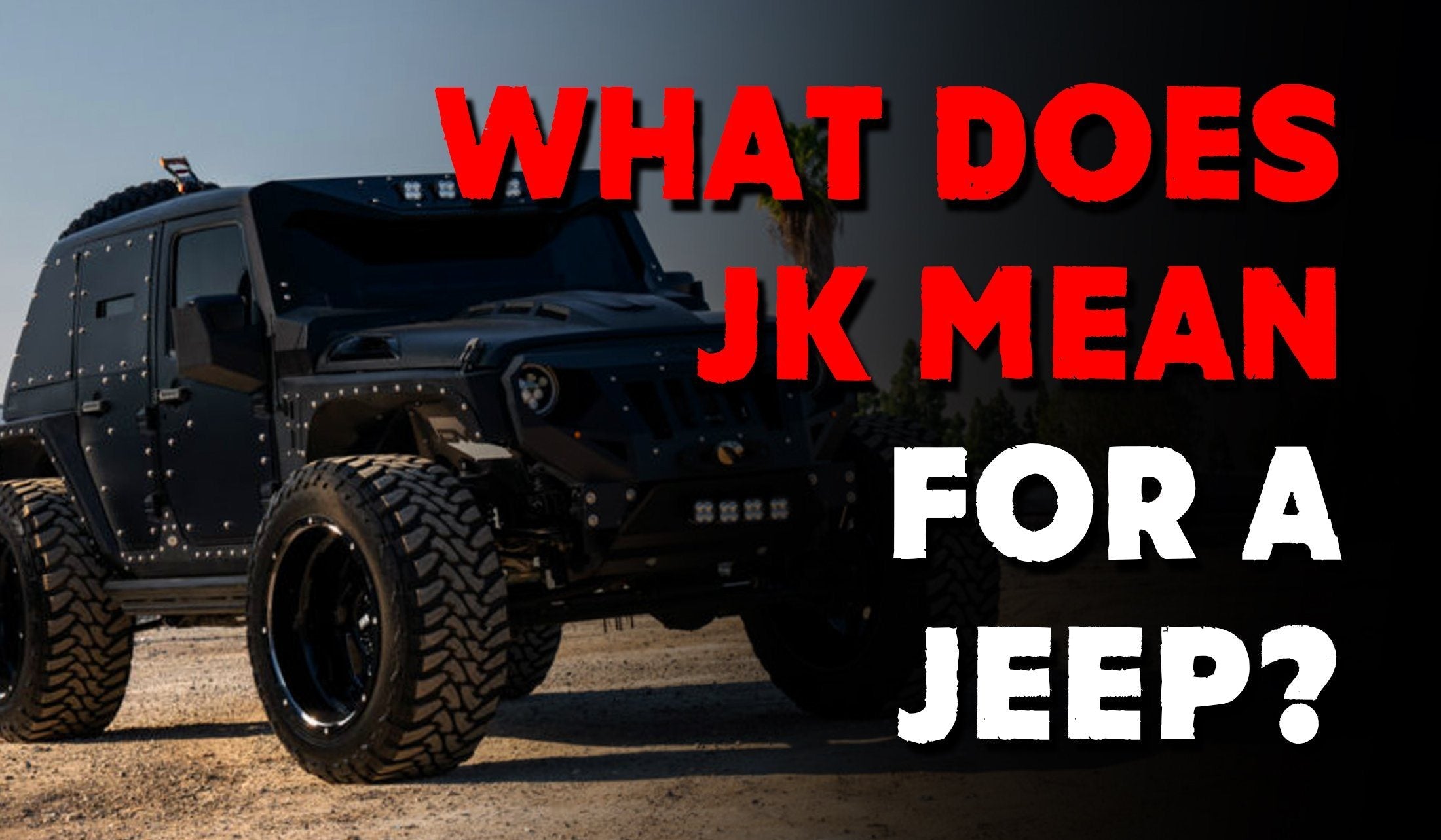
The Jeep Wrangler JK is the third generation of the iconic Jeep Wrangler, produced from 2007 to 2018. JK stands for the third-generation Jeep Wrangler, produced from 2007 to 2018. This model marked a major leap forward from its predecessors, the Jeep TJ and Jeep YJ, with a complete redesign that set new standards for the brand. The JK Wrangler is celebrated for retaining classic Jeep features like live axles, a folding windshield, removable top, and a robust mechanical four-wheel drive system. What the Jeep Wrangler JK represents is a perfect blend of tradition and innovation—offering a longer wheelbase, increased track width, and a more powerful engine compared to the TJ model. Jeep fans and off-road enthusiasts quickly embraced the JK Wrangler for its improved ride quality, enhanced stability, and greater versatility, making it a top choice for both daily driving and serious off-roading adventures. Whether you’re navigating city streets or tackling rugged trails, the JK Wrangler stands out as a vehicle that truly embodies the adventurous spirit of the Jeep brand.
Now that you have an overview of the JK Wrangler, let's explore the history and meaning behind Jeep's two-letter model codes.
The 2-Letter History and Meanings
Ever since the late 80s, the “CJ” nomenclature became quite popular. Most people in-the-know are aware that it stands for “Civilian Jeep,” as to signify the fact that most models with that specific acronym actually were designed specifically with the civilian market in mind. The CJ designation refers to a classification for classic Jeep models produced from 1945 to 1986, with different model numbers like CJ-2, CJ-5, and CJ-7 used to identify and date these vehicles. Having said that, there are other acronyms as well, including “YJ,” as well as “TJ and “JK.” What does the latter mean? Long story short, these acronyms actually don’t really have a meaning, at least not one for the public. These are engineer codes, which are used by the company to keep track of their models, revisions and so forth. The JK is an internal engineering designation used by Jeep to differentiate this generation from the TJ and JL. The JK designation is part of a letter-based naming system used by Jeep to differentiate its generations. When discussing the evolution of Jeep models, it's important to note the distinction between the two models, JK and JL, which represent different generations with unique features and updates. Chrysler, as the parent company, has played a significant role in the development and production of these models, overseeing their design, manufacturing, and technological advancements.
With this context in mind, let's dive into the end of the JK series and what made it such a significant chapter in Jeep history.
The End of the JK Series
Jeep models are often defined by specific acronyms, and oftentimes, there is some confusion about what they might actually mean. Throughout the years, Jeep has released various waves of models. Ranging from the aforementioned CJ series, down to the YJ (produced from the late 80s to the mid 90s), the TJ (from the mid 90s to 2006) and finally, the JK, which started in 2007, replacing the previous TJ series. The JK series ended in 2018, after 12 years of innovation. JK denotes the 2-door version of the Jeep Wrangler, while JKU refers to the 4-door "Unlimited" version.
For many jeepers, this truly marks the end of an era. The JK series has often been highly regarded as one of the company’s most successful forays into the market. The JK Wrangler introduced a factory standard four-door model called the Wrangler Unlimited, also known as the JK Unlimited. These four door models quickly became a significant sales success, offering more rear passenger and cargo space and appealing to a wider range of buyers. The JK model can be identified as either a 2-door or a 4-door model, with the 4-door version known as the 'Unlimited'.
The halt of the JK series production also coincides with big changes in the company’s premier assembly complex in Toledo, as the plant will be retooled to focus on the production of other offerings, including Wrangler-based pick-ups, which will apparently roll out soon.
Next, let's learn how to identify a JK Wrangler and distinguish it from other generations.
Identifying the Jeep JK Series
When you are looking into a JK model with 2 doors only, it might be quite easy to get confused with the previous TJ series, since there are many similarities between the two. However, the JK Wrangler has a track width that is 3.4 inches wider than the TJ, making it more stable and giving it a more planted stance. Having said that, you might be able to easily tell a JK from a TJ if you actually know what you are talking about.
Distinguishing Features of the JK

One of the biggest giveaways is most definitely the shape and style of the front grille. In the JK models, the grille is slanted back a little bit, and it has a rake, which makes the bottom stick out towards the top. This is also what makes the look of a JK’s front quite distinctive when compared to other older models. Some ever describe it as a pleasant vintage touch, which definitely enhances the aesthetic appeal of these Jeeps.
If you are looking for a Jeep with four doors, you are likely going to be looking at a JK. One thing that could get a little bit confusing is that the JK models can be branded differently. For example, there are several names out there, including Polar Edition, Willys, Unlimited, and others. Go past the branding and you will find that these are actually still JK models, in most cases!

There is a wide range of Jeep Wrangler JK models out there, starting with the base model and including popular trims like the Sport S, which offers enhanced features for both daily driving and off-road use. The possibilities are truly endless, and whether you are in the market for a flexible 4-doors option, or you prefer the feel of a 2-doors instead, the possibilities are truly endless. Many JK models also offer half doors as a popular customization option, especially for off-road enthusiasts. In addition to that, you will also find many amazing Jeep Wrangler JK accessories to enhance your experience and truly bring your Jeep to the next level. For off-road performance, aggressive tread tires are available, and certain trims come with fog lights as standard or optional features. Inside, the JK features a redesigned center console and offers upgraded passenger seats for added comfort. Notably, the JK was the first generation to offer power windows and remote power door locks as options, reflecting its modernization.
Now that we've covered how to identify a JK, let's look at its key design features.
Design and Features of the JK Wrangler
The JK Wrangler introduced a fresh body and chassis design that set it apart from the earlier TJ model. One of the most notable changes is the longer wheelbase—two-door JK models gained an extra 2 inches over the TJ, while the four-door Unlimited model stretched the wheelbase by more than 20 inches, offering significantly more interior space and comfort. The JK also boasts a wider track width, increasing stability and off-road capability by 3.4 inches compared to the TJ.
JK vs. TJ: Wheelbase and Track Width Comparison
-
2-Door JK Wheelbase: 2 inches longer than TJ
-
4-Door JK Unlimited Wheelbase: Over 20 inches longer than TJ
-
JK Track Width: 3.4 inches wider than TJ
Signature design elements include a fold-flat windshield, removable doors, and a choice between a soft or hard removable top, giving drivers the freedom to customize their ride for any adventure. The JK Wrangler is available in both two-door and four-door configurations, with the four-door Unlimited model becoming especially popular among families and those needing extra cargo space. Special editions like the Sahara model feature body-colored fender flares, a paint-matched hardtop, and distinctive gold ‘SAHARA’ decals, while the Rubicon model is equipped for serious off-roading with larger 32-inch tires, an improved breakover angle, and an electronic sway bar disconnect system. These thoughtful design features make the JK Wrangler a standout in both style and performance.
With a solid understanding of the JK's design and features, let's see how it fits into Jeep's broader lineup and model variations.
Jeep Models and Variations
Jeep’s lineup offers something for every type of driver, from rugged off-roaders to comfortable daily drivers. The Jeep Wrangler, including the popular Wrangler JK, comes in several trim levels such as the Sport, Sahara, and Rubicon, each catering to different needs and preferences. For those seeking more luxury and space, the Grand Cherokee delivers with upscale trims like the Laredo, Limited, and Overland, while the Cherokee provides a compact SUV option with trims like the Sport, Latitude, and Trailhawk. Jeep fans and owners love to personalize their vehicles, often adding lift kits, fender flares, and other aftermarket accessories to boost both appearance and off-road performance. The Jeep Wrangler JK is especially favored by off road enthusiasts, thanks to its live axles, locking differentials, and impressive ground clearance, making it a formidable vehicle on challenging terrain. Whether you’re driving a Rubicon with all the off-road bells and whistles or a Grand Cherokee for daily comfort, Jeep’s diverse models and variations ensure there’s a perfect fit for every adventure.
Now, let's look at how the JK series paved the way for the next generation of Jeep Wranglers.
The Next Generation: JL Series
The Jeep Wrangler lineage will actually live on with a brand new series, which, you guessed it, will be marked by yet another two-letters acronym! The successive series, JL, is fresh off the shelves, so to speak (although you’ll need a very big shelf for a Jeep!). 'JK' refers to the third-generation Jeep Wrangler, produced for the 2007–2018 model years. The Jeep Wrangler JK was produced from 2007 to 2017, while the Jeep Wrangler JL began production in 2017 and continues to be available. The Jeep Wrangler JL is considered the next generation Wrangler, introducing new features and significant advancements over the JK.
The Jeep Wrangler JL features a more modern design, including a sleeker grille and standard LED headlights, while the JK only offered LED headlights as an option in later years. The JL also offers a wider range of powertrain options, such as a 2.0L turbocharged engine and a 3.0L EcoDiesel V6, compared to the JK's 3.6L V6. Inside, the JL boasts a more refined interior with upgraded materials and an improved dashboard layout. Advanced safety features like standard blind-spot monitoring and rear cross-traffic alert are included in the JL, which were not available in the JK. Additionally, the JL has improved off-road capabilities, offering better suspension and ground clearance than the JK.
So far, it has shown the company’s commitment to introducing quality features and innovative design appointments, contributing to an increasingly better experience tailored to the needs and preferences of the modern driver.
MUST READ: 12 Coolest Jeep Wrangler Upgrades and Accessories
Next, let's take a closer look at the JK series itself, including its performance and comfort features.
More About the JK Series
The Jeep Wrangler JK series was produced from 2007 to 2016. These models are available in both 2-door and 4-door configurations, with the 4-door version known as the Wrangler Unlimited. This extended flexibility makes them perfect for various needs and applications, especially for people looking to travel in larger groups or seeking a four-door layout, as previous models like the TJ series only offered 2-door options.
The JK Wrangler features a separate body and frame design, rigid live axles both front and rear, and a fold-flat windshield, which contribute to its legendary off-road capability.
JK Engine and Performance
The base engine for the 2007-2011 Jeep Wrangler JK was a 3.8L V6 producing 202 hp and 237 lb-ft of torque, while in 2012, it was upgraded to a 3.6L Pentastar V6 engine with 285 hp and 260 lb-ft of torque. Transmission options include a five speed automatic transmission and a six speed manual transmission, both of which are valued for their performance and versatility. Towing capacity and fuel economy are important considerations for buyers, with the JK offering competitive ratings for its class.
JK Comfort and Convenience
Air conditioning is available as standard or optional equipment depending on the trim, and the JK Wrangler comes with a range of standard equipment to enhance comfort and convenience.
Whether you are looking for a newer model, or you’re looking into an old-school Jeep series, you will certainly find that all of these beautiful Jeep vehicles have something in common. It is not by chance that this company has become synonym with this type of vehicle after all! What’s really interesting about Jeep is that the brand became a true cultural icon, partly due to the innovation of their designs, and partly due to their ever-increasing commitment to outstanding quality.
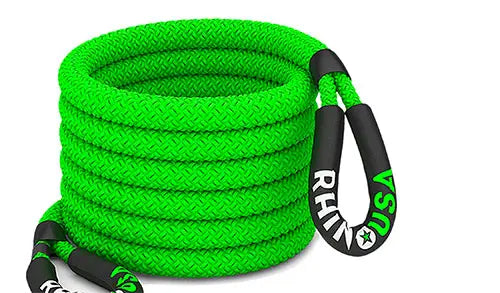
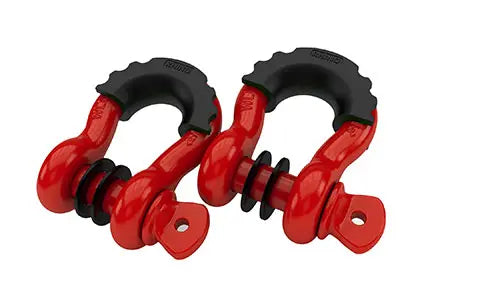
Featured Product: Jeep Pro Recovery Kit

We hope this article was informative and helpful, thank you for stopping by the site and we hope to see you again soon!
If you own a Jeep, Truck or SUV, we provide some of the strongest products on the market. Be sure to take a look at our Off-Road Collection to see for yourself!
Now, let's answer some of the most frequently asked questions about the Jeep JK.

Jeep JK FAQ's
What axles are in my Jeep JK?
The specific axles in your Jeep Wrangler JK can vary depending on the trim level, model year, and optional packages. However, the most common axle configurations for the Jeep Wrangler JK are as follows:
Front Axle:
-
Dana 30: The Dana 30 is a common front axle for many Jeep Wrangler JK models. It's known for its durability and is suitable for both on-road and moderate off-road use.
Rear Axle:
-
Dana 35: Some base and Sport trim level Jeep Wrangler JKs may come equipped with a Dana 35 rear axle. This axle is adequate for light to moderate off-roading.
-
Dana 44: The Dana 44 rear axle is a stronger and more robust option that is often found in higher trim levels and models designed for more serious off-roading. It offers improved strength and durability compared to the Dana 35.
It's important to note that Jeep may have used different axles for various special editions and optional packages. To determine the specific axles in your Jeep Wrangler JK, you can refer to your vehicle's documentation.
How much does a Jeep JK hardtop weigh?
On average, a Jeep Wrangler JK hardtop typically weighs between 140 to 150 pounds (63.5 to 68 kilograms). It's essential to note that the weight may vary depending on factors like the type of hardtop (e.g., two-door or four-door). Some of the lightest Jeep JK hardtops weigh around 90 pounds. As for the Jeep JK itself, a hardtop version of the Wrangler weighs anywhere between 3,800 pounds and 4,100 pounds depending on the trim and accessories.
- Choosing a selection results in a full page refresh.