



How Low To Air Down When Off-Roading
When you drive off-road, airing down tires is beneficial. This means letting air out of the tires to reduce tire pressure. Most drivers are taught to check tire pressure regularly and ensure that it hits the right level on the pressure gauge. On standard roads and highways, the tire pressure should meet manufacturer recommendations. Low tire pressure can accelerate wear and increase the risk of punctures and aquaplaning.
This guide is for off-road enthusiasts, overlanders, and anyone looking to improve their vehicle's performance on challenging terrain. Airing down matters not only for enhancing traction and comfort but also for improving safety and reducing the risk of getting stuck or losing control in difficult conditions.
Airing the tires down when driving a UTV, truck or 4x4 off-road is important because it increases traction and reduces the risk of slipping and losing control of the vehicle. Whether you’re navigating snow-covered trails, rocky terrain or undulating sand dunes, it’s critical to enhance the grip of the tires as much as possible. If you air the tires down, this increases traction and prevents the tires from sinking into the ground. Airing down increases the tire's surface area in contact with the ground, which improves grip and stability. Airing down can also improve support for the suspension system for a smoother, less bouncy ride and reduce tire wear. At lower pressures, the tire's sidewall flexes more, helping absorb bumps and obstacles during off-roading.
It is beneficial to air down under the following circumstances:
-
Driving on dirt roads and uneven tracks
-
Driving on soft surfaces, such as sand
-
Off-roading on rocky trails and loose terrain
-
Off-roading in the snow and ice
Optimal Tire Pressures for Different Off-Road Terrains
The optimal tire pressure for off-roading varies depending on the terrain, vehicle type, and tire construction. Use the table below as a general guide, but always consider your specific vehicle, tire type, and conditions:
|
Terrain Type |
Recommended Tire Pressure (PSI) |
Notes |
|---|---|---|
|
Sand/Deep Snow |
6-15 |
Maximum flotation to prevent sinking; lower end for beadlock wheels |
|
Rocks/Rock Crawling |
10-15 (as low as 6-12 w/ beadlocks) |
Maximum footprint and grip; beadlock wheels allow safe drops to 6-12 PSI |
|
Mud |
10-15 |
Increases traction and footprint |
|
Trails/Dirt Roads |
18-25 |
Balances comfort, traction, and tire safety |
|
12-25 |
Adjust based on vehicle weight, tire type, and specific conditions |
The ideal tire pressure can depend on the specific off-road conditions, vehicle weight, and tire type. For deep sand, starting tire pressure can be as low as 15 PSI, while for rocky terrain, it can be between 15-25 PSI. For extreme rock crawling or sand, beadlock wheels allow safe tire pressure drops to 6-12 PSI.
Understanding Air Pressure
Air pressure is a fundamental factor in off-roading, directly influencing your vehicle’s traction, ride comfort, and overall safety across different terrains. When you lower tire pressure—commonly known as airing down—you allow your tires to flex and spread out, increasing the contact patch, or the area of the tire that touches the ground. This wider footprint provides better grip and more traction, which is especially valuable on loose terrain like sand, mud, deep snow, or rocky trails. For even more support in tough conditions, traction boards are another critical tool to help with off-road recovery.
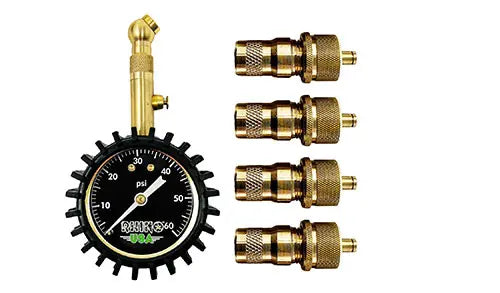
A tire pressure gauge is critical to ensure you've achieved the right pressure for your current terrain.
The optimal tire pressure for off-roading depends on several variables, including your vehicle’s weight, tire size, and tire construction. For example, radial tires are designed to flex more than bias-ply tires, so they may perform better at lower pressures without risking damage to the tire bead. Heavier vehicles or those with big tires may also require different adjustments to achieve the best balance between improved traction and tire safety.
To get the most out of airing down your tires, it’s essential to use a reliable tire pressure gauge. Whether you choose a built-in pressure gauge, a portable tire inflator with a gauge, or a dedicated tire deflator tool, accurate readings are key to finding the optimal tire pressure for your specific setup. Many off-roaders rely on portable air compressors or portable tire inflators to re-inflate their tires after a day on the trails, ensuring they return to the recommended PSI for highway speeds and regular roads. For those interested in proper vehicle care, you can also learn how to transport a motorcycle like a pro with expert tips and equipment recommendations.
Reducing tire pressure should always be done in small increments. Use a step-by-step guide: release air, check the pressure, and test the tire’s performance on the terrain. This approach helps you avoid going too low, which can increase the risk of tire damage, especially when navigating sharp rocks or rough trails. Tire deflators, such as the ARB E-Z Deflator, make it easy to release air quickly and accurately, but always be careful not to damage the valve core or unseat the tire bead.
Why Air Down?
Airing down your tires not only delivers better traction and a smoother ride on off road trails, but it also reduces the risk of getting stuck and improves overall vehicle performance. Softer tires can conform to uneven ground, providing a more comfortable ride and better grip in challenging conditions like packed snow or rocky terrain. However, it’s crucial to re-inflate your tires to the recommended PSI before returning to paved roads to prevent excessive tire wear and ensure safe handling at higher speeds.
By understanding how air pressure affects your tires and using the right tools—such as a tire pressure gauge, portable air compressors, and tire deflators—you can confidently adjust your tire pressure for any terrain. This comprehensive guide to managing air pressure will help you enjoy the benefits of airing down, including improved traction, reduced risk of tire damage, and a more comfortable ride, no matter where your off-roading adventures take you.
How low should you air down tire pressure and what role does the environment play?

When you go off-roading, it’s important to figure out how low to air the tires down based on the type of vehicle and the environment in which you’re driving. Some surfaces pose greater risks than others and some landscapes will benefit from higher reductions in tire pressure. Using lower pressure in your tires can help optimize performance and safety in challenging off-road environments. Always consider the size and weight of the vehicle, the type of tires you are using, the terrain you are navigating, the conditions and the standard tire pressure on regular, paved roads.
As a general guide, it’s best to reduce tire pressure by more if you’re driving on soft surfaces, including mud and sand, and very challenging terrain rather than on solid or even ground. Here are some examples to give you an idea of optimum tire pressure for different surfaces:
Dirt Roads and Trails
-
Airing down by up to 25%
Rock Crawling
-
Air down by around 35%
Sand and Mud
-
Air down by 50%
Driving on soft surfaces like sand often requires running at low psi to maximize flotation and traction.
It is crucial to remember that you should only be airing the tires down when off-roading. Deflate the tires just as you are preparing to start driving off the beaten track and away from paved roads and routes. You will need to inflate your tires again before getting back onto the main roads. The type of wheels you have, such as beadlock or non-beadlock, can affect how safely you can run low pressures during off-roading, as beadlock wheels are designed to prevent de-beading at low psi.
Rhino USA Pro Tire Deflator Kit
What do you need to air down and do you need an air compressor?
There are various options if you're going off-roading or overlanding and you want to reduce the tire pressure along the way. Tire deflators are devices that quickly and easily lower your tire pressure to the desired level. You can manually deflate your tires or use a tire deflator kit, which includes all the components you need to remove air from your tires before driving on rocks, dirt trails, snow, mud or sand. Carry a pressure gauge to enable you to check the pressure before, during and after airing down. Securing your cargo is also essential before heading out—consider using ratchet tie down straps for added safety and peace of mind. If you buy a kit like the Rhino USA Pro Tire Deflator Kit, you can air down quickly and easily using preset PSI levels for different environments. Automatic deflators can be preset to a desired PSI and stop automatically, making them a hands-free solution for airing down.
Essential tools for airing down and re-inflating:
-
Tire deflator kit
-
Pressure gauge
-
Air compressor or portable tire inflator
Essential Tools for Airing Down and Re-Inflating
Airing down will prepare you for off-road adventures, but you'll also need to ensure that you have the relevant tools to drive safely on paved roads once you're ready to return home. If you've deflated the tires to drive on sand or rocks, for example, you'll need to inflate them again before joining the highway. Driving on regular roads with low tire pressure can cause significant damage to the tires. Make sure you have an air compressor or a portable tire inflator with you. Even short journeys to a service station, for example, can put your tires at risk of wear.
Conclusion
Airing down is an important component of the preparation process if you're going off-roading. Letting air out of the tires improves traction and grip to reduce the risk of slipping, sliding and getting stuck. The amount of air you let out of the tires will depend on the type of vehicle and the environment. To enable you to air down quickly and easily with minimal effort, it's an excellent idea to invest in a tire deflator kit like Rhino USA's Pro Tire Deflator Kit, which includes a best-performance tire gauge, valve core replacements, chrome and plastic valve caps and a 4-way valve replacement tool with the option to use preset PSI levels. If you do get stuck, consider using a recovery snatch block to instantly increase your winching power and safely pull your vehicle free.

- Choosing a selection results in a full page refresh.