

Kinetic Rope vs. Tow Strap: An In-Depth Comparison and Guide
Picture this: tires spinning in mud, engine roaring in frustration. You’re stuck. Now, imagine two lifesavers in this off-road nightmare: kinetic rope vs. tow strap. But which one throws you a lifeline, and which leaves you hanging?
That’s where a deep understanding of the difference between kinetic ropes and tow straps kicks in. One’s all elástica, a stretchy monster channeling momentum like a slingshot. The other’s steady puller for controlled rescues. Each shines in different terrains, against different foes. Kinetic ropes are generally more expensive and bulkier than standard tow straps, which is an important consideration when choosing your recovery gear. Choose the wrong equipment, and your mudbath might turn into a metal-bending rodeo.
So, buckle up. We’re diving deep into the nitty-gritty of these recovery titans, including the ability of kinetic ropes to stretch and absorb energy, making them stand out in certain recovery scenarios.
Kinetic Rope vs. Tow Strap: Defining the Difference:

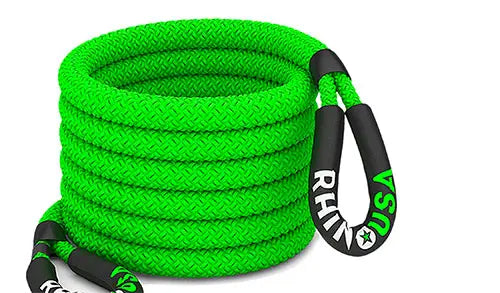
Picture the Rhino Kinetic Rope as a high-tech slingshot. Stretchy beast? Yup. It absorbs your buddy’s stuck-ness, then slingshots them back to freedom with a controlled “pow!” – perfect for mud, sand, even snow. Think superhero high-five, rescuing your pal like a champ.
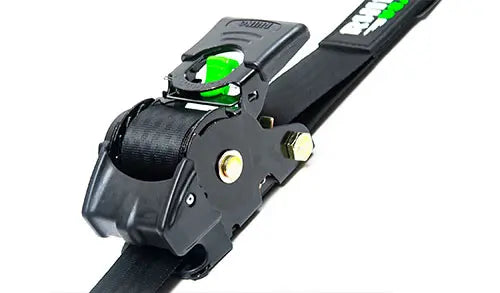
Tow straps are typically made of 100% polyester, providing strength and minimal stretch, and are constructed from flat nylon strips. The Rhino Tow Strap is all Captain America – strong, steady, built for control. Imagine a steel handshake, slowly and steadily pulling you out of ditches or over boulders like a boss. Tough terrain is its playground. Tow straps do not stretch much, making them ideal for static recoveries, while kinetic ropes are suitable for dynamic recoveries that require a running start. This minimal stretch is similar to a static rope, which is used for towing and winching where consistent tension is needed. But hold on, this ain’t roughhousing. Both tools need respect.
Kinetic ropes are generally lighter and stronger than traditional tow straps, and their construction typically involves a double-braided nylon design for enhanced durability and performance. Sure, the rope’s stretch is magic—kinetic ropes can stretch up to 33%, giving them more stretch and superior stretch capability compared to tow straps. This allows them to store and release kinetic energy, absorbing and dissipating shock loads during recovery operations and reducing the risk of sudden shocks or vehicle damage. The breaking strength of a kinetic rope should be at least two to three times the gross vehicle weight rating (GVWR) of the vehicle being recovered, and is determined by the weakest point of the rope, such as the sewn loops or webbing.
The strap? Think gentle giant – brute strength, but finesse matters. Jerky pulls can quickly turn your off-road rescue party into a demolition derby, and we can avoid that with a deep understanding of the differences between a kinetic rope vs. tow strap. So, before you pick your hero in this battle, remember: stretchy slingshot for momentum, steady puller for obstacles.
Kinetic Rope Mechanics: Unleashing Stored Energy in Style

Remember that stretchy monster from the kinetic rope vs. tow strap showdown? Time to get up close and personal with its superpower: kinetic energy. Buckle up, because this rope’s a slingshot in disguise. Think of it like this: remember that slingshot you used as a kid? Pull back, store the energy, then launch that pebble sky-high. Kinetic ropes use the same principle, but with stuck vehicles instead of pebbles. The kinetic energy generated during recovery is absorbed and dissipated by the rope’s stretch capability, which helps prevent damage to vehicles by reducing shock impacts.
Of course, with great power comes… well, not responsibility exactly, but careful handling. Kinetic ropes are designed to absorb and dissipate kinetic energy, reducing the risk of sudden shocks that can damage vehicles and their components. The stretch capability of kinetic ropes allows them to stretch 20% to 30% in regular use, and up to 30% under load, which helps absorb and store kinetic energy during recovery operations. This ability to absorb shock during recovery helps prevent damage to your vehicle’s components. That’s why Rhino engineers built it tough, using high-tech materials that can handle the “pow!” without snapping. So relax, enjoy the superhero rescue feeling, and let the Rhino Kinetic Rope do the heavy lifting for you. But remember, there’s another champion waiting in the wings. Next up, we’ll meet the steady puller, the master of tough terrain: the Rhino Recovery Tow Strap.
Tow Strap Fundamentals: Controlled Pulls, Zero Surprises

Now, let’s meet the Rhino Recovery Tow Strap: the champion of controlled pulls and predictable rescues. Think of it as a steel handshake, the kind that pulls you out of ditches or over boulders like a boss. Tough terrain’s its playground, from rocky hills to stubborn sandbars. Need a steady arm yank back to solid ground? This recovery strap’s got your back (literally).
Tow straps are typically made of 100% polyester, which provides strength and minimal stretch, making them ideal for static recoveries. Never use a tow strap for a "running start" recovery—tow straps do not absorb kinetic energy, and using them for dynamic recoveries can cause damage to the vehicle, rip recovery points, or even injure people nearby.
But hold on, this ain’t roughhousing. Unlike the rope’s stretchy antics, the strap’s all about finesse. Remember, slow and steady wins the race. Sure, the kinetic rope vs. tow strap might seem like a battle of extremes, but both tools have their place. When momentum’s your friend, the rope slingshots you free. When control’s king, the strap reigns supreme.
Kinetic Rope Unleashed: Tips for a Supercharged Recovery

So you’ve chosen the slingshot in the kinetic rope vs. tow strap showdown! Now, let’s make sure your stuck buddy gets launched free, not flung into orbit. Remember, kinetic recovery ropes thrive on momentum, not mayhem.
Length of the Leap: Don’t shortchange your yank! Choose a kinetic rope with generous length. Think double the stuck vehicle’s distance for maximum momentum build-up. Think slingshot, not slingshot-lite.
Strength in Numbers: Match the rope’s strength to the weight of your buddy. Rhino offers a range of beasts, from nimble to burly. Don’t try to pull a tank with a featherweight rope. You’ll end up with a tangled mess, not a triumphant rescue.
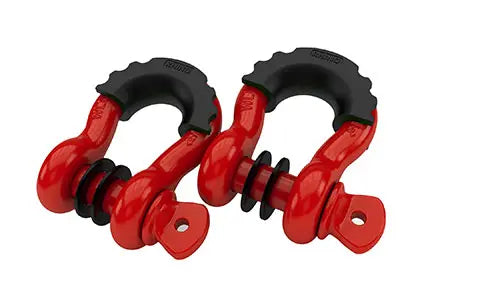
Anchors Ahoy: Secure your anchoring points like they’re holding a pirate’s treasure! Always attach the kinetic rope to the correct, designated towing points on your vehicle—never to bumpers or non-reinforced areas—to ensure safety and prevent damage. Sturdy trees, rocks, or Rhino D-Ring Shackles – don’t trust flimsy twigs or wobbly fences. Remember, a shaky anchor turns your slingshot into a flying projectile.
Communication is Key: Talk it out! Driver needs to accelerate smoothly, not launch like a rocket. Gentle communication ensures the rope stretches without snapping, turning your “pow!” into a controlled “pop.”
Practice Makes Perfect: Don’t unleash the rope in the heat of the moment. Find a safe spot and get used to the “snatch” technique. Gradual acceleration, controlled release, and voilà – your stuck buddy’s flying free.
Caring for Your Kinetic Rope: After use, always clean a muddy or dusty kinetic rope with warm soapy water and lay it out to dry thoroughly. Never pack your rope away if it is wet or dirty, and always check for any damage or fraying after each use. If your kinetic rope starts to become overly stiff or shows signs of fraying, it’s time to replace it to ensure safety. Kinetic ropes should not be used for towing, as they need time to rest and return to their normal structure after each pull. For maximum life and convenience, store your kinetic rope in a heavy-duty storage bag—this helps extend its service life and makes it easier to carry your recovery gear safely and efficiently.
Remember, the Rhino Kinetic Rope is a powerful tool, not a magic wand. Respect its stretch, choose the right size, and communicate clearly. Soon, you’ll be a master, launching your friends out of any sticky situation with a grin instead of a groan. And for those situations where momentum isn’t the answer, don’t fret – the mighty Rhino Tow Strap awaits in the next chapter.
Tow Strap Tactics: Steady Pulls for Predictable Rescues

Stuck in a ditch? Stuck against a boulder? Ditch the slingshot, it’s time for the kinetic rope vs. tow strap champion of controlled pulls: the Rhino Recovery Tow Strap! Remember, momentum’s not always king – sometimes you need a steady hand, not a superhero flick. When choosing recovery gear, consider the variety of straps and ropes available for different situations.
Strap Savvy: Choose the right strap for the job. In other words, don’t try to pull a tank with a shoelace, right? The Rhino Recovery Tow Strap has a max break strength of 31,518 lbs. Always match the strap’s strength and length to the size and weight of your vehicle, whether it’s a truck, Jeep, or SUV. Avoid using metal hooks as connectors, as they can damage the strap or rope under strain.
Angle Attack: Straight and steady wins the race! Avoid sharp angles that strain the strap and your vehicles. Think gentle tug-of-war, not Olympic weightlifting.
Communication Crux: Talk it out! Signal the pulling vehicle for smooth acceleration, no jerky starts. Remember, controlled pulls, not power surges. A steady rhythm gets both of you back on solid ground, not in the repair shop.
Gear Up: Gloves, traction boards, snatch blocks, and shovels – don’t be a barehanded hero! Rhino’s got your back (literally) with top-notch recovery gear. A good recovery kit should include both a tow strap for static recoveries and a snatch strap or kinetic rope for dynamic recoveries. Don’t forget a tree strap as an anchor point to prevent damage to trees and vehicles during recovery. Remember, safety’s not a spectator sport, even in the kinetic rope vs. tow strap battle.
Winching Wonders: Stuck in a deep ditch? Rhino straps play nice with winches too! Secure the strap, engage the winch, and watch your stuck buddy crawl back to civilization like a happy snail. Use a winch line as an accessory for recovery operations. Just remember, slow and steady wins the race (and the ditch escape).
Safety Considerations for Recovery
When it comes to vehicle recovery, safety isn’t just a suggestion—it’s the golden rule. Whether you’re reaching for a kinetic rope, tow strap, or snatch strap, the right moves can mean the difference between a triumphant rescue and a day ruined by vehicle damage or injury.
Inspect Before You Connect: Before you even think about hooking up that recovery strap or kinetic rope, give your gear a thorough once-over. Look for frays, cuts, or worn spots—any weakness could turn a recovery into a dangerous situation. Never use a damaged rope or strap; it’s not worth the risk.
Choose the Right Attachment Points: Always connect your kinetic rope or tow strap to factory tow hooks or rated recovery points on your vehicle. Avoid bumpers, axles, or suspension parts—these aren’t designed to handle the force and could break, causing serious damage or injury. If you’re using a snatch strap, make sure both vehicles have secure, rated tow points.
Clear the Danger Zone: When the recovery process begins, keep everyone well clear of the action. A snapped recovery rope or flying metal hook can cause serious injury. Make sure bystanders stand far back, out of the line of tension, and never straddle or step over a loaded strap or rope.
Plan and Communicate: Before you pull, talk it out. Make sure everyone knows the plan—who’s driving, who’s spotting, and when to start. Clear communication prevents confusion and keeps the recovery process smooth and safe.
Use the Right Gear for the Job: Not all recovery situations are created equal. Use a kinetic rope for dynamic recoveries where you need to store kinetic energy and “pop” a stuck vehicle free. Opt for a tow strap when you need a steady, controlled pull. The right tool prevents damage and gets you back on the trail faster.
Remember, off-roading adventures are all about fun and freedom—but only if you make safety your co-pilot. Respect your recovery gear, follow these safety tips, and you’ll keep the good times rolling, no matter how deep the mud or how stubborn the sand.
Kinetic Rope vs. Tow Strap: Gear Up and Rule the Trails

So, there you have it, folks! The kinetic rope vs. tow strap showdown wrapped up, leaving you a master of off-road rescues. Remember, the rope’s a slingshot for momentum, the strap’s a steady puller for control. Kinetic recovery ropes can provide more pulling power than standard tow ropes or chains due to their ability to stretch and store energy. Choose wisely, based on terrain, weight, and the rescue game at hand, and always match the breaking strength of your gear to your vehicle.
For the vast majority of off-roaders, reputable brands like ARB Snatch Strap and Bubba Rope offer high-quality, durable recovery gear suitable for Jeeps, trucks, and SUVs. High-quality kinetic ropes can cost between $100 and $200, depending on diameter and length, but their performance and reliability are worth the investment.
Don’t get stranded by the learning curve, though! Rhino’s got your back with top-notch tools and expert advice. No matter the situation, Rhino’s there, like a superhero sidekick always in your toolbox. Choose your tool, respect its power, and remember: safety first, fun always!
- Choosing a selection results in a full page refresh.