

Trailer Hitch Types: Complete Beginner's Guide
If you are new to towing, the trailer hitch world is more complicated than it should be. Receiver hitches, gooseneck hitches, fifth wheels, weight-distribution setups, pintle hooks. Each one has a specific use case and the wrong type for your job either will not work or will work badly. Picking the right hitch is step one of every tow setup.
This guide walks through every common trailer hitch type, the class system that ties weight ratings to receiver sizes, the use cases each hitch handles best, and the Rhino USA accessories that make every setup work better. Every Rhino USA hitch product is American family operated and backed by lifetime replacement warranty. Before any tow trip, the 10 things to check before you tow walk-around catches the loose pin or missing safety chain that turns into a roadside problem.
Quick Answer: Which Hitch Type Is Right for You?
The right hitch type depends on what you tow.
- Bumper-pull travel trailer, boat, or utility trailer under 14,000 lbs: receiver hitch (Class III, IV, or V).
- Heavy travel trailer 8,000 lbs and up: receiver hitch with a weight-distribution setup.
- Fifth wheel RV: fifth wheel hitch installed in the truck bed.
- Heavy livestock trailer, big flatbed, or large toy hauler: gooseneck hitch in the truck bed.
- Commercial or industrial trailer with a lunette ring: pintle hitch.
Most consumer towing happens on a 2" receiver with a ball mount and a drop hitch. Match the class rating to the trailer weight and you are 90 percent of the way there.
What Is a Trailer Hitch
A trailer hitch is the mechanical connection between a tow vehicle and a trailer. The hitch transfers the trailer's weight (tongue weight) and pulling forces (gross trailer weight) into the tow vehicle's frame, allowing the trailer to follow safely behind.
The most common form is the receiver hitch, a square steel tube bolted to the back of the tow vehicle that accepts a removable ball mount. Other hitch types attach inside the truck bed (gooseneck, fifth wheel) or use specialized couplers (pintle hooks for heavy industrial loads).
The right hitch type depends on three things: trailer weight, trailer style, and tow vehicle. We will cover each.
The Five Main Trailer Hitch Types
Five categories cover virtually every consumer and light commercial towing job.
1. Receiver Hitch (Bumper-Pull)
The most common type by a wide margin. A square steel receiver bolts to the rear frame of the tow vehicle. A ball mount slides into the receiver and holds the trailer ball. The trailer coupler latches onto the ball.
Best for: travel trailers up to about 14,000 lbs, boats, utility trailers, cargo trailers, bike racks, and most consumer towing.
Receiver hitches are sized by class (Class I through V) and receiver opening (1-1/4", 2", 2.5", 3"). For the full receiver-size breakdown, see Hitch Receiver Sizes Explained.
2. Gooseneck Hitch
A gooseneck hitch mounts inside the truck bed, with a ball that protrudes through the bed floor over the rear axle. The trailer's gooseneck arm hooks onto this ball. The setup puts the trailer weight directly over the rear axle, dramatically increasing tow stability.
Best for: heavy livestock trailers, large flatbed trailers, big toy haulers, and commercial loads up to about 30,000 lbs.
Goosenecks are typically used on three-quarter-ton trucks and up. The bed installation requires a hole in the bed floor (or a removable ball setup) and a frame-mounted hitch system below the bed.
3. Fifth Wheel Hitch
A fifth wheel hitch is a horseshoe-shaped plate that sits in the truck bed, with a coupling jaw that grabs the trailer's kingpin. Same advantage as gooseneck: weight is directly over the rear axle for better stability.
Best for: large RV trailers and fifth wheel campers up to about 30,000 lbs.
Fifth wheels are the standard for big RV setups. The hitch sits semi-permanently in the truck bed and takes up most of the cargo area when not towing. Some systems are removable for empty-bed use.
4. Weight-Distribution Hitch (WDH)
A weight-distribution hitch uses spring bars to redistribute trailer tongue weight from the rear of the tow vehicle to the front axle and the trailer axles. The result is a more level vehicle, better steering response, and reduced sway.
Best for: large travel trailers (8,000+ lbs) being pulled by half-ton or three-quarter-ton trucks. Required for many trailers above 5,000 lbs by the tow vehicle manufacturer.
A WDH attaches to a standard 2" or 2.5" receiver but adds a complete spring-bar system to the trailer A-frame. Sway-control bars are often paired with the WDH to further reduce trailer sway.
5. Pintle Hitch
A pintle hitch uses a hook-and-ring coupler instead of a ball-and-socket. The trailer ring (called a lunette) drops over a hook on the tow vehicle, and a latch closes over the ring.
Best for: heavy industrial trailers, military equipment, and agricultural loads. Pintle hitches handle harsh terrain and large angle changes between tow vehicle and trailer better than ball couplers.
Most consumer towing does not use pintle hitches. They are a commercial and industrial standard.
The Hitch Class System: Class I Through V
Receiver hitches are rated by class. The class tells you the maximum weight rating, not just the physical size.
Class I. Up to 2,000 lbs gross trailer weight (GTW), 200 lbs tongue weight. 1-1/4" receiver. Compact cars, small crossovers. Bike racks and small utility trailers.
Class II. Up to 3,500 lbs GTW, 350 lbs tongue weight. 1-1/4" receiver. Compact and midsize SUVs. Small boats and jet skis.
Class III. Up to 8,000 lbs GTW, 800 lbs tongue weight. 2" receiver. Half-ton trucks and full-size SUVs. Most consumer travel trailers, boats, and dump trailers.
Class IV. Up to 10,000 lbs GTW, 1,000 lbs tongue weight. 2" receiver. Heavy half-tons and three-quarter-tons. Larger travel trailers and two-horse trailers.
Class V. Up to 20,000 lbs GTW, 2,700 lbs tongue weight. 2" or 2.5" receiver. Heavy-duty trucks, big toy haulers, and fifth wheels with WDH.
The class numbers track receiver size loosely but not perfectly. A 2" receiver can be Class III, IV, or V depending on the manufacturer's rating. Always check the sticker on the hitch frame for the actual GTW rating.
Choosing a Hitch by Use Case
The right hitch depends entirely on what you are towing.

RV and Travel Trailer
For travel trailers under 8,000 lbs: a Class III or Class IV receiver hitch on a half-ton truck, paired with a weight-distribution hitch if the manufacturer recommends one.
For travel trailers 8,000 to 14,000 lbs: a Class IV or V receiver, weight-distribution hitch, and sway-control bars. Three-quarter-ton truck recommended.
For fifth wheel RVs: a fifth wheel hitch in the bed of a three-quarter-ton or one-ton truck.
Boat Trailer
For most boat trailers under 8,000 lbs: a Class III receiver hitch, 2" ball, level setup. A drop hitch may be required to keep the trailer level.
For large boat trailers (sailboats, large bay boats over 8,000 lbs): Class IV or V receiver with possible weight-distribution.
Utility Trailer
For most utility trailers: Class II or Class III receiver, 2" ball. Match the trailer's coupler size and rated GTW.
Cargo Carrier (Hitch Mount)
For cargo carriers: any receiver size that matches the carrier's shank. Most carriers fit 2" receivers and rate to 500 to 1,000 lbs of cargo.
Bike Rack
For 2 to 4 bike racks: most fit 2" receivers, some smaller racks fit 1-1/4". The rack's weight rating sets the limit.
Horse Trailer
For two-horse trailers: Class IV or V receiver, weight-distribution hitch. Typical loaded weight runs 7,000 to 12,000 lbs depending on the trailer and horses.
For three-horse and larger: gooseneck hitch on a three-quarter-ton or one-ton truck. Big livestock trailers handle better with the weight over the rear axle.
Commercial and Heavy Equipment
For commercial loads: Class V receiver, gooseneck, fifth wheel, or pintle hitch depending on the trailer style.
Drop Hitches and Why They Matter

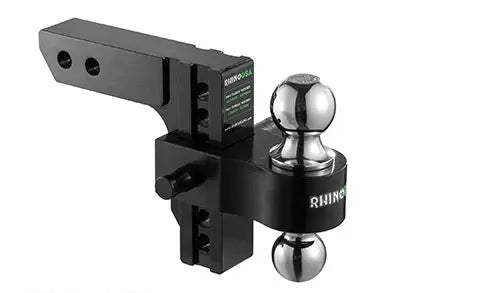
A drop hitch positions the trailer ball below the receiver, compensating for the difference between truck hitch height and trailer coupler height. A level trailer rides better, brakes more predictably, and wears tires evenly.
Most stock half-ton trucks need a 4" to 6" drop. Lifted trucks need 8" to 10" or more. Some specialty trailers need a "rise" instead of a drop (the ball sits above the receiver) for trucks that ride lower than the trailer.
The Adjustable Drop Hitch (2" Receivers) covers most stock trucks pulling typical travel trailers with multiple drop positions on a single mount. For trucks with 2.5" receivers or lifted setups, the Adjustable Drop Hitch (2.5" Receivers) dials in the height for any combination, no swapping required.
Multi-Ball Hitches: One Mount, Multiple Trailers

If you tow more than one trailer with different ball sizes, a multi-ball hitch saves swap time.
The 2" Dual Ball Hitch carries a 2" and 2-5/16" ball on the same mount. Flip the mount to expose the size you need.
The Tri-Ball Hitch (2" Receivers) gives you 1-7/8", 2", and 2-5/16" balls in one unit. Spin the head to expose the right ball, no tools required. Right answer if you tow a jet ski, a boat, and a travel trailer with the same truck.
Ball Mount Sizing Quick Reference
The ball mount holds the trailer ball, and the ball must match the trailer coupler exactly.
- 1-7/8" ball: Light utility trailers, jet skis, some boat trailers. Up to about 2,000 lbs GTW.
- 2" ball: The most common size. Travel trailers, boats, dump trailers, car haulers. Up to about 8,000 lbs GTW.
- 2-5/16" ball: Heavy travel trailers, big horse trailers, large car haulers. Up to about 14,500 lbs GTW.
- 3" ball: Specialty heavy gooseneck and large flatbeds.
A trailer coupler stamped "2 inch" only works on a 2" ball. A 1-7/8" coupler will sit on a 2" ball but will not latch. Always match exactly.
Hitch Accessories Worth Owning
Several accessories make every hitch setup work better.
Locking Hitch Pin
A standard hitch pin and clip is fine for around the yard. For any trip, use a locking pin. The Locking Trailer Hitch Pin replaces the clip with a key-locked mechanism that prevents quick removal of bike racks, cargo carriers, and ball mounts. For 2.5" receivers, swap to the 2.5" Locking Trailer Hitch Pin. For specialty drop hitches with longer shaft setups, the 3" Locking Trailer Hitch Pin reaches the second pin hole.
For the full coupler-lock vs hitch-pin-lock breakdown, see Trailer Coupler Lock vs Hitch Pin Lock.
Coupler Lock
For any trailer parked unhitched at home, at a campground, or on a job site, a coupler lock is the single most effective theft deterrent. The Trailer Coupler Lock Kit fits 1-7/8", 2", and 2-5/16" couplers and blocks the coupler so it cannot drop onto a ball.
Hitch Tightener (Anti-Rattle)
Every receiver has a small clearance gap inside the opening. That gap creates rattle on every bump. The Hitch Tightener Anti-Rattle Stabilizer clamps the accessory tight against the receiver wall, eliminating the rattle and the wear that comes with it.
Shackle Hitch Receiver
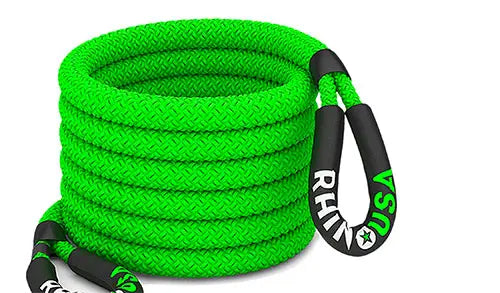
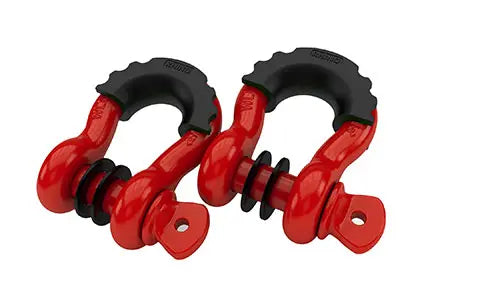
Not for towing, but worth owning. A shackle hitch turns your 2" receiver into a rated recovery point that accepts a D-ring shackle for kinetic rope or tow strap recovery. The Shackle Hitch Receiver is built from powder-coated chromoly steel with 41,850 lb break strength. Pair it with the Kinetic Energy Recovery Rope for stuck-truck duty.
Hitch Step
If you climb in and out of a tall truck bed often, a hitch step is a back saver. The Tow Hitch Step (2" Receivers) drops into your receiver and gives you a non-slip platform for bed access. Doubles as a bumper guard.
Hitch Cover
When the receiver is empty, debris and water can get inside the tube and corrode the inner walls. A hitch cover seals the opening when not in use. The 2" American Flag Hitch Cover keeps the receiver clean and shows off some American pride.
How to Pick the Right Hitch Type for Your Tow Vehicle

Three steps to nail the right hitch for your truck or SUV.
Step 1: Check Your Vehicle's Tow Rating
Every truck and SUV ships with a manufacturer-rated maximum tow capacity in the owner's manual. The tow rating is the absolute ceiling. Do not bolt a higher-class hitch onto a vehicle and assume the truck can pull it. The frame and powertrain are still capped at the tow rating.
Step 2: Match the Trailer to the Truck
Add the trailer's weight plus expected cargo to get gross trailer weight. Then add tongue weight (10 to 15 percent of GTW). Compare both numbers to the truck's tow rating and tongue weight rating. The smaller of the two ratings is your real-world ceiling.
Step 3: Pick the Hitch Type
Bumper-pull travel trailer under 14,000 lbs: receiver hitch (Class III, IV, or V).
Heavy travel trailer 8,000+ lbs: receiver hitch with weight-distribution.
Fifth wheel RV: fifth wheel hitch in the bed.
Heavy livestock or flatbed: gooseneck hitch in the bed.
Commercial or industrial: pintle hitch.
Common Mistakes to Avoid
Mistakes happen. The big ones we see:
Mismatched class. Bolting a Class V hitch on a Class III truck does not give you Class V capacity. The truck's tow rating is the ceiling.
Wrong ball size. A 2" coupler on a 1-7/8" ball will lift off under load. Always match exactly.
Wrong drop. A trailer that rides nose-up or nose-down brakes badly and wears tires unevenly. Measure the truck's hitch height and pick a drop that levels the trailer.
Skipping safety chains. Safety chains are required by law in most states. Cross them under the coupler in an X pattern so they catch the coupler if it disconnects.
Skipping the locking pin. Bike racks and cargo carriers walk off fast. A locking pin takes seconds to install.
Ignoring the rattle. Receiver rattle wears out the receiver and the ball mount over time. Use a hitch tightener.
Skipping weight-distribution on heavy trailers. Most trailer manufacturers require WDH above a certain weight. Skipping it puts the truck out of spec and reduces handling and braking performance.
Exceeding tongue weight. Tongue weight should run 10 to 15 percent of GTW. Too little and the trailer sways. Too much and the truck's rear sags, lifting the front and reducing steering response.
Towing Pre-Drive Checklist
A two-minute walk-around before any tow trip catches the issues that cause roadside problems.
- Coupler latched onto the ball, safety pin in place
- Hitch pin (preferably a locking pin) installed in the receiver
- Safety chains crossed under the coupler in an X
- Trailer wiring harness connected
- Trailer brake controller (if equipped) tested
- All trailer lights working: brake, turn, marker, running
- Trailer tire pressure checked (under-inflated tires cause sway)
- Trailer load secured with ratchet straps
- Mirrors adjusted for trailer width
- Hitch tightener snug against the receiver wall
The same checklist applies whether you are towing a bike rack to a weekend ride or a 12,000 lb travel trailer cross-country. For the full pre-tow walk-through, see 10 things to check before you tow.
Securing the Load on the Trailer
Hitching the trailer is half the job. Securing whatever is on the trailer is the other half.
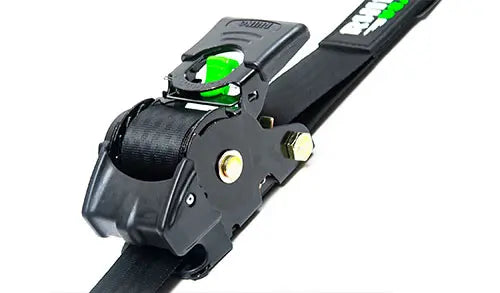
For most truck-bed and utility-trailer hauling, ratchet straps are the standard. The 1.6" x 15' HD Ratchet Tie-Down Set (4-Pack) hits 5,000 lb break strength and covers motorcycles, UTVs, and heavy cargo. For frequent haulers, retractable straps eliminate the loose-strap flutter that wears webbing prematurely: the 2" x 10' Retractable Ratchet Straps handle UTVs and heavy cargo with 3,033 lb break strength, while the 1" x 10' Retractable Ratchet Straps cover lighter loads at 1,209 lb. Ford truck owners get the cleanest install with the Bed-Mounted Retractable Ratchet Straps for Ford Trucks, which install directly into the factory tie-down points.
For the full breakdown, see Best Heavy-Duty Ratchet Straps: 2026 Buyer's Guide.
The Rhino USA Hitch Lineup
Every Rhino USA hitch product is American family operated and backed by lifetime replacement warranty. Drop hitches, multi-ball hitches, locking pins, tighteners, shackle receivers, hitch steps, and hitch covers all carry the same warranty. If a product ever fails in normal use, we replace it.
Drop Hitches
- Adjustable Drop Hitch (2" Receivers): multi-position drop for half-ton trucks.
- Adjustable Drop Hitch (2.5" Receivers): same adjustability for heavy-duty truck receivers.
Multi-Ball Hitches
- 2" Dual Ball Hitch: 2" and 2-5/16" on one mount.
- Tri-Ball Hitch (2" Receivers): 1-7/8", 2", and 2-5/16" on one mount.
Locks and Pins
- Locking Trailer Hitch Pin: 5/8" pin for 2" receivers.
- 2.5" Locking Trailer Hitch Pin: heavy-duty version for 2.5" receivers.
- 3" Locking Trailer Hitch Pin: long-shaft pin for specialty drop hitches.
- Trailer Coupler Lock Kit: universal coupler lock for unhitched trailers.
Recovery and Add-Ons
- Shackle Hitch Receiver: rated recovery point for 2" receivers.
- Hitch Tightener Anti-Rattle Stabilizer: clamps the accessory tight, kills the rattle.
- Tow Hitch Step (2" Receivers): non-slip platform for tall truck-bed access.
- 2" American Flag Hitch Cover: seals an empty receiver, keeps debris out.
FAQ
What is the most common type of trailer hitch?
A Class III receiver hitch with a 2" receiver. Standard on most half-ton trucks and full-size SUVs, handles up to 8,000 lbs GTW.
What is the difference between a receiver hitch and a gooseneck?
A receiver hitch is mounted at the rear bumper area and uses a ball mount. A gooseneck hitch is mounted inside the truck bed over the rear axle. Goosenecks handle heavier loads and ride more stably than receivers because the trailer weight sits directly over the rear axle.
Do I need a weight-distribution hitch?
Most manufacturers require a WDH for trailers above 5,000 lbs (or 50 percent of the tow vehicle's curb weight). Check your truck and trailer manuals.
What is a fifth wheel hitch?
A fifth wheel hitch sits in the truck bed and uses a horseshoe-shaped plate to grab the trailer's kingpin. Used for large RVs and commercial loads above what a bumper-pull can handle.
What is a pintle hitch?
A hook-and-ring coupler instead of a ball-and-socket. Used for heavy industrial and military trailers where harsh terrain and large angle changes between tow vehicle and trailer would cause a ball coupler to fail.
What size receiver does my truck have?
Most half-ton trucks (F-150, Ram 1500, Silverado 1500) ship with a 2" receiver. Heavy-duty trucks (F-250 and up, Ram 2500 and up, Silverado 2500HD and up) often have 2.5". Measure inside the receiver opening with a tape to confirm.
Can I tow a 12,000 lb trailer with a half-ton truck?
Some half-ton trucks have tow ratings up to 12,000 to 14,000 lbs with the right tow package. Check your owner's manual for the rated maximum and stay well within it.
Do all trailers use the same ball size?
No. Three common ball sizes cover most trailers: 1-7/8", 2", and 2-5/16". The trailer coupler is stamped with the required ball size.
What is a drop hitch?
A ball mount with the ball positioned below the receiver. Compensates for the height difference between truck and trailer so the trailer rides level under load.
Why does my hitch rattle?
Receivers have a small clearance gap inside the opening to allow accessories to slide in. That gap creates rattle. A Rhino USA Hitch Tightener Anti-Rattle Stabilizer eliminates the gap.
Do I need a locking hitch pin?
For any accessory left on the vehicle in a public space, yes. Bike racks, cargo carriers, and ball mounts walk off fast at trailheads and parking lots. A Rhino USA Locking Trailer Hitch Pin takes seconds to install and stops casual theft cold.
What is tongue weight?
The downward force the trailer applies to the hitch ball. Most trailers run 10 to 15 percent of gross trailer weight as tongue weight.
Can I tow with the wrong drop hitch?
You can, but the trailer will not ride level. A nose-up or nose-down trailer brakes badly, wears tires unevenly, and sways more.
What is the difference between Class III and Class IV?
Weight rating. Class III handles up to 8,000 lbs GTW. Class IV handles up to 10,000 lbs GTW. Both use a 2" receiver.
What is a sway control hitch?
Sway-control bars or hitches reduce trailer sway by adding friction or hydraulic resistance to side-to-side trailer motion. Often paired with a weight-distribution hitch on heavy travel trailers.
Can I tow without safety chains?
No. Safety chains are required by law in most states and act as a backup if the coupler disconnects. Cross them under the coupler in an X pattern.
What is a coupler?
The trailer's connection point that latches onto the ball. The coupler is part of the trailer, the ball is part of the tow vehicle, and the coupler must match the ball size exactly.
Do hitch covers matter?
They keep debris and water out of the receiver tube when the receiver is empty. The Rhino USA 2" American Flag Hitch Cover seals the opening when not in use.
Can I install a hitch myself?
Most aftermarket hitches bolt directly to factory mounting points and install in 30 to 60 minutes with hand tools. Some heavy-duty hitches need a body mount drop or fascia trimming.
How do I know my trailer is level?
Park on flat ground, hook up the trailer, and look at the trailer frame. The frame should be parallel to the ground, no nose-up or nose-down tilt. Adjust the drop hitch if needed.
What is the heaviest a receiver hitch can tow?
Class V receivers handle up to 20,000 lbs GTW. Heavier loads need a gooseneck or fifth wheel.
Do I need a brake controller?
Most states require trailer brakes (and a controller) for trailers above 3,000 lbs GTW. Some require it for any trailer with brakes. Check your state law.
What is the difference between a tow strap and a hitch?
A tow strap is for vehicle recovery, not trailer towing. A hitch is the permanent connection point for trailers. They are not interchangeable.
Are Rhino USA hitch products legit?
Yes. American family operated, lifetime replacement warranty, real customer reviews on every product page in the thousands at high ratings, and a team that picks up the phone when you call.
Related Articles
- Hitch Receiver Sizes Explained
- Best Trailer Hitch Lock
- Trailer Coupler Lock vs Hitch Pin Lock
- 10 Things to Check Before You Tow
- Best Heavy-Duty Ratchet Straps: 2026 Buyer's Guide
- Best Gifts for Truck Guys
- Choosing a selection results in a full page refresh.