
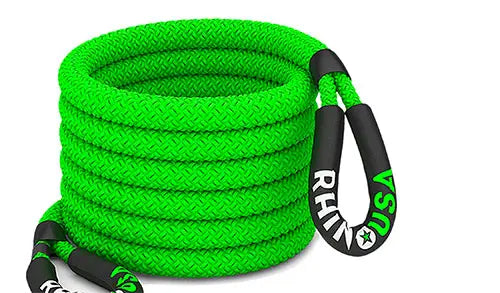
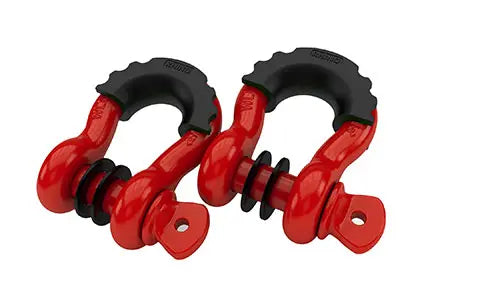

A loose UTV in a trailer is the most expensive ride home you'll ever take. Five-figure machines get thrown into trailer walls because somebody used the wrong straps, missed an anchor point, or skipped the parking brake. None of that is necessary. Tying down a UTV is straightforward when you have the right gear and a process you trust.
The short version: four heavy-duty ratchet straps, one at each corner, anchored through soft loops to the chassis or wheels, suspension compressed 25 to 30 percent, parking brake set, slack stowed, re-checked after the first 10 miles. The right UTV tie down straps are 1.6" or 2" wide, poly-silk webbing, forged steel hooks, and rated for at least 1,500lb WLL per strap.
This guide covers the way professional haulers and racers strap UTVs and ATVs to trailers, why each step matters, and what UTV tie down straps you actually need in the box.

The Four-Strap Rule
Every UTV gets four tie downs. One at each corner. Front-left, front-right, rear-left, rear-right. Two straps might hold a UTV on flat ground for a short trip. Four straps hold a UTV through a hard stop, a sharp lane change, and a railroad crossing without slack.
Four straps is the standard professional setup. There's no good reason to use fewer for any UTV transport over more than a couple of miles. Set up four corners, every time.
Pick the Right Straps for the Job

Your tie downs do the work, so they have to be rated for it. Cheap big-box ratchet straps with stamped sheet-metal hardware are not the right tool to secure a 1,500 to 2,500 lb side-by-side. You want:
- 1.6" or 2" wide ratchet straps with a Working Load Limit of at least 1,500 to 3,500 lb each. Modern heavy UTVs do best with 2,500 to 3,500 lb WLL.
- Industrial-grade poly-blend webbing. poly-blend webbing is preferred over nylon because poly-blend webbing resists UV rays, doesn't absorb water, and stretches less under load.
- Forged steel hooks with safety latches. Stamped sheet metal hooks bend and snap.
- Soft loops for any anchor point that would otherwise scratch paint, plastic, or anodized parts.
- Wheel chocks or axle straps if you want to tie to the tires or axle instead of the chassis.
The 1.6" x 15' HD Ratchet Tie-Down Set 4-Pack gives you four heavy ratchets in one box (5,000 lb break strength, soft loops included). The Motorcycle Soft Loops 4-Pack covers extra A-arms, frames, and roll cage tubes when you need more. The Rhino USA Heavy-Duty 2" Vehicle Tie-Down Kit bundles ratchets and axle straps in one purpose-built kit for UTVs, ATVs, and small machines.
Retractables for the Frequent Hauler
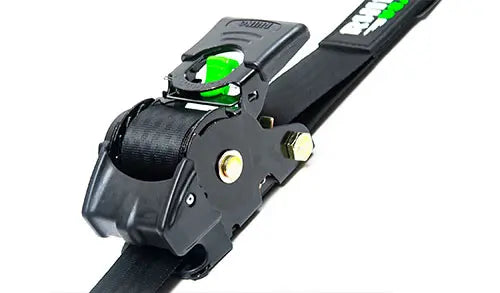
If you trailer a lighter or mid-size side-by-side every weekend, retractable ratchet straps cut setup time and kill loose-strap flutter. The 2" x 10' Retractable Ratchet Straps hit 3,033 lb break strength with auto-retract built in. Pull the webbing out, hook up, ratchet to tension. Done. No coiling, no tucking, no excess strap whipping the trailer floor at 70 mph.
For trailers with E-track rails, the 2" x 10' Retractable E-Track Ratchet Straps drop the retractable convenience into any E-track setup. For Ford truck owners hauling side-by-sides in the bed, the Bed-Mounted Retractable Ratchet Straps for Ford Trucks install into the factory tie-down points for the cleanest setup possible.

Where to Anchor: A-Arms, Frame, or Tires
Three schools of thought, all three work when done right.
A-Arms or Frame Anchors
Hook your soft loops to the lower A-arm or to a clearly bolted, structural part of the chassis. Not the bumper plastic. Not the body panels. The A-arm and the welded frame rails are designed to take load. Pull the strap from the chassis anchor down at an outward angle to the trailer floor anchor, and crank the ratchet until the suspension compresses about 25 to 30 percent.
This is the most common and most flexible setup. It works for almost any UTV.
Wheel Straps and Tire Bonnets
Wheel nets or tire bonnets are widely considered the safest method for securing UTVs to trailers because they let the vehicle's suspension move naturally without putting stress on frame components. The strap wraps around the tire, the ratchet anchors to the trailer floor, and the suspension stays unloaded. No frame bind, no compressed shocks for the whole trip.
Wheel chocks paired with wheel straps build a complete system. The UTV Wheel Chock Tie-Down Kit ships with chocks and straps to lock all four corners by the tires.
E-Track Wheel Chock Kits
E-track wheel chock kits combine the E-track flexibility we cover in the E-Track guide with proper wheel-strap securement. Use these in a fixed enclosed trailer setup where the E-track rails are already installed. You move the chocks to fit the UTV's wheelbase and the rear bar locks behind the tire. The payoff is fast loading every time.

Step-by-Step: How to Tie Down a UTV
Here's the way to do it that doesn't require luck.
1. Drive On and Center the UTV
Drive the UTV onto the trailer with the front facing forward. Center it on the deck, leaving roughly equal space on both sides. For trailers under 7 feet wide, hug the centerline. For wider trailers, you have a little more flex.
Proper load balancing during transport typically follows the 60/40 rule: 60 percent of the weight positioned forward of the trailer axle. Position the UTV so the heavy end (engine, fuel tank) sits forward of the axle.
2. Set the Parking Brake
Engage the parking brake. This eliminates one form of movement before you ever touch a strap. Don't trust transmission alone, even on AWD machines.
3. Place Wheel Chocks if You Use Them
If you're using wheel chocks, set them now in front of the front tires and behind the rear tires. The chocks back up the straps and add a mechanical stop in case anything loosens.
4. Attach Soft Loops to Anchor Points
Loop a soft loop around a manufacturer-approved tie-down point or lower A-arm. For UTVs and side-by-sides, soft loops on the lower A-arm or a manufacturer-approved tie-down point give you a clean, strong anchor without contacting painted or plastic body parts. If your UTV has dedicated frame tie-down points, use those first.
5. Hook Your Ratchet to the Trailer Floor
Pull each ratchet strap from the trailer floor anchor (D-ring, E-track fitting, or stake pocket) up at an outward angle to the soft loop. The angle creates lateral tension that pulls the UTV toward the centerline of the trailer instead of letting it slide side to side.
6. Crank the Ratchet to Compress Suspension
Crank each ratchet until the suspension compresses about 25 to 30 percent at each corner. You want the suspension preloaded so the machine doesn't bounce on the deck. If you over-tighten, the suspension bottoms out and the strap can snap from the additional jolt of every bump.
Tension must be applied evenly across all four corners to keep the vehicle's suspension from bottoming out during transport.
7. Stow the Slack
Roll up any extra strap and tuck it through the ratchet handle or wrap it around the strap itself. Loose slack flapping at 70 mph is how straps wear and how anchors come loose. Or skip the problem entirely with retractables.
8. Walk Around and Recheck
Push the UTV side to side at the front and rear bumper. There should be no significant shifting. If you can rock it, tighten the corresponding strap. Check that all four ratchets are locked closed.
9. Recheck After 5 to 10 Miles
The most important step nobody does. The first 5 to 10 miles of every trip and at every fuel or rest stop, get out and check tension. Suspension settles, strap webbing relaxes, and you'll find at least one strap that needs another crank. This habit alone prevents most UTV-trailer disasters.
Securing UTVs Without Scratching Paint
Use soft loops at every anchor point. Soft loops let you wrap A-arms, frame tubes, or roll cage bars without your hook touching paint or anodized finish. They also distribute load across a wider area than a single hook would.
If your UTV has plastic skid plates, factory bumpers, or visible body panels, a soft loop is the only acceptable way to anchor at those points.
Should You Use Wheel Straps or Axle Straps?

Wheel straps and axle straps both anchor at the wheel end of the suspension. The difference:
- Wheel straps and tire bonnets wrap the tire itself.
- Axle straps loop around the axle housing or a control arm.
Wheel straps and tire bonnets keep the suspension free to move. Axle straps anchor near the wheel end and work well when chassis or A-arm access is limited. Pick whichever fits your machine's geometry. The 2" x 38" Axle Tie-Down Straps 4-Pack work on most UTVs and ATVs with exposed axle tube or A-arm geometry.
Ratchet Straps vs Cam Buckle Straps for UTVs
Use ratchet straps. Cam buckle straps slip under vibration and can't generate the mechanical tension needed to hold a heavy UTV through a rough road. Ratchet straps provide the tension required to keep the suspension loaded and the chassis stable.
Cam buckle straps are fine for cargo, soft loads, and lighter motorcycles. They are not the right choice for a heavy machine.

Pre-Trip Inspection Checklist
Before every trip:
- All four ratchets locked closed
- Suspension compressed 25 to 30 percent at each corner
- Soft loops in place at every chassis anchor
- Wheel chocks set if you use them
- Parking brake engaged
- All strap slack tucked or rolled
- Trailer hitch locked, safety chains crossed, lights tested
- Tire pressures correct on UTV and trailer
Inspect every strap before use for fraying, cuts, or damaged hardware. Never use worn straps. Replace any strap that shows damage at the webbing or the hook.
How to Strap a Polaris Ranger, Can-Am, or Honda
The same principles apply to every modern side-by-side. Polaris Ranger, RZR, Can-Am Maverick, Honda Pioneer, Kawasaki Mule. Pick the lower A-arms or wheel straps as your anchor, run four straps to the trailer floor, compress 25 to 30 percent at each corner. Always engage the parking brake. Always re-check after the first stop.
For dirt bikes and motorcycles, the How to Tie Down a Motorcycle guide covers the right straps and points for two-wheel machines.
The Rhino USA Picks for UTV Tie-Downs
American family operated, backed by lifetime warranty, with real people on customer service.
- 1.6" x 15' HD Ratchet Tie-Down Set 4-Pack: four heavy ratchets in one box, 5,000 lb break strength, soft loops included.
- 1.6" x 8' HD Ratchet Tie-Down Set 4-Pack: our most popular 4-pack for ATV, UTV, and motorcycle tie-down.
- 2" x 10' Retractable Ratchet Straps: 3,033 lb break, auto-retract. The fastest setup for the frequent hauler.
- Rhino USA Heavy-Duty 2" Vehicle Tie-Down Kit: purpose-built for vehicles with axles or hooked anchor points.
- UTV Wheel Chock Tie-Down Kit: chocks plus straps for full corner securement.
- Motorcycle Soft Loops 4-Pack: paint-safe loops for chassis anchor points.
- 2" x 38" Axle Tie-Down Straps 4-Pack: for direct axle or A-arm anchoring.
- 2" x 10' Retractable E-Track Ratchet Straps: retractable straps for enclosed trailers with E-track rails.
- Bed-Mounted Retractable Ratchet Straps for Ford Trucks: for Ford bed hauling of smaller side-by-sides and ATVs.
FAQ
What is the best way to tie down a UTV?
Four straps, one at each corner, anchored to chassis or wheels through soft loops, with suspension compressed 25 to 30 percent. Set the parking brake. Recheck after 5 to 10 miles.
What size tie downs for a UTV?
1.6" to 2" wide ratchet straps with at least 1,500 to 3,500 lb working load limit per strap. The Rhino USA 1.6" x 15' HD Ratchet Tie-Down Set 4-Pack (5,000 lb break, ~1,666 lb WLL per strap) and the 2" x 10' Retractable Ratchet Straps (3,033 lb break) both qualify.
What is the best ratchet strap for a UTV?
A heavy-duty 1.6" or 2" ratchet built from poly-silk or poly-blend webbing with forged steel hooks. The Rhino USA 1.6" x 15' HD Ratchet Tie-Down Set 4-Pack covers most setups. For frequent haulers, the 2" x 10' Retractable Ratchet Straps cut setup time with auto-retract.
How many straps do I need for a UTV?
Four straps minimum. One at each corner. Two straps will not hold a heavy side-by-side through hard stops, sharp lane changes, or rough roads.
How tight should UTV tie-down straps be?
Tight enough to compress the suspension 25 to 30 percent at each corner. Even tension across all four corners. Over-tightening bottoms out the suspension and risks snapping the strap on a hard bump.
How to properly strap down a 4-wheeler?
Same four-corner method as a UTV. Soft loops at the frame or A-arms. 1.6" or 2" ratchets to the trailer floor. Parking brake engaged. Suspension compressed 25 to 30 percent. Re-check after the first 10 miles.
Should I use wheel straps or chassis straps for a UTV?
Wheel straps and tire bonnets are the safest method because they keep the suspension free to move. Chassis straps (to A-arms or frame) are the most common and most flexible. Either works when done right. Many haulers run a combination.
Are retractable ratchet straps good for UTVs?
Yes for frequent haulers. The 2" x 10' Retractable Ratchet Straps hit 3,033 lb break strength and cut setup time. Pull the webbing out, hook up, ratchet to tension. No coiling or tucking.
How to keep a UTV from being stolen?
Lock the trailer with a coupler lock and hitch pin lock when parked. See the Trailer Coupler Lock vs Hitch Pin Lock guide for the full setup.
Do I need to re-check straps after loading?
Yes. The first 5 to 10 miles of every trip and at every fuel or rest stop, check tension. Suspension settles, webbing relaxes, and at least one strap will need another crank.
Related Articles
- How to Tie Down a Motorcycle for Trailering
- Best Heavy-Duty Ratchet Straps: 2026 Buyer's Guide
- Retractable vs Regular Ratchet Straps: Which One Do You Actually Need?
- 10 Things to Check Before You Tow