

Hitch Receiver Sizes Explained: 1-1/4", 2", 2.5", and 3" Hitches
Hitch receivers come in four common sizes and picking the wrong one ruins your day in a hurry. A 2" ball mount won't slide into a 1-1/4" receiver. A 1-1/4" accessory in a 2" receiver rattles like a maraca and chews up the hardware on every bump. This guide breaks down the four receiver sizes, the hitch class system that ties weight ratings to each, and the Rhino USA accessories built to fit every common setup.
Every Rhino USA hitch product is American family operated and backed by lifetime replacement warranty. If a pin gets stuck, a tightener strips, or a ball mount fails in normal use, we replace it. Before any tow trip, the 10 things to check before you tow walk-through covers safety chains, tire pressure, and brake controllers worth two minutes of your time.
Quick Answer: What Size Receiver Do You Have?
For most owners, the receiver size follows the truck.
- Compact cars and small crossovers: 1-1/4" receiver, Class I or II.
- Midsize SUVs, half-ton trucks, full-size SUVs: 2" receiver, Class III or IV.
- Heavy-duty trucks (F-250 and up, Ram 2500 and up, Silverado 2500HD and up): 2" or 2.5" receiver, Class IV or V.
- Commercial trucks and dedicated heavy-tow rigs: 2.5" or 3" receiver, Class V or commercial.
When in doubt, crawl under the bumper with a tape measure and check the inside opening of the square tube. The four answers are 1.25", 2", 2.5", or 3". Anything else and the reading is off.
What Is a Hitch Receiver
A hitch receiver is the square steel tube welded or bolted to the rear frame of the tow vehicle. It accepts a ball mount, shackle hitch, bike rack, cargo tray, hitch step, or any other accessory with a matching shank. A hitch pin (or a locking pin) holds the accessory in place.

The receiver size is measured by the inside dimension of the square tube. A 2" receiver has a 2" by 2" opening. A 2.5" receiver has a 2.5" by 2.5" opening. The opening size determines what physically fits. The class rating stamped on the hitch frame determines what the receiver is rated to pull.
The Four Common Hitch Receiver Sizes
Four sizes cover every consumer and light commercial vehicle on the road today.
1-1/4" Receiver
The smallest common receiver. Found on compact cars, small SUVs, and some crossovers. Used for light cargo carriers, bike racks, and small utility trailers. Weight ratings stay light, typically under 3,500 lbs gross trailer weight.
2" Receiver
The most common size by a wide margin. Standard on full-size pickups, midsize and full-size SUVs, vans, and most Jeeps. Handles trailers up to 14,000 lbs gross weight depending on the receiver's class rating. The 2" size is the sweet spot for everyday towing, recovery work, and accessory compatibility. Most aftermarket hitch products are built first for 2" receivers.
2.5" Receiver
Standard on heavy-duty trucks (Ford F-250 and up, Ram 2500 and up, Silverado/Sierra 2500HD and up). Handles heavier trailers and weight-distribution setups up to 20,000 lbs gross weight in many configurations. Less consumer aftermarket selection than 2" but the right size for serious haulers.
3" Receiver
The largest commonly available size. Found on commercial trucks and dedicated heavy-tow rigs. Handles ratings above 20,000 lbs gross trailer weight in commercial Class V applications. Limited consumer aftermarket since most personal trucks max out at 2.5".
Hitch Class System: Class I Through Class V
Receiver size and hitch class are related but not identical. Class is about weight rating. Receiver size is about the physical opening. A Class III hitch is almost always a 2" receiver, but the class tells you what the hitch can pull, not just what fits.
Class I
Up to 2,000 lbs gross trailer weight, 200 lbs tongue weight. Receiver size: 1-1/4". Compact cars and small crossovers. Bike racks and small utility trailers only.
Class II
Up to 3,500 lbs gross trailer weight, 350 lbs tongue weight. Receiver size: 1-1/4". Slightly stronger than Class I but the same physical receiver. Small boats, jet skis, light utility trailers.
Class III
Up to 8,000 lbs gross trailer weight, 800 lbs tongue weight. Receiver size: 2". The most common class for half-ton pickups and full-size SUVs. Travel trailers, boats, dump trailers, car haulers in the lighter range.
Class IV
Up to 10,000 lbs gross trailer weight, 1,000 lbs tongue weight. Receiver size: 2". Heavy half-tons and lighter three-quarter-tons. Larger travel trailers, two-horse trailers, mid-size car haulers.
Class V
Up to 20,000 lbs gross trailer weight, 2,700 lbs tongue weight. Receiver size: 2" or 2.5" depending on configuration. Heavy-duty trucks pulling fifth wheels, big toy haulers, and commercial loads. Some Class V XD ratings push higher with weight-distribution hitches.
How to Measure Your Existing Hitch

Pull a tape measure and check the inside opening of the square tube on your receiver. Measure across the inside, edge to edge, not corner to corner. The result will be one of four numbers.
- 1.25": Class I or II receiver
- 2": Class III, IV, or V receiver (most common)
- 2.5": Class V or commercial receiver
- 3": Heavy commercial receiver
If the opening reads anything else, take the measurement again. Receivers come in standardized sizes, no oddballs.
While you are under there, look for a sticker or stamped tag on the hitch frame. Most receivers list the manufacturer, the gross trailer weight rating, and the tongue weight rating. That number is your absolute ceiling. Exceeding it stresses the hitch frame, weakens welds, and risks failure on the road.
How to Choose the Right Hitch Receiver Size for Your Trailer
Three factors decide which receiver size you need: trailer weight, tongue weight, and tow vehicle compatibility.
Trailer Weight
Add the trailer plus everything inside it. That is your gross trailer weight (GTW). Match it to the class system above. A 6,500 lb travel trailer needs at least a Class III rating, which puts you in a 2" receiver. A 12,000 lb fifth wheel needs Class V, which means 2" or 2.5".
Tongue Weight
Tongue weight is the downward force the trailer applies to the hitch ball. Most trailers run 10 to 15 percent of GTW as tongue weight. A 6,000 lb trailer typically has 600 to 900 lbs of tongue weight. Make sure your receiver class can handle it.
Tow Vehicle
Your truck or SUV ships from the factory with a maximum tow rating and a max tongue weight rating. The receiver class on your vehicle is selected to match. Bolting a higher-class receiver onto a half-ton truck does not give you Class V capacity. The frame and powertrain still cap you at the truck's rated tow weight.
Ball Mount Sizing for Each Receiver
The ball mount slides into your receiver and holds the hitch ball. Ball mount shanks come in two main sizes that match the receiver: 1-1/4" and 2". Some 2.5" receivers use 2" shanks with reducer sleeves. Others use full 2.5" shanks for higher weight ratings.
Common ball sizes on the mount itself.
- 1-7/8" ball: Light utility trailers, jet skis, some boats. Up to about 2,000 lbs GTW.
- 2" ball: The most common size. Travel trailers, boats, dump trailers, car haulers. Up to about 8,000 lbs GTW.
- 2-5/16" ball: Heavy travel trailers, fifth wheels (some), large toy haulers. Up to about 14,500 lbs GTW or higher.
Always match the trailer coupler size to the ball size exactly. A 2" coupler will sit on a 1-7/8" ball but will not lock down. The trailer can lift off the ball at the worst moment.
Drop Hitches and Why They Matter

A drop hitch is a ball mount with a built-in vertical offset. Trucks ride higher than most trailer couplers, so a level tow setup needs the ball positioned lower than the receiver. The "drop" measurement tells you how far below the receiver the ball sits.
For most half-ton trucks, a 4" to 6" drop puts a typical travel trailer level. Lifted trucks need 8" to 10" or more. A level trailer rides better, brakes more predictably, and wears tires evenly. A trailer pitched nose-down or nose-up handles poorly and chews up suspension components. Match the drop to your truck's hitch height.
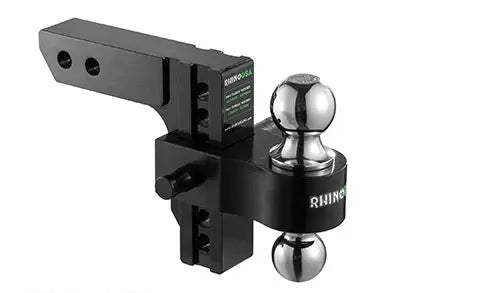
The Adjustable Drop Hitch (2" Receivers) covers most stock half-ton trucks with multiple drop positions on a single mount. For lifted trucks or 2.5" receivers, the Adjustable Drop Hitch (2.5" Receivers) dials in the height for any combination. Adjustable drops are also handy if you tow multiple trailers with different coupler heights since you do not need to swap ball mounts every time.
Multi-Ball Hitches for Multiple Trailers
If you tow more than one trailer with different ball sizes, a multi-ball hitch saves you the swap. The 2" Dual Ball Hitch carries a 2" and 2-5/16" ball on the same mount. Flip the mount to expose the size you need.
For three-ball setups, the Tri-Ball Hitch (2" Receivers) gives you 1-7/8", 2", and 2-5/16" balls in one unit. Spin the head to expose the right ball, no tools required. The right answer if you tow a jet ski, a boat, and a travel trailer with the same truck.

Shackle Hitch Receivers for Recovery
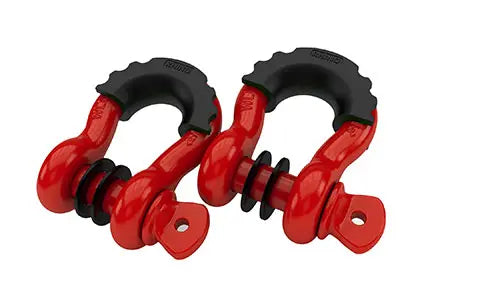
A shackle hitch isn't for towing trailers. It is a recovery accessory that turns your receiver into a rated recovery point. Stuck rigs need a strong attachment point on both vehicles. The factory frame loops on most trucks are not always rated for recovery. A shackle hitch in your 2" receiver gives you a known-good rated point.

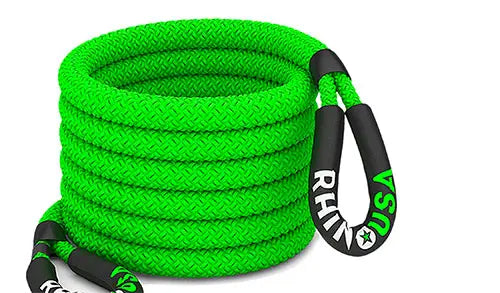
The Shackle Hitch Receiver drops into any 2" receiver and accepts a 3/4" D-Ring Shackle for kinetic rope or tow strap recovery. Built from powder-coated chromoly steel with a 41,850 lb break strength. Pair it with the Kinetic Energy Recovery Rope and the 3" Ultimate Recovery Tow Strap for a complete recovery setup.
Hitch Pins, Locks, and Anti-Rattle
Three accessories every receiver needs.

Locking Hitch Pins
A standard hitch pin and clip works fine until someone walks off with your $400 cargo carrier in a parking lot. A locking pin replaces the clip with a key-locked mechanism that prevents quick removal. Match the pin diameter and shaft length to the receiver.

- 2" receivers: Locking Trailer Hitch Pin (5/8" pin diameter)
- 2.5" receivers: 2.5" Locking Trailer Hitch Pin (longer barrel for the larger receiver)
- Long-shaft setups: 3" Locking Trailer Hitch Pin (longest barrel for specialty drop hitches and accessory shafts with the pin hole set farther back)
All three use a hardened-steel pin and a weatherproof lock barrel. For the full coupler-versus-pin breakdown, see Trailer Coupler Lock vs Hitch Pin Lock.
Anti-Rattle Tighteners

Every receiver has some play between the inside walls and the ball mount shank. That play turns into a metallic rattle every time you hit a bump. Annoying on the highway, downright maddening on a long trip.
The Hitch Tightener Anti-Rattle Stabilizer clamps your accessory tight against the receiver wall, eliminating the rattle and extending the life of the hardware. Fits 2" and 2.5" receivers with the included spacer.
Hitch Steps and Covers

If you climb in and out of a tall truck bed all day, a hitch step is a back saver. The Tow Hitch Step (2" Receivers) drops into your receiver and gives you a non-slip platform for bed access. Doubles as a low-impact bumper guard.
When the receiver is empty, debris and water can get into the tube and corrode the inner walls. The 2" American Flag Hitch Cover seals the opening when no accessory is installed.
Receiver Size and Vehicle Compatibility Cheat Sheet
A quick reference for what is typically on the back of common vehicle types.
- Compact cars and crossovers (Honda CR-V, Toyota RAV4): 1-1/4" receiver, Class I or II
- Midsize SUVs (Ford Explorer, Toyota 4Runner, Jeep Grand Cherokee): 2" receiver, Class III
- Half-ton trucks (Ford F-150, Ram 1500, Silverado 1500): 2" receiver, Class III or IV
- Full-size SUVs (Tahoe, Suburban, Expedition): 2" receiver, Class III or IV
- Three-quarter-ton and one-ton trucks (F-250, F-350, Ram 2500, 3500, Silverado 2500HD, 3500HD): 2" or 2.5" receiver, Class IV or V
- Heavy commercial trucks: 2.5" or 3" receiver, Class V or commercial
Always verify by measuring or checking the owner's manual. Trim levels, tow packages, and aftermarket installs change what sits on any specific vehicle.
Common Mistakes to Avoid
Mistakes happen. The big ones we see:
Mismatching ball size and coupler size. A trailer with a 2" coupler sitting on a 1-7/8" ball is a disaster waiting to happen. Always match exactly.
Using a Class III ball mount on a Class V trailer. The shank might fit, but the welds and steel grade are not rated for Class V loads. Match the class.
Skipping the locking pin. A standard hitch pin and clip is fine for around-the-yard use. For any trip, use a locking pin. Trailer accessories walk off fast.
Ignoring the rattle. Receiver rattle is more than an annoyance. Constant metal-on-metal vibration wears out the receiver and the ball mount over time. Use a hitch tightener.
Using the wrong drop. A trailer that rides nose-up or nose-down handles poorly, brakes badly, and wears tires unevenly. Measure your truck's hitch height and pick a drop that levels the trailer.
Exceeding the rated capacity. The class rating on your receiver is the maximum, not a target. Stay well within it for safety and to avoid frame stress over time.
Bolting on a higher-class hitch and assuming the truck can pull it. The receiver class is one factor. The truck's frame, powertrain, brakes, and cooling system all cap your real-world tow capacity. Do not exceed the truck's tow rating no matter what hitch you bolt on.
How to Use a Hitch Receiver Step by Step
A quick walkthrough for using any standard receiver.
- Slide the ball mount shank into the receiver until the pin holes line up.
- Insert the hitch pin (or locking pin) through both walls of the receiver and the shank.
- Secure with the clip or turn the lock key.
- If using a hitch tightener, turn the tightener handle until the shank is locked snug against the receiver wall.
- Connect the trailer coupler to the ball, latch the coupler, and insert the safety pin.
- Cross the safety chains under the coupler in an X pattern.
- Connect the trailer wiring harness.
- Test trailer brakes, lights, and turn signals before driving off.
A two-minute pre-drive check catches loose couplers, missing pins, and dead lights before you hit the road.
The Rhino USA Hitch Accessory Lineup
Every Rhino USA hitch product is American family operated and backed by lifetime replacement warranty. Built to fit every common receiver size in the 2", 2.5", and 3" ranges. Locking pins, drop hitches, multi-ball hitches, shackle receivers, tighteners, hitch steps, and hitch covers get used by truck owners, Jeep crews, RVers, and overland teams across all 50 states.
Hitch Pins and Locks
- Locking Trailer Hitch Pin: standard locking pin for 2" receivers.
- 2.5" Locking Trailer Hitch Pin: heavy-duty version for 2.5" receivers.
- 3" Locking Trailer Hitch Pin: long-shaft pin for specialty drop hitches.
Drop Hitches
- Adjustable Drop Hitch (2" Receivers): multi-position drop for half-ton trucks.
- Adjustable Drop Hitch (2.5" Receivers): same adjustability for heavy-duty truck receivers.
Multi-Ball Hitches
- 2" Dual Ball Hitch: 2" and 2-5/16" on one mount.
- Tri-Ball Hitch (2" Receivers): 1-7/8", 2", and 2-5/16" on one mount.
Recovery and Add-Ons
- Shackle Hitch Receiver: rated recovery point for 2" receivers.
- Hitch Tightener Anti-Rattle Stabilizer: clamps the accessory tight, kills the rattle.
- Tow Hitch Step (2" Receivers): non-slip platform for tall truck-bed access.
- 2" American Flag Hitch Cover: seals an empty receiver, keeps debris out.
FAQ
What size hitch receiver does my truck have?
Most half-ton trucks (F-150, Ram 1500, Silverado 1500) ship with a 2" receiver. Heavy-duty trucks (F-250 and up, Ram 2500 and up, Silverado 2500HD and up) often have 2.5". Measure inside the receiver opening with a tape to confirm.
Is a 2" receiver the same as a Class III hitch?
Not exactly. A Class III hitch is rated for up to 8,000 lbs GTW and uses a 2" receiver, but a 2" receiver can also be Class IV or Class V with higher ratings. The class tells you the weight capacity, the receiver size tells you what physically fits.
What is the difference between a 2" and 2.5" receiver?
Physical opening size and weight rating. A 2" receiver accepts 2" shank accessories and tops out around 14,000 lbs GTW (Class IV/V). A 2.5" receiver accepts heavier-duty accessories and supports up to 20,000 lbs GTW or more.
Can I use a 2" ball mount in a 2.5" receiver?
Yes, with an adapter sleeve. Without the adapter the smaller shank rattles around inside the larger receiver. Some adjustable drop hitches like the Rhino USA Adjustable Drop Hitch (2.5" Receivers) come sized for 2.5" directly so no adapter is needed.
What size is a Class V hitch?
Most Class V hitches use a 2" or 2.5" receiver. Some commercial Class V applications use 3" receivers. The class refers to the weight rating, not the size.
How do I know what class my hitch is?
Look for a sticker or stamped tag on the hitch frame. It will list the gross trailer weight rating and the tongue weight rating. Match those numbers to the class table.
Can I tow a 10,000 lb trailer with a 2" receiver?
If the receiver is rated Class IV or Class V, yes. The receiver size alone does not tell you the rating. Check the sticker for the actual GTW rating.
Do I need a locking hitch pin?
For any accessory left on the vehicle in a public space, yes. Bike racks, cargo carriers, and ball mounts walk off fast at trailheads and parking lots. The Rhino USA Locking Trailer Hitch Pin takes seconds to install and stops casual theft cold.
What is a hitch tightener for?
A tightener clamps the ball mount or accessory tight against the inside wall of the receiver, eliminating the rattle and play between the two. Useful on any setup with a hitch-mounted accessory.
How much drop do I need for my trailer?
Measure the height from the ground to the top of your receiver, then measure the height from the ground to the bottom of your trailer coupler when the trailer is level. The difference is your drop. Most stock trucks use a 4" to 6" drop.
What is the difference between a drop hitch and a regular ball mount?
A drop hitch positions the ball below the receiver. A regular ball mount has the ball at the same height as the receiver. Most truck setups need a drop to keep the trailer level under load.
Can I use a Class III hitch on a Class IV truck?
You can install it but you will be capped at the lower Class III rating (8,000 lbs GTW). The hitch is the weakest link in the chain.
Do all 2" receivers fit the same accessories?
Yes for the receiver opening. Any 2" shank accessory fits any 2" receiver. Weight ratings still vary by class.
What is the strongest hitch receiver size?
2.5" and 3" receivers handle the highest weight ratings. For commercial Class V applications, 2.5" is most common. 3" receivers are used in heavy commercial setups.
How do I install a hitch receiver?
Most aftermarket receivers bolt directly to factory mounting points on the frame. Install takes 30 to 60 minutes with hand tools. Some heavy-duty receivers need a body mount drop or fascia trimming.
Why does my hitch rattle?
Receivers have a small clearance gap inside the opening to allow accessories to slide in. That gap creates rattle. A Hitch Tightener Anti-Rattle Stabilizer eliminates the gap and the rattle.
What ball size do I need for my trailer?
Check the trailer coupler. It will be stamped with the ball size required, most commonly 1-7/8", 2", or 2-5/16". The ball must match the coupler exactly.
Can I tow without a drop hitch?
If your truck and trailer are already level with a flat ball mount, yes. Most truck-and-trailer combos benefit from some drop to keep the trailer level under load.
What is a shackle hitch receiver used for?
Vehicle recovery. The shackle hitch turns your 2" receiver into a rated recovery point that accepts a D-ring shackle and a recovery rope or strap.
Are Rhino USA hitch accessories legit?
Yes. Hardened-steel construction, weatherproof finishes, thousands of verified customer reviews at high ratings, and a lifetime replacement warranty backed by a family-run American team.
Related Articles
- Trailer Hitch Types: Complete Beginner's Guide
- Best Trailer Hitch Lock
- Trailer Coupler Lock vs Hitch Pin Lock
- 10 Things to Check Before You Tow
- Best Heavy-Duty Ratchet Straps: 2026 Buyer's Guide
- Best Gifts for Truck Guys
- Choosing a selection results in a full page refresh.