

How To Connect a Tow Strap to D-Ring Shackles
When it comes to recovering a stuck vehicle, having the proper gear on hand is absolutely critical and can mean the difference between a successful extraction and potential damage to your vehicle or injury to yourself. A tow strap, often referred to as a recovery strap in professional circles, represents an essential piece of equipment for any serious towing operation. Engineered specifically to handle the substantial weight loads and dynamic tension forces involved in extracting a vehicle from challenging terrain such as mud, snow, or other compromising situations, a quality tow strap serves as your primary line of defense against what could otherwise become a prolonged and costly recovery scenario.
Before you attempt to initiate any towing or recovery procedure, it's imperative that you understand the critical distinctions between the various types of tow straps available in today's market. Certain professional-grade straps come equipped with advanced soft shackles, while others utilize heavy-duty D-rings for maximum secure attachment capability. Selecting the appropriate strap for your specific recovery needs depends on several crucial factors: your vehicle's gross weight rating, the particular type of terrain conditions you're confronting, and the designated recovery points engineered into your vehicle's frame. Properly utilizing the correct recovery strap and ensuring secure attachment protocols between both the towing vehicle and the stuck vehicle represents the foundation of safe and effective towing operations that meet industry standards.
Whether you're a dedicated off-road enthusiast or simply want to maintain proper preparedness for unexpected roadside situations, investing in essential recovery equipment such as a professional-grade tow strap represents a strategic decision that will serve you well. Properly implementing your strap system with the appropriate shackles and adhering to established safe towing practices will enable you to recover a stuck vehicle efficiently and safely, regardless of environmental conditions or terrain challenges you may encounter.
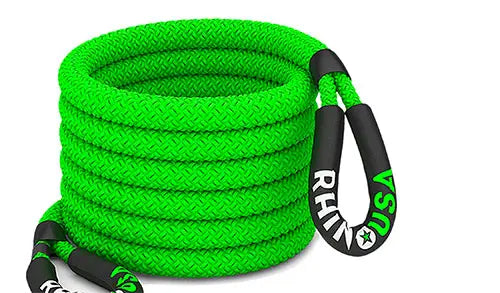
Featured Product: Rhino USA 3" Recovery Tow Strap
What is a Recovery Tow Strap?
Tow straps are made from strong nylon with hooks hard-sewn into each end, designed to connect two vehicles for towing or recovery. Heavy-duty recovery tow straps are designed to withstand extreme forces and harsh conditions. Tow straps made from high-tenacity polyester offer superior strength, durability, and flexibility. Cables and chains are also used for towing, but each has different safety considerations, such as the risk of snapping and proper attachment points. Recovery tow straps are engineered to recover stuck vehicles due to the additional stretch that they provide. Using a dedicated recovery strap is preferred over a tow strap because the stretch helps reduce shock load. Recovery tow straps are long straps that are used to link one vehicle to another, usually in conjunction with D-ring shackles, in the event that one of the vehicles is stuck and needs to be pulled free.
MUST READ: Tow Strap vs Recovery Tow Strap
When choosing a strap, it is important to select one made from high-quality material, such as high-strength synthetic fibers or nylon, for safety and durability. The vehicle weight should always be considered when selecting a tow or recovery strap to ensure the load rating matches the task. Tow chains or cables have similar strength to nylon tow straps but can be more dangerous if they break. They are an essential component of the vehicle recovery emergency kit that should be kept in your vehicle, particularly if you live in an area where snow or mud are commonplace or enjoy off-roading.
Now that you understand the basics of recovery tow straps, let's look at the hardware used to connect them: D-ring shackles.
What are D-Ring Shackles?
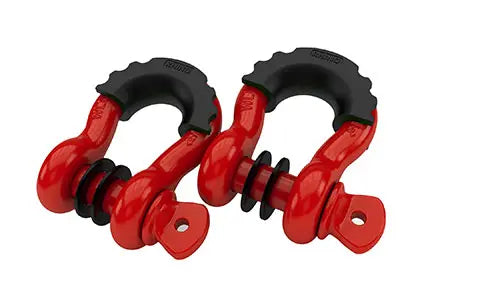
Towing, recovery, and hitching are all applications that benefit greatly from the use of a galvanized D-ring shackle - a clevis shackle, or a tow shackle are some of the other names that it goes by in the industry.
It is essential to keep in mind that d-shaped shackles are designed to only withstand pulling in a straight line, as side pulls have the potential to twist or bend the shackle.
Shackles for D-rings can be purchased in a screw pin form and feature a galvanized finish to defend against regular corrosion and rust. Compared to D-ring shackles, soft shackles are lightweight, made from high-strength synthetic fibers, and provide exceptional strength and flexibility. Soft shackles offer the same strength as steel shackles while being lighter and easier to handle.
With a solid understanding of tow straps and D-ring shackles, let's move on to why using the right equipment and following safety checks is so important.
The Importance of Rated Tow Points, Strap Inspection, and Minimum Breaking Strength
Before you begin any recovery operation, always remember:
-
Tow straps should always be attached to rated tow points on vehicles to ensure safety during towing operations. Using rated recovery points is crucial to avoid accidents and equipment damage.
-
Inspecting the tow strap for damage before use is essential to ensure safety during towing operations. Look for fraying, cuts, or broken stitching.
-
The minimum breaking strength (MBS) of a tow strap should exceed the weight of the vehicle being towed by at least two times. Always check that the tow strap's MBS is appropriate for your vehicle.
By following these guidelines, you reduce the risk of equipment failure and ensure a safer recovery process.
Safety Precautions
Personal Protective Equipment
When you're dealing with a stuck vehicle recovery situation, safety isn't just important—it's absolutely critical to protecting yourself and others around you. Before you even think about hooking up that tow strap, you need to make sure you're properly equipped with the right protective gear. This means wearing gloves to protect your hands from cuts and abrasions, and safety glasses to shield your eyes from any debris or potential strap failure.
Vehicle Positioning
You'll also want to position both vehicles—the one doing the towing and the stuck vehicle—on level ground whenever possible. Both vehicles should be aligned in a straight formation before towing. Engage the parking brakes to prevent any unexpected movement while you're setting everything up.
Attachment Points
Never, and we mean never, attach your tow strap to a bumper or any non-structural component of the vehicle. This is one of the most common mistakes people make, and it can lead to serious damage to the vehicle or, even worse, cause the strap to break loose unexpectedly. Instead, you need to use soft shackles or D-rings to properly connect your tow strap to the vehicle's designated recovery points—these are specifically engineered to handle the stress of a recovery operation. Always attach tow straps to rated tow points.
Inspection Procedures
Take the time to double-check that all your shackles and straps are properly secured before you start the recovery process, because a loose connection can quickly turn into a dangerous situation. You should make it a standard practice to thoroughly inspect your tow strap and shackles both before and after each use, looking for any signs of wear, fraying, or other damage that could compromise their integrity. Inspect both the towing and towed vehicles' attachment points for debris and damaged areas before towing. If you find any gear that doesn't meet safety standards or shows signs of deterioration, replace it immediately.
Bystander Safety
When it's time to actually perform the recovery, the key is keeping everything slow and controlled—this isn't a race, and sudden jerks or rapid acceleration can significantly increase your risk of strap or shackle failure. You'll want to maintain approximately a 45-degree angle between the tow strap and the ground, which helps prevent the strap from getting tangled up or caught on obstacles during the pull. However, one of the most important safety considerations is making sure that all bystanders are kept at a safe distance from the recovery area. Stay at least 20 feet away from the recovery line during operation. A snapped strap or flying shackle can cause serious injury to anyone in the vicinity, so establishing a clear safety perimeter is essential. Place a heavy blanket or dedicated damper over the middle of the strap to absorb energy if it snaps.
Finally, developing good inspection habits is crucial for safe towing operations. Following these precautions consistently will help ensure that your vehicle recovery operations are not only effective but also as safe as possible for everyone involved.
How to Attach a Tie Strap to the D-Ring Shackles
Before starting, always inspect all attachment points on both the towing and towed vehicles for debris and any signs of damage. Proper attachment points, such as rated tow points and secure shackles, are essential for safe towing—never use non-structural parts like bumpers.
You are probably curious about how to connect a tow strap if you have never used one before and have never had the need to do so. Before its initial use, perform a complete inspection of your tow strap for fraying, cuts, or broken stitching. Improper attachment or failure to inspect your equipment can cause the strap or other components to fail, leading to accidents or damage. A picture or visual inspection of your setup can help ensure everything is properly connected.
Below is a step-by-step guide to attaching a tow strap to D-ring shackles safely and effectively. Follow each step carefully and review the safety notes included.
Step 1: Connect to the Recovery Vehicle
-
Inspect the tow strap for any fraying, cuts, or broken stitching before use.
-
Inspect both the towing and towed vehicles' attachment points for debris and damaged areas.
-
Ensure the towing area is free from obstacles and people before starting.
-
Lay the tow strap out flat and untangled before use.
-
Each end of your Rhino USA recovery tow strap is made with triple reinforced loop ends. These loop ends are where you will attach the Rhino USA d-ring.
-
Always ensure you are connecting the tow strap to proper attachment points, such as rated tow points or solid steel tow hooks located near or under the front bumper. Never attach a tow strap to bumpers, suspension components, or steering rods.
-
Unscrew the pin on the D-ring and place your tow strap loop ends through the open space. Then slide the D-ring pin back through the tow strap and fasten it tightly.
-
Once this is completed, the D-ring can be attached to the vehicle's mounting point or to a shackle hitch receiver.
-
The strap’s minimum breaking strength (MBS) should exceed the weight of the stuck vehicle by a factor of at least two or three.
Step 2: Connect to the Other Vehicle

-
Find the mounting hook or rated tow point on the front of the car that is stuck. It may be tucked away or covered with plastic on some vehicles.
-
Do not attach the tow hook to any other component of the vehicle.
-
The other end of the tow strap should be attached to a secure mounting point at the rear or front of the recovery vehicle, such as a designated tow hook or steel loop near the rear bumper or trailer hitch, and never to axles or undercarriage components.
-
Another alternative is to have a shackle hitch receiver on both vehicles, where the D-ring shackle can be hooked on to, providing a much safer and stronger connection to both vehicles.
-
Use D-ring shackles or soft shackles to connect the strap to the vehicle's frame instead of hooks, as hooks can slip or detach during towing.
-
Always double-check the attachment points for debris and damage before towing to ensure a secure and safe recovery.
-
After you have located it, attach the D-ring to it, and then give the recovery strap a few good yanks to ensure that it is not too loose.
Step 3: Begin Pulling
-
Ensure both vehicles are aligned in a straight formation before towing.
-
Both vehicles should be manned during the towing operation.
-
The vehicle that is being pulled behind another car should be in drive or first gear before the pull begins. If it is not functioning, keep it in neutral gear.
-
Release the parking brake on the vehicle being towed.
-
Place a heavy blanket or dedicated damper over the middle of the strap to absorb energy if it snaps.
-
Stay at least 20 feet away from the recovery line during operation.
-
After that, you should begin to very slowly move the car that is doing the towing forward until the recovery tow strap is just tight, and then continue so that you are gradually pulling the other vehicle.
-
Tension should be applied slowly to avoid sudden jerks, as sudden jerks during towing can overload the tow strap and vehicle, putting the equipment under excessive stress which may cause failure.
-
It is imperative that you proceed with extreme caution in order to prevent malfunctions or serious injury.
D-Ring Shackles from Rhino USA
Rhino USA D-ring shackles are built to last and we have full confidence that they help you pull your vehicle. The break strength is among the highest in the industry (over 40,000 pounds), and we do lab tests on them right here in the United States. Our D-ring shackles will exceed any others that are available on the market since they are long-lasting and available at an unbelievable cost.
As well as being heavy duty, when you order D-ring shackles from Rhino USA, you have the choice of multiple colors, so they look good on your vehicle. Choose from green, matte, gloss black, red, and silver, so you always look good on the road.
When you have a vehicle full of recovery gear and various other accessories, being able to find something when you need it can be tricky. When you purchase D-Ring shackles from Rhino USA, you also get a handy box with a carry handle for easy storage and transportation, so you always have them to hand when you need them.
The Rhino USA D-Ring Shackles have two black isolators and four rubber washers, which together result in a reduction in the amount of road noise. In addition to this, this product offers supplementary protection at the connection points. The 7/8-inch pin is compatible with virtually all trucks and, because of the deep threading, the D-rings can provide the highest possible level of safety.
Why Rhino USA?
Here at Rhino USA, we’re proud to be a family owned and operated business located in Temecula, California. However, we’re not just “any” small family business, we are a Father and 2 Sons who are avid motorcycle and powersports enthusiasts. We designed and thoroughly field tested all of our products to make sure they are the best! Buy your Rhino Tow Strap or Rhino Shackles today!
You can also find Rhino USA products on eBay, and the product links provided may be affiliate links.

FAQ's
-
Can I use any tow strap to connect to D-ring shackles?
-
It’s important to use a tow strap that is rated for the weight of the vehicle you are towing. Always check that the tow strap's Minimum Breaking Strength (MBS) exceeds the weight of the vehicle by at least two times. Make sure to check the weight rating of your tow strap before connecting it to D-ring shackles.
-
Can I connect a tow strap directly to the bumper or frame of my vehicle instead of using D-ring shackles?
-
It’s not recommended to connect a tow strap directly to the bumper or frame of your vehicle, as this can cause damage to the vehicle and create a safety hazard. D-ring shackles are designed to distribute the load evenly and provide a secure connection for the tow strap. It’s important to use them for safe towing and recovery.
-
What are some common wrong ways to use a tow strap?
-
Using the wrong attachment points, such as bumpers or suspension parts, or using a tow strap that is not rated for the vehicle’s weight can lead to failure or accidents. Incorrectly attaching the strap, using damaged or old straps, or standing too close to the recovery line are also dangerous. Always avoid these mistakes to prevent injury or damage.
-
What are the general best practices for safe towing with a tow strap?
-
Use reinforced attachment points and secure hardware like D-ring shackles.
-
Stay at least 20 feet away from the recovery line during operation.
-
Place a heavy blanket or dedicated damper over the middle of the strap to absorb energy if it snaps.
-
Regularly used straps should be replaced every 2 to 4 years, even if there is no visible wear.
- Choosing a selection results in a full page refresh.